
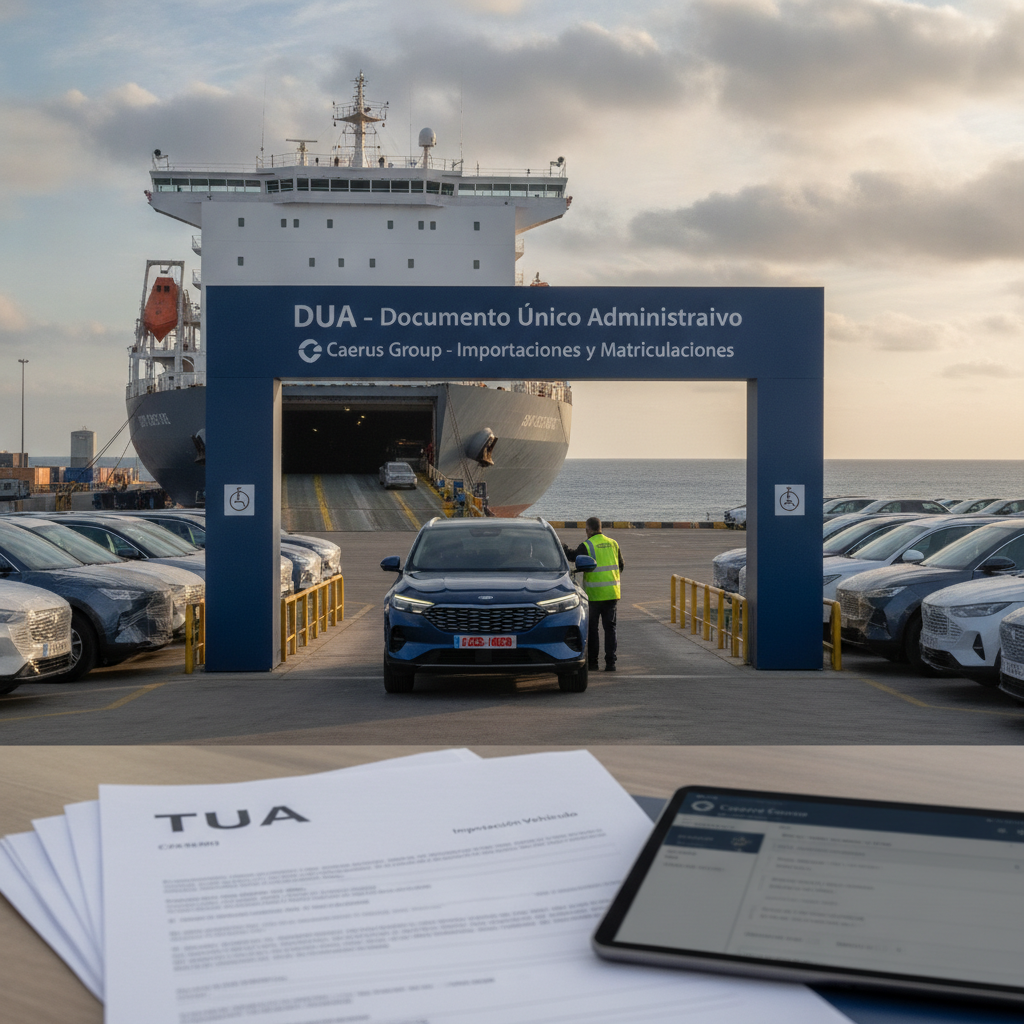
The allure of the open roads in Spain, from the coastal drives of the Costa del Sol to the winding mountain paths of the Pyrenees, makes owning a vehicle a top priority for many residents and expats alike. While many choose to buy locally, a significant number of drivers prefer to bring their trusted vehicles from abroad or purchase specific models from international markets. However, the process of bringing a vehicle into Spanish territory involves a complex web of bureaucracy, taxes, and specific customs requirements. At Caerus Group, we specialize in making this transition seamless, particularly when it relates to the essential Single Administrative Document, commonly referred to in the industry as the SAD Import Document for cars (DUA).
Why Import a Car to Spain?
There are numerous reasons why car enthusiasts and relocating professionals choose to import. For some, it is about maintaining a vehicle they have meticulously cared for over the years. For others, the international market offers luxury models, classic cars, or specific configurations that are simply not available within the Spanish domestic market. Regardless of the motivation, importing a vehicle requires a deep understanding of the legal framework to avoid hefty fines or having a vehicle impounded. The cornerstone of this legal framework is the customs declaration process, centered around the SAD Import Document for cars (DUA).
Understanding the Single Administrative Document (SAD) for Car Imports (DUA)
If you are importing a vehicle from outside the European Union (or from areas with special tax statuses like the Canary Islands, Ceuta, or Melilla), the Single Administrative Document, known in Spanish as the Documento Único Administrativo (DUA), is your most important piece of paperwork. The SAD Import Document for cars (DUA) serves as the official customs declaration. It provides the authorities with all the necessary data regarding the product being imported, its origin, and the person responsible for the import.
In the context of vehicle importation, the SAD is used to calculate the applicable duties and taxes. Without a correctly filed DUA, a vehicle cannot be legally cleared through customs, and consequently, it cannot be registered with the Spanish Directorate-General for Traffic (DGT). At Caerus Group, we act as your expert liaison, ensuring that every field in the SAD is filled with precision to prevent delays at the border.
The Role of the SAD in the Customs Process
When a car arrives at a Spanish port or border from a non-EU country, it is technically in a state of "temporary storage" until the SAD Import Document for cars (DUA) is presented and processed. This document informs the Spanish Tax Agency (Agencia Tributaria) about the vehicle's value, which is then used to determine the VAT (IVA) and any applicable import duties. For most passenger vehicles, the standard VAT rate in Spain is 21%.
One of the most critical aspects of the SAD is the "Tariff Classification." Every item imported globally has a specific code. For cars, this code determines if you pay 10% import duty (standard for most passenger cars from outside the EU) or if you are eligible for exemptions based on international trade agreements. Navigating these codes requires professional expertise, as an incorrect classification can lead to overpayment or legal complications.
Essential Requirements for a Successful Import
While the SAD Import Document for cars (DUA) is the heart of the customs process, it does not exist in a vacuum. To successfully register your imported vehicle in Spain, several other steps must be completed in a specific order:
1. Technical Inspection (ITV): Even if your car has a valid inspection from its country of origin, it must undergo a Spanish "Inspección Técnica de Vehículos." This ensures the car meets Spanish safety and environmental standards. You will need to provide the vehicle's "Certificate of Conformity" (COC) during this stage.
2. Payment of Registration Tax (Impuesto de Matriculación): This tax is based on the vehicle's CO2 emissions. Cars with lower emissions pay less, while high-emission vehicles can face a tax rate of up to 14.75% of the vehicle's value. This is separate from the VAT handled during the SAD process.
3. Municipal Road Tax (IVTM): This is a local tax paid to the town hall (Ayuntamiento) where you are registered as a resident.
Common Challenges and How Caerus Group Can Help
The most common hurdle for individuals is the sheer volume of paperwork and the "Catch-22" nature of Spanish bureaucracy—where you often need one document to get another, but can't get the first without the second. For example, you cannot get your definitive license plates without the proof of tax payment, and you cannot pay the taxes without the SAD Import Document for cars (DUA) already being cleared.
Caerus Group takes the weight off your shoulders. We don't just sell cars; we are experts in the entire lifecycle of vehicle ownership in Spain. Our team handles the communication with customs agents, ensures the SAD is filed correctly, and manages the communication with the Spanish Tax Agency. This is particularly vital for those moving to Spain as part of a "Change of Residence." If you meet certain criteria, you may be exempt from paying VAT and Registration Tax, but this exemption must be claimed correctly through the SAD filing process.
External Resources and Legal Framework
To understand the broader European context of vehicle importation and the rights of citizens, you can consult the official European Commission guidelines on buying and selling vehicles across borders. This resource provides clarity on how EU law interacts with national Spanish regulations, providing a foundation for why documents like the SAD are necessary for non-EU entries.
Conclusion: Seamless Registration with Caerus Group
Importing a vehicle to Spain should be an exciting milestone, not a bureaucratic nightmare. Whether you are bringing a classic car from the United States, a luxury SUV from the UK, or a vehicle from any other non-EU territory, understanding the SAD Import Document for cars (DUA) is essential. By partnering with Caerus Group, you ensure that your vehicle is handled with the utmost care, from the moment it touches Spanish soil to the moment you turn the key with your new Spanish license plates.
Our comprehensive service covers everything from customs clearance to the final registration with the DGT. We pride ourselves on transparency, efficiency, and a deep knowledge of Spanish maritime and inland customs laws. Let us handle the paperwork while you focus on enjoying the drive. Contact Caerus Group today to start your vehicle importation journey with confidence.