
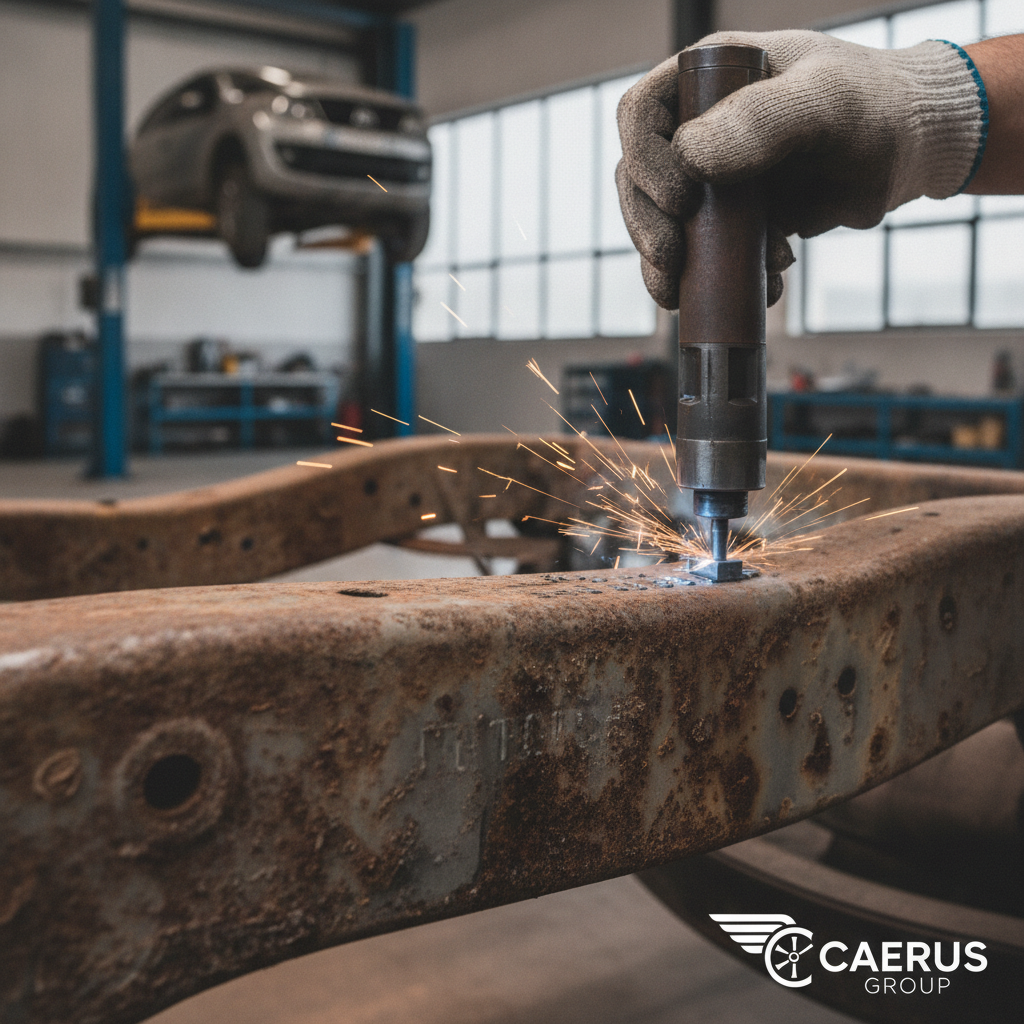
Bringing a car into Spain from another country is an exciting venture, whether you are relocating permanently or simply purchasing a vintage gem from abroad. However, the process of vehicle registration, known locally as matriculación, involves strict technical inspections and bureaucratic hurdles. One of the most frustrating obstacles an owner can face during the technical inspection (ITV) is a Chassis Number (VIN) that is illegible due to corrosion. In this guide, we will explore the legal and technical steps required for re-stamping an oxidized chassis number on an imported car, and how Caerus Group can help you navigate this complex situation.
The Critical Role of the VIN in Spanish Inspections
The Vehicle Identification Number (VIN), or chassis number, is the DNA of your car. It is a unique 17-character code that provides a record of the vehicle’s manufacturer, specifications, and history. In Spain, the ITV (Inspección Técnica de Vehículos) inspectors are required by law to physically verify this number against the vehicle’s documentation. This check is performed to prevent vehicle theft, fraud, and the illegal trade of automotive parts.
When you import a car, the inspection is even more rigorous. If the inspector finds that the number is faded, partially missing, or completely covered by rust, the inspection will be halted immediately. You will be issued a "denegatoria" or a failure notice, and the vehicle will not be allowed to circulate or be registered until the issue is legally resolved. This is where the specialized process of re-stamping an oxidized chassis number on an imported car becomes essential.
Why Does Chassis Oxidation Happen?
Oxidation is a natural process, but it is particularly common in cars imported from Northern Europe or coastal regions. Vehicles from countries like Germany, Belgium, or the United Kingdom are frequently exposed to road salt during the winter months. Salt is highly corrosive and, if not washed off regularly, it eats through the protective coatings on the chassis. Over time, the stamped numbers on the metal frame become pitted and unreadable.
For many owners, this comes as a surprise. A car might look perfect on the outside, but the specific area where the manufacturer stamped the VIN—often in the engine bay, under the passenger seat, or on the wheel arch—may have suffered from localized humidity. Understanding that this is a common technical fault is the first step toward fixing it through the proper legal channels.
The Legal Procedure for Re-stamping in Spain
You cannot simply take a hammer and a set of stamps to your car to "fix" the number yourself. Doing so is considered a criminal offense in Spain, as it constitutes the falsification of a public document. The process of re-stamping an oxidized chassis number on an imported car must be authorized by the authorities and performed by a certified workshop under specific conditions.
The process generally follows these steps:
1. **Documentation Review:** You must provide the original foreign registration documents and the Certificate of Conformity (COC). These documents prove that the vehicle is what you claim it is.
2. **Manufacturer Authorization:** In many cases, the Spanish authorities will require a document from the vehicle manufacturer (or their official representative in Spain) stating that the vehicle indeed belongs to that VIN and authorizing the re-stamping.
3. **DGT Notification:** The Dirección General de Tráfico (DGT) must be informed of the discrepancy. They oversee the legality of the vehicle's identity throughout the registration process.
4. **The Re-stamping Process:** Once authorized, the vehicle is taken to a designated station or a certified workshop. The new stamps are applied, usually preceded and followed by a specific symbol (like a star) to indicate it is a legal re-stamp. The old, oxidized number is usually crossed out but left visible if possible, or a new plate is welded under official supervision.
Common Obstacles with Imported Vehicles
Imported cars face an extra layer of difficulty because the Spanish ITV stations do not have the vehicle’s history in their local database yet. If a car was originally sold in Spain, the record might show previous notes about rust. For an import, you are starting from scratch. If the oxidation is severe, the inspector might demand a "ficha técnica reducida" (reduced technical file) prepared by an engineer to confirm the vehicle's specifications before they even consider the re-stamping request.
Furthermore, different autonomous communities in Spain may have slight variations in how they handle the administrative side of chassis recovery. Navigating these regional differences requires local expertise and a deep understanding of the Spanish Road Safety Law.
How Caerus Group Simplifies Your Registration
At Caerus Group, we specialize in the comprehensive management of vehicle imports and registrations in Spain. We understand that discovering an unreadable VIN can be a stressful experience that threatens to turn your dream car into a stationary paperweight. Our team is experienced in the specific technical requirements for re-stamping an oxidized chassis number on an imported car.
We handle the entire workflow for you:
- **Technical Assessment:** We inspect the state of the chassis number before you head to the ITV to identify potential problems early.
- **Bureaucracy Management:** We contact the manufacturers and the DGT to obtain the necessary permits for re-stamping.
- **Engineering Services:** If a reduced technical file or an engineer's report is required, our in-house experts prepare the documentation immediately.
- **Final Registration:** Once the chassis number is legally restored and the ITV is passed, we complete the tax payments and obtain your Spanish license plates.
Conclusion: Don't Let Rust Stop You
An oxidized chassis number is a significant hurdle, but it is not an insurmountable one. By following the legal procedures and ensuring that the re-stamping an oxidized chassis number on an imported car is done with full official authorization, you protect the value of your investment and ensure that your vehicle is 100% legal on Spanish roads.
If you are planning to import a vehicle or are currently struggling with a failed ITV due to chassis corrosion, contact Caerus Group today. Our expertise in Spanish vehicle legislation and our commitment to professional service will help you get behind the wheel as quickly as possible. Let us handle the paperwork and the technicalities while you enjoy the drive.