
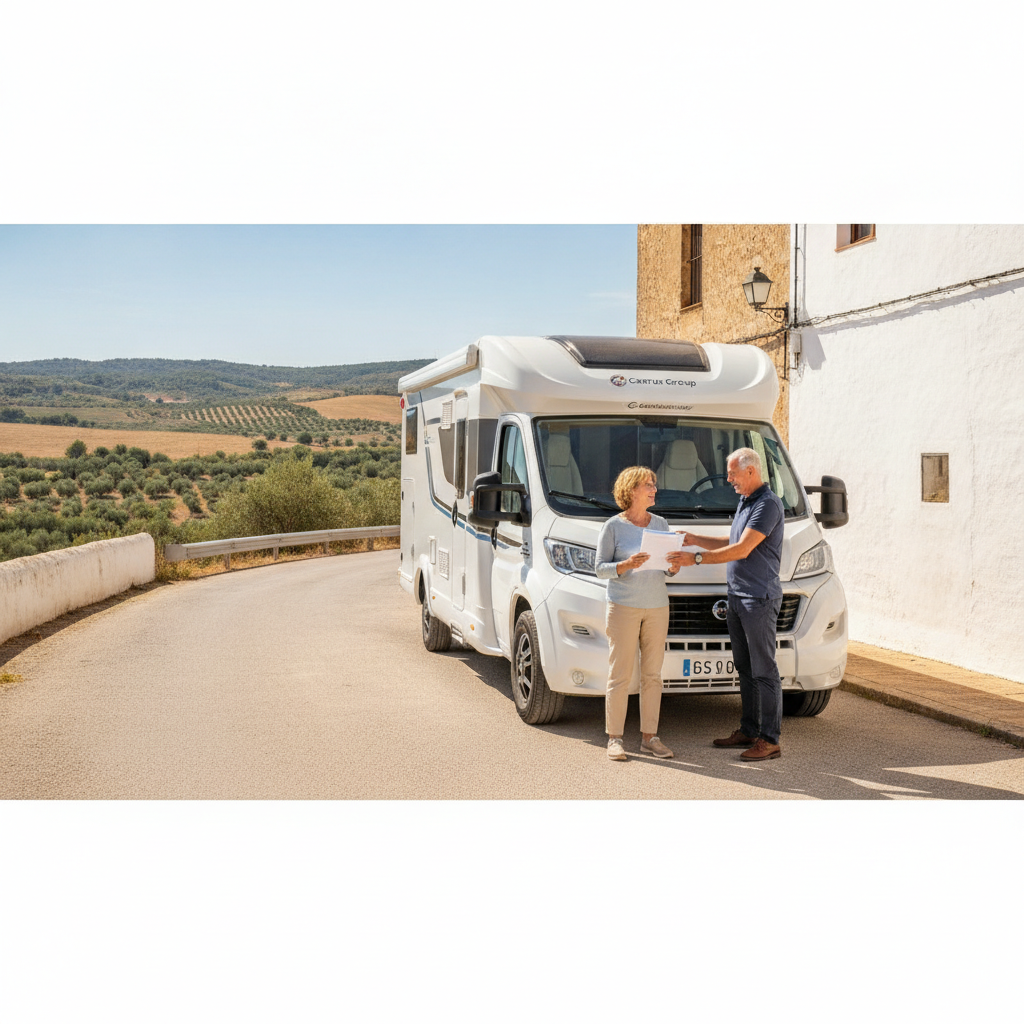
Spain has long been a premier destination for those seeking the freedom of the open road. With its diverse landscapes, ranging from the rugged Pyrenees to the sun-drenched beaches of the Costa del Sol, it is no wonder that many travelers and expats choose to bring their own mobile homes into the country. However, moving a vehicle across borders involves more than just a long drive. If you are planning to bring a vehicle from abroad, understanding the specific procedures for registering a foreign motorhome is essential to ensure you are driving legally on Spanish roads.
At Caerus Group, we specialize not only in high-quality vehicle sales but also in the complex administrative world of Spanish vehicle registrations. We understand that the bureaucracy in Spain can be daunting, especially when it involves technical specifications and tax obligations for large vehicles like motorhomes. This guide is designed to walk you through the necessary steps to transition your foreign-plated motorhome to Spanish plates.
Initial Considerations Before Importing
Before you even begin the physical process of importation, it is vital to check if your motorhome meets European Union standards. If your vehicle was originally purchased within the EU, it likely has a Certificate of Conformity (COC). This document is the "birth certificate" of the vehicle and proves it meets the required safety and environmental standards. If your motorhome comes from outside the EU, such as the United States or the UK (post-Brexit), the process becomes significantly more complex, often requiring a "homologación individual" or an individual approval process.
At Caerus Group, we recommend a preliminary documentation review. This prevents the common mistake of transporting a vehicle to Spain only to find out it cannot be registered due to structural modifications that do not comply with local regulations, such as non-approved gas installations or electrical setups.
The Technical Inspection (ITV)
The first major hurdle in the procedures for registering a foreign motorhome is the Inspección Técnica de Vehículos, commonly known as the ITV. This is not a standard annual inspection. For a foreign registration, you must undergo a "favorable inspection for registration."
During this appointment, the inspectors will verify that the vehicle matches the technical specifications provided in the documentation. They will check the dimensions, weight, emissions, and safety features. For motorhomes, they specifically look at the living quarters' installations. You will need to provide a technical file (Ficha Técnica), which can be created by an engineer if you do not have a COC. Ensuring your motorhome is in top mechanical condition and that all interior modifications are documented is key to passing this stage on the first attempt.
Navigating Spanish Taxes and Duties
One of the most complex parts of the registration process involves the Spanish Tax Agency (Agencia Tributaria). There are several taxes that must be settled before you can receive your new license plates:
1. VAT (IVA) or Transfer Tax (ITP): If the motorhome is brand new, you will need to pay VAT. If it is a second-hand purchase from an individual, you may be liable for the Impuesto de Transmisiones Patrimoniales (ITP), which varies depending on the Autonomous Community in Spain where you reside.
2. Special Tax on Certain Means of Transport (IEDMT): This is often referred to as the registration tax. The amount is calculated based on the CO2 emissions of the vehicle. Motorhomes, due to their size and engine capacity, can sometimes fall into higher tax brackets. However, there are potential exemptions or reductions for residents moving their permanent home to Spain (traslado de residencia), provided certain conditions and timelines are met.
For official information on tax rates and forms, you can visit the Agencia Tributaria official website, which provides the necessary frameworks for declaring imported goods.
The Final Step: The Directorate-General for Traffic (DGT)
Once you have your passed ITV report and proof of tax payments, the final administrative step is with the Dirección General de Tráfico (DGT). You will need to submit an application for registration along with your identification (NIE/DNI), proof of address in Spain (empadronamiento), the original foreign vehicle documents, and the receipts for all paid taxes.
The DGT will then issue your new Spanish registration number. With this number, you can have your Spanish plates printed at an authorized shop and finalize your Spanish insurance policy. It is important to note that you cannot legally drive a vehicle with foreign plates indefinitely; once you become a resident, you usually have a 30 to 60-day window to start the registration process.
Why Choose Caerus Group for Your Registration?
Attempting to handle the procedures for registering a foreign motorhome on your own can lead to months of delays, unexpected costs, and significant stress. The requirements for gas certificates, electrical safety boletos, and CO2 calculations require precision and local expertise.
At Caerus Group, we offer a "turnkey" service. We handle the technical engineers, the tax filings, and the appointments with the DGT and ITV stations. Our team ensures that every document is correctly translated and filed, allowing you to focus on planning your next adventure across the Iberian Peninsula. Whether you are buying a car from our showroom or bringing your cherished motorhome from abroad, we are committed to providing a seamless experience.
In conclusion, while the path to Spanish plates involves several layers of bureaucracy, it is a manageable process with the right professional guidance. By following these steps and ensuring your documentation is in order, you will soon be enjoying the freedom of the Spanish roads in your own foreign-born motorhome, fully legalized and ready for the journey ahead.