
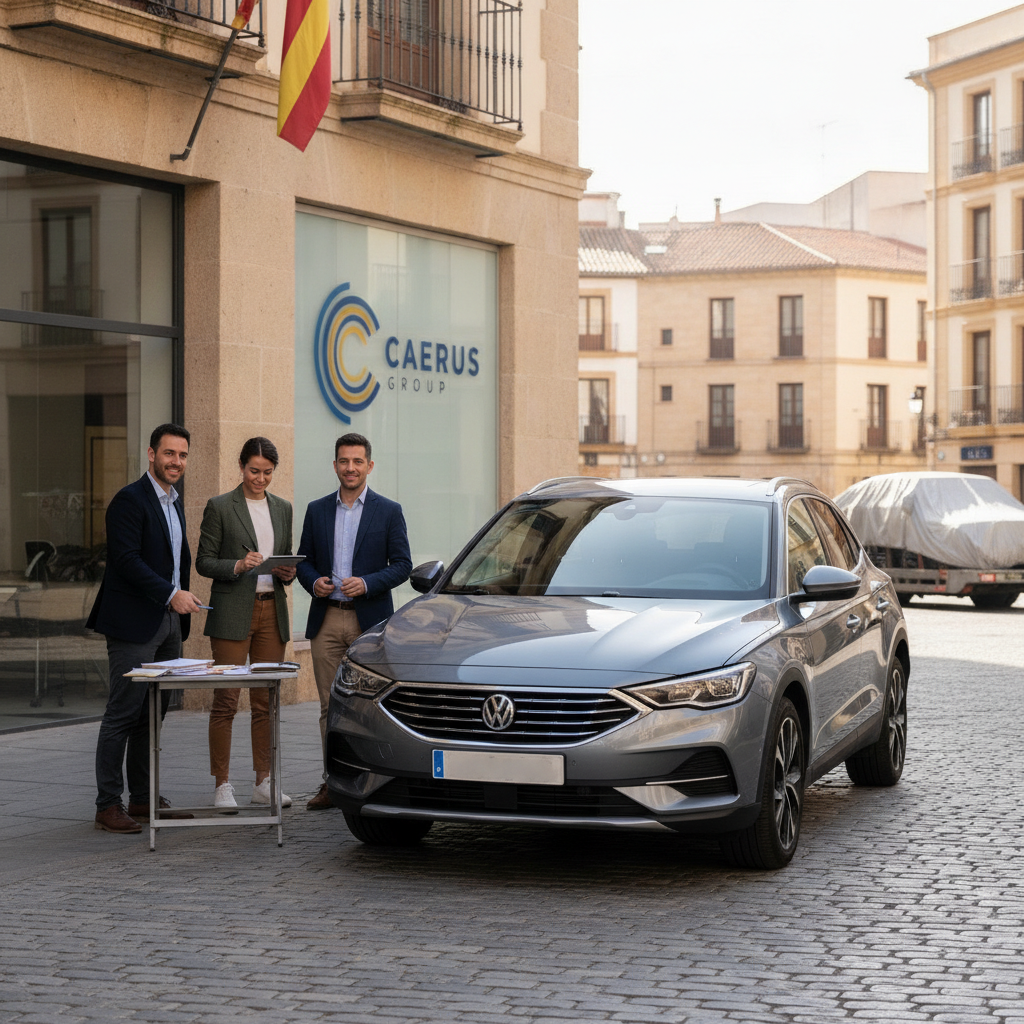
Bringing a vehicle into Spain from another country is an exciting prospect. Whether you have found a vintage classic in Germany, a high-performance sports car in Italy, or you are simply moving your personal vehicle to your new home on the Mediterranean coast, the process offers a world of possibilities. However, the administrative side of this endeavor can often feel like a labyrinth of bureaucracy and technical requirements.
At Caerus Group, we specialize in both high-quality vehicle sales and the intricate technicalities of automotive administration. Navigating the registration procedures for imported cars (trámites matriculación coche importación) requires a keen understanding of Spanish law, tax obligations, and technical standards. In this guide, we will break down the essential steps to ensure your imported vehicle is legal, safe, and ready for the Spanish roads.
Phase 1: The Technical Inspection (ITV)
The first and perhaps most critical step in the registration process is the Technical Vehicle Inspection, known in Spain as the ITV (Inspección Técnica de Vehículos). Unlike a standard annual inspection, an imported car must undergo a "non-resident" or "homologation" inspection.
During this process, engineers will verify that the vehicle complies with European safety and environmental standards. You will need to provide the original vehicle documentation from the country of origin and a Certificate of Conformity (COC). The COC is a document issued by the manufacturer stating that the vehicle meets the required standards for the European Union. If your car does not have a COC—common with vehicles imported from outside the EU, such as the United States—you may need to undergo a "Unitary Homologation," which is a more complex and costly technical verification.
Phase 2: Settling Your Tax Obligations
Before you can apply for Spanish license plates, you must settle several tax accounts with both the national and local governments. This is often where many owners feel overwhelmed, as the amounts can vary significantly based on the vehicle's value and CO2 emissions.
The primary tax is the Special Tax on Certain Means of Transport (IEDMT), commonly known as the Registration Tax. This tax is calculated based on the vehicle's carbon dioxide emissions. Cars with very low emissions may be exempt, while high-emission vehicles can face a tax rate of up to 14.75% of the vehicle's current market value. Additionally, if the car was purchased outside the EU, you will likely need to pay VAT (IVA) and customs duties.
On a local level, you must pay the "Impuesto de Circulación" (IVTM) to the town hall where you are registered (padrón). This is an annual road tax, and the receipt of payment is a mandatory document for the final registration step.
Phase 3: The Directorate General of Traffic (DGT)
Once you have your passed ITV report and proof of all tax payments, it is time to visit the DGT. This is the final administrative hurdle in the registration procedures for imported cars. You must submit a formal application for registration, providing your identification (NIE/DNI), proof of address, and all the documents gathered in the previous steps.
The DGT will process the file and assign a Spanish registration number to the vehicle. At this point, you will receive the "Permiso de Circulación" (Circulation Permit), which is the definitive document proving the car is legally registered in Spain. For more detailed information on official requirements, you can visit the official DGT website regarding foreign vehicle registration.
Common Pitfalls and How to Avoid Them
Many individuals attempt to handle these procedures on their own, only to find themselves stuck in a cycle of missing paperwork and rejected appointments. Common issues include expired temporary plates (green plates), incorrect translation of foreign documents, or failing to account for the "Reduced Technical Sheet" required by the ITV station.
It is also vital to remember that you have a limited window of time to complete this process. Generally, if you become a resident in Spain, you have 30 to 60 days to register your foreign vehicle before you risk heavy fines or even the impounding of the car.
Why Choose Caerus Group for Your Registration Needs?
At Caerus Group, we understand that your time is valuable. We don't just sell exceptional cars; we provide a comprehensive service that covers every aspect of automotive ownership in Spain. Our dedicated team handles registration procedures for imported cars daily, ensuring that every document is filed correctly and every tax is optimized.
By trusting us with your registration, you benefit from:
- Expert analysis of the taxes due, avoiding overpayment.
- Coordination with trusted ITV stations for a smooth inspection process.
- Direct communication with the DGT to expedite the issuance of your Spanish plates.
- Peace of mind knowing that professionals are handling the "Spanish bureaucracy" for you.
Whether you are importing a car yourself or looking to purchase a premium vehicle from our curated inventory, Caerus Group is your partner in Spain. We bridge the gap between the car of your dreams and the legal reality of driving it on Spanish soil.
Conclusion
Registering an imported car in Spain is a multi-step journey that requires patience and precision. From the initial technical inspection to the final plates issued by the DGT, each stage is vital for the legal operation of your vehicle. While the process can be daunting for the uninitiated, understanding the registration procedures for imported cars is the first step toward success.
If you prefer to skip the stress and enjoy the drive instead, contact Caerus Group today. Let us handle the paperwork while you plan your next road trip across the beautiful Spanish landscape. Your vehicle deserves a smooth transition, and we are here to provide exactly that.