
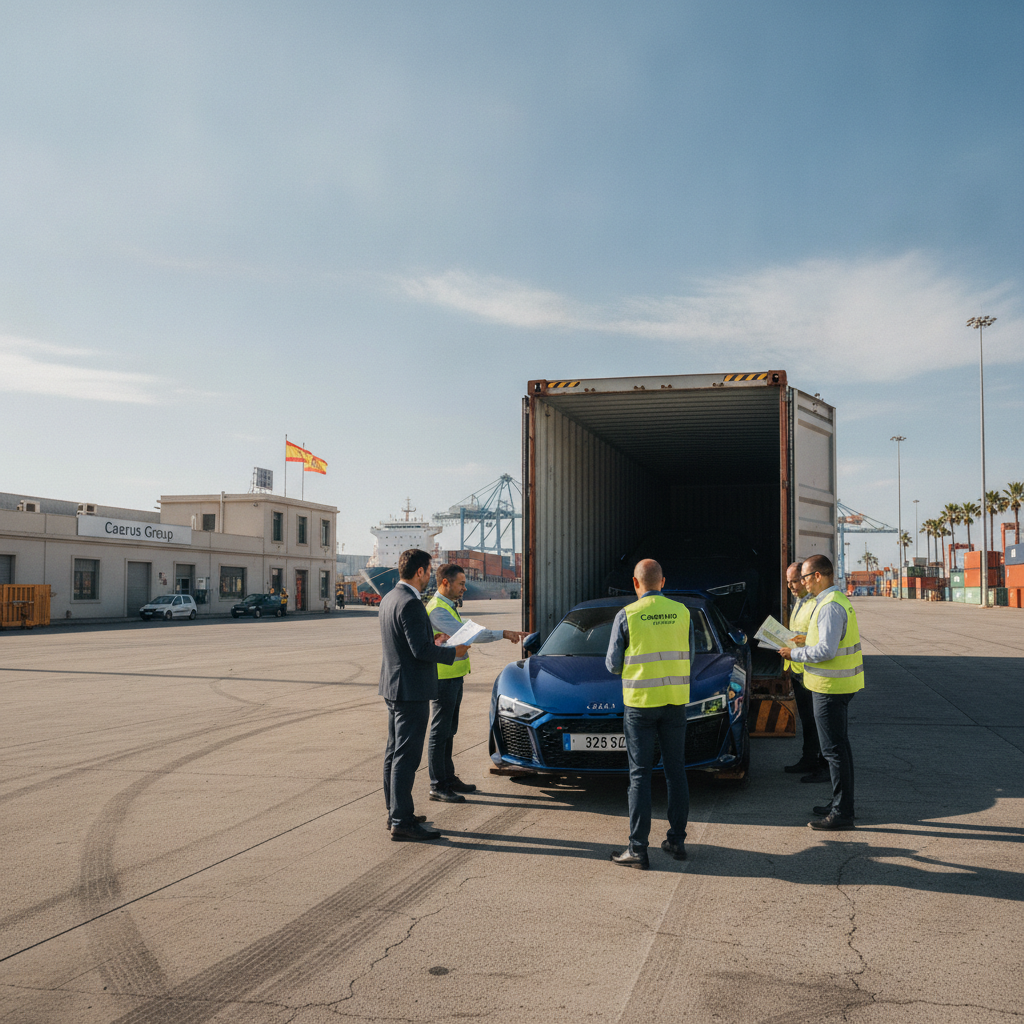
Bringing a vehicle into Spain can be an exciting venture, whether you are relocating to the Mediterranean coast or seeking a specific luxury model that is hard to find in the local market. However, the logistical reality of importing a vehicle often involves a complex web of bureaucracy and legal requirements. At Caerus Group, we specialize in simplifying these transitions, ensuring that your dream car reaches Spanish roads without unnecessary delays. Understanding the nuances of customs procedures for imported cars is the first step toward a successful registration process.
The process of importing a car to Spain varies significantly depending on the vehicle's country of origin. While movements within the European Union are relatively streamlined due to the single market, importing a vehicle from outside the EU, such as the United States, the United Kingdom, or Japan, involves rigorous oversight. This is where professional expertise becomes invaluable, as the documentation and tax obligations can be overwhelming for those unfamiliar with Spanish administrative law.
The Difference Between EU and Non-EU Imports
If you are importing a car from an EU member state, the process is generally considered a "transfer of residence" or an "intra-community acquisition." In these cases, customs duties are typically not applicable, although you will still need to settle specific Spanish taxes and pass a local technical inspection (ITV). The focus here is on ensuring the vehicle meets European safety and environmental standards, usually proven through a Certificate of Conformity (COC).
On the other hand, importing a vehicle from a non-EU country—often referred to as a third country—triggers more intensive customs procedures for imported cars. In these instances, the vehicle must be cleared through Spanish Customs (Aduanas). This involves the filing of the Single Administrative Document (DUA), which serves as the official declaration to the tax authorities. Without a correctly filed DUA, a vehicle cannot be legally registered or driven in Spain.
For those importing from outside the European Union, it is crucial to consult the official guidelines provided by the Spanish Tax Agency (Agencia Tributaria) regarding VAT and customs duties. These regulations determine the percentage of tax based on the vehicle's value and the reason for its importation.
Essential Documentation for Customs Clearance
To successfully navigate the customs procedures for imported cars, a specific set of documents must be gathered and presented. Any missing paperwork can lead to the vehicle being held at the port, resulting in expensive storage fees. At Caerus Group, we manage this documentation on behalf of our clients to ensure a seamless entry.
The primary documents required include the original vehicle title and registration from the country of origin, the commercial invoice or a sales contract (if the car was recently purchased), and a copy of the owner's identification (DNI, NIE, or Passport). Additionally, if the vehicle is being imported as part of a move (change of residence), proof of previous residence outside of Spain for at least twelve months is necessary to apply for tax exemptions.
Furthermore, technical documentation is vital. The Spanish authorities require the "Ficha Técnica," which is a technical data sheet. If the vehicle does not have a European Certificate of Conformity, it may need a "Homologación Individual." This is a specialized process where a laboratory certifies that the car complies with Spanish road safety and emissions regulations.
Taxes and Duties: What to Expect
One of the most frequent questions we receive at Caerus Group concerns the cost of importing. When dealing with customs procedures for imported cars from outside the EU, there are three main financial components to consider: Customs Duties, VAT, and the Registration Tax.
Customs duties (Aranceles) are usually around 10% for passenger cars, calculated based on the purchase price plus shipping costs. Value Added Tax (IVA) in Spain is currently set at 21%. However, if you are moving to Spain and importing your personal vehicle as part of your household effects, you may be eligible for a waiver of both the customs duties and the IVA, provided you meet strict deadlines and residency requirements.
Finally, there is the "Impuesto de Matriculación" (Registration Tax). This tax is applied to all vehicles being registered in Spain for the first time, regardless of whether they are from the EU or not. The rate of this tax is based on the vehicle's CO2 emissions. Cars with lower emissions pay less, while high-performance or older vehicles with higher emissions can face significant tax rates. Accurate calculation of these costs is a core part of the service we provide at Caerus Group.
The Technical Inspection (ITV) and Final Registration
Once the customs procedures for imported cars are finalized and the taxes are paid, the vehicle must undergo a "Privatized Technical Inspection" (ITV). This is not a standard annual check-up but a more rigorous inspection to ensure the car matches the technical specifications listed in its documentation. The inspector will verify the VIN number, the engine type, the lighting systems, and the exhaust emissions.
After passing the ITV, the final step is the registration with the Dirección General de Tráfico (DGT). Here, the Spanish license plates are issued. This step requires the proof of payment of the Municipal Circulation Tax (IVTM) to the local town hall where the owner resides. Only after the DGT processes the file and issues the "Permiso de Circulación" is the car legally allowed to circulate on Spanish roads.
Why Choose Caerus Group for Your Import Needs?
The complexity of customs procedures for imported cars makes it easy for individuals to make costly mistakes. Language barriers, changing regulations, and the need for precise technical data can turn a simple import into a bureaucratic nightmare. Caerus Group was founded to provide a comprehensive solution for car enthusiasts and expatriates alike.
As a specialized dealership and registration agency, we handle the entire lifecycle of the import. From the moment the vehicle leaves its country of origin to the moment you turn the key with Spanish plates attached, our team manages the logistics, the customs agents, the tax filings, and the technical inspections. We ensure that every "trámite" is completed according to current Spanish law, protecting your investment and saving you time.
Whether you are importing a classic car from the United Kingdom or a modern SUV from the United States, our deep understanding of the Spanish administrative system ensures a smooth journey. At Caerus Group, we don't just sell cars; we provide the peace of mind that your vehicle's legal status is as pristine as its engine.
Conclusion
Importing a vehicle to Spain is a multifaceted process that requires a thorough understanding of both international trade laws and local Spanish regulations. By mastering the customs procedures for imported cars, owners can avoid unnecessary hurdles and enjoy their vehicles in one of the most beautiful driving environments in the world. If you are considering bringing a vehicle into Spain, let Caerus Group be your partner in navigating the complexities of the Spanish administration.