
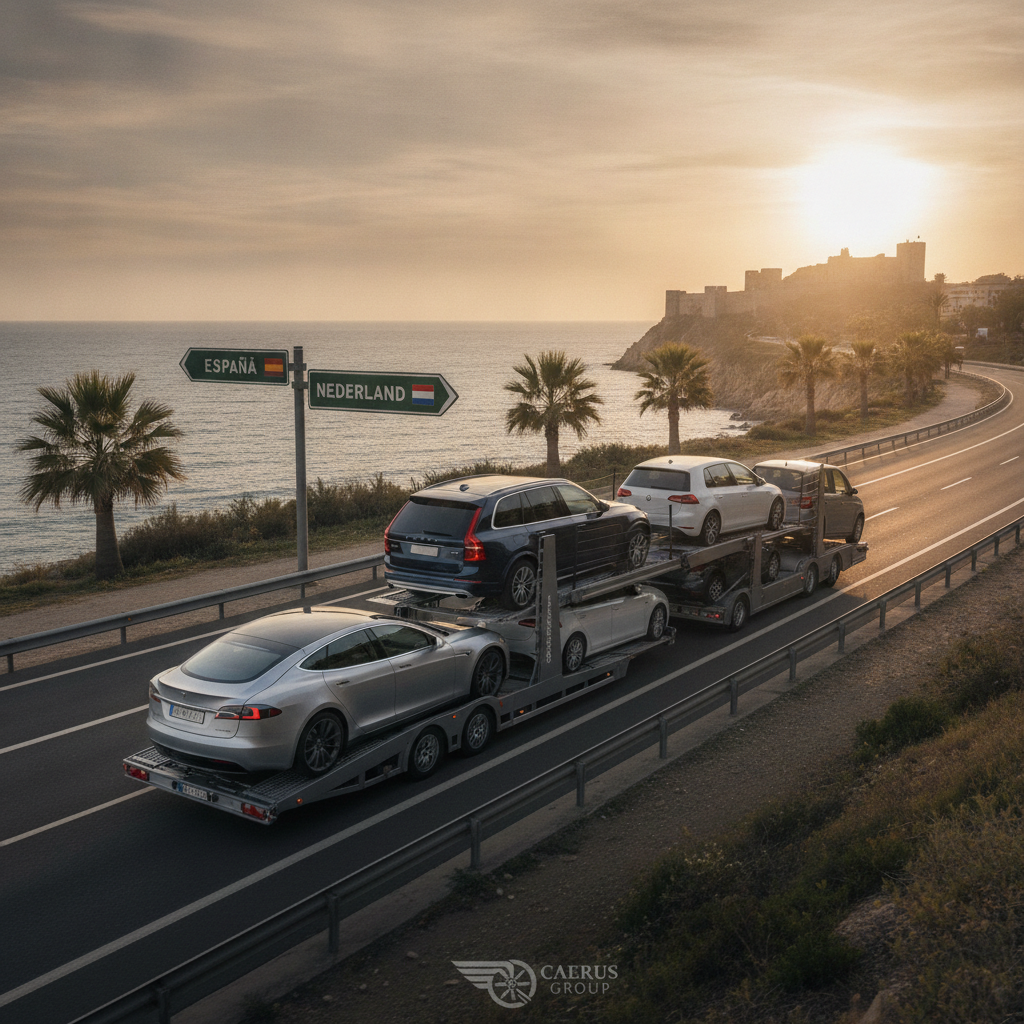
The European second-hand car market offers a wealth of opportunities for enthusiasts and pragmatic buyers alike. Among the most popular destinations for sourcing high-quality vehicles is the Netherlands. Known for meticulous maintenance standards and a transparent history of vehicle care, Dutch cars are a top choice for Spanish drivers. However, the process of importing a car from the Netherlands to Spain involves several legal, logistical, and administrative steps that can be daunting for the uninitiated.
At Caerus Group, we specialize in making this transition seamless. Whether you are looking for a luxury sedan, a sturdy SUV, or a classic model, understanding the roadmap of importation is essential. This guide covers everything you need to know about the journey of your new vehicle from the Dutch lowlands to the Spanish coast.
Why Choose the Netherlands for Your Next Vehicle?
The Dutch automotive market is highly regarded for several reasons. Firstly, the "NAP" (Nationale Auto Pas) system in the Netherlands ensures that mileage readings are accurate and verified, significantly reducing the risk of odometer fraud. Secondly, the road infrastructure in the Netherlands is among the best in the world, meaning vehicles suffer less wear and tear on their suspension and chassis compared to other regions.
Furthermore, Dutch owners tend to follow strict maintenance schedules, often at official dealerships. When you decide on importing a car from the Netherlands to Spain, you are often investing in a vehicle that has been treated with the utmost care. At Caerus Group, we help you verify these details to ensure your investment is sound.
Step 1: Finding and Purchasing the Vehicle
The first step is identifying the right car. Popular platforms like Gaspedaal or AutoTrack provide a comprehensive look at the Dutch inventory. Once you have found the perfect match, the purchase process begins. It is crucial to obtain the original vehicle documentation, known as the "Kentekenbewijs." This document is vital for the subsequent registration process in Spain.
If you are buying from a dealer, ensure they provide an invoice with a clear breakdown of VAT (BTW in Dutch). If you are a professional or an entity with a registered VIES number, you may be eligible for an intra-community transaction, which can simplify the tax implications. For private individuals, paying the Dutch VAT is usually standard, though specific rules apply depending on whether the car is considered "new" or "used" by Spanish tax authorities.
Step 2: Logistics and Transport to Spain
Once the purchase is finalized, you must decide how to get the car to Spain. There are two primary methods: driving it yourself or hiring a professional transport service. If you choose to drive, you will need temporary export plates and short-term insurance. The Dutch vehicle authority, the RDW (Dienst Wegverkeer), manages the deregistration and issuance of export documents.
Alternatively, many clients prefer professional transport via a car carrier. This method avoids putting extra mileage on the vehicle and eliminates the need for temporary insurance and fuel costs during the trip. Caerus Group works with trusted logistics partners to ensure your vehicle arrives safely at our facilities or directly to your doorstep in Spain.
Step 3: The ITV Inspection (Technical Inspection)
Upon arrival in Spain, the vehicle must undergo a specific type of technical inspection known as "ITV para matriculación." Unlike a standard annual inspection, this process verifies that the vehicle complies with Spanish and European regulations. You will need to provide the Dutch registration papers and the Certificate of Conformity (COC).
The COC is a crucial document issued by the manufacturer that proves the vehicle meets the required technical standards for the EU. If the vehicle does not have a COC, a "Ficha Técnica Reducida" (Reduced Technical Sheet) must be prepared by a certified engineer. Our team at Caerus Group handles all the technical paperwork to ensure your car passes the ITV without any hiccups.
Step 4: Taxes and Registration Fees
Importing a car from the Netherlands to Spain involves two main taxes. The first is the "Impuesto Especial sobre Determinados Medios de Transporte" (IEDMT), commonly known as the registration tax. The amount is calculated based on the vehicle's CO2 emissions; cars with lower emissions may be exempt, while high-emission vehicles can face significant charges.
The second is the "Impuesto de Transmisiones Patrimoniales" (ITP) if you purchased the car from a private individual, or VAT if purchased from a dealer. Additionally, you must pay the local municipal circulation tax (IVTM) in the town where you reside. Calculating these costs accurately is vital to avoid unexpected expenses. Caerus Group provides detailed fiscal consulting to give you a clear picture of the total investment before you even buy the car.
Step 5: Final Registration and License Plates
Once the taxes are paid and the ITV is passed, the final step is to submit all documentation to the "Dirección General de Tráfico" (DGT). They will issue the Spanish registration number and the "Permiso de Circulación." With these documents in hand, you can finally order your Spanish license plates and secure permanent insurance.
While the process of importing a car from the Netherlands to Spain may seem complex, it is a highly rewarding way to acquire a premium vehicle at a competitive price. The key is having a partner who understands both the Dutch and Spanish administrative landscapes.
Why Trust Caerus Group?
At Caerus Group, we are more than just a car dealership. We are experts in automotive logistics and registration. We understand that our clients value their time and peace of mind. That is why we offer a comprehensive "turnkey" service. From the moment you find a car in the Netherlands to the day you turn the key in Spain, we manage every detail.
Our services include vehicle sourcing, price negotiation, transport coordination, ITV management, and all administrative filings with the Spanish Tax Agency and DGT. We pride ourselves on transparency and efficiency, ensuring that "Importing a car from the Netherlands to Spain" is a stress-free experience for you.
Ready to bring your dream car home? Contact Caerus Group today and let our specialists handle the heavy lifting. Your Dutch-sourced car is just a few steps away from the Spanish roads.