
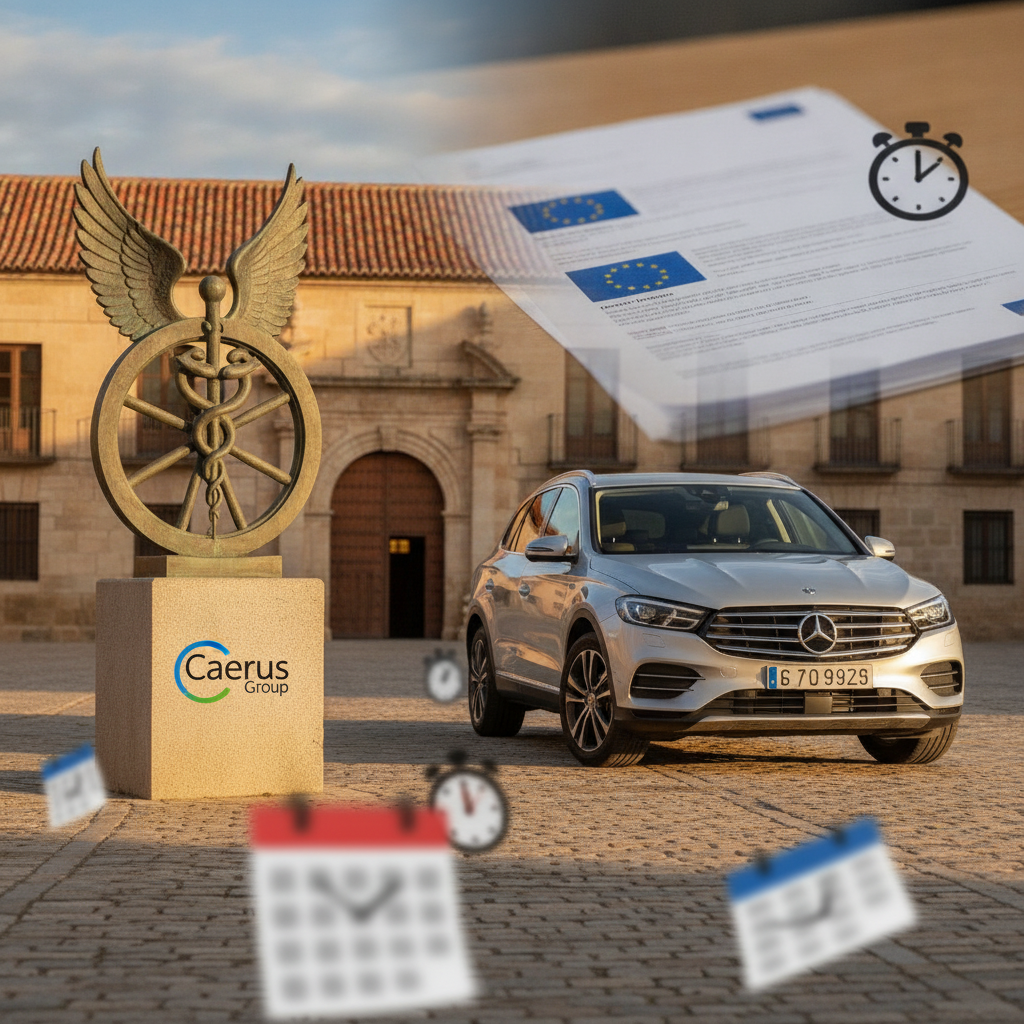
Moving to Spain is an exciting journey filled with the promise of sunny Mediterranean coastlines, vibrant cultural heritage, and a relaxed lifestyle. Many expatriates and international professionals choose to bring their personal vehicles with them to maintain their mobility and comfort. However, the administrative side of relocating a vehicle can be complex. At Caerus Group, we specialize not only in providing high-quality vehicles but also in streamlining the bureaucratic process of vehicle registration for our clients. One of the most frequent questions we receive concerns the legal timeframe for this process: what exactly is the deadline for registering a foreign car in Spain?
The 30-Day Rule for New Residents
The legal framework in Spain is quite specific regarding how long you can drive a car with foreign plates. If you have moved to Spain and have become a legal resident, the clock starts ticking almost immediately. According to Spanish law, the standard deadline for registering a foreign car in Spain is 30 days from the moment you establish residency. This timeframe is strictly enforced, and failing to initiate the process within this month-long window can lead to significant administrative hurdles and financial penalties.
It is important to distinguish between being a tourist and being a resident. Tourists or non-residents visiting Spain can typically use their foreign-registered vehicles for up to six months within a calendar year. However, the moment you obtain your NIE (Número de Identidad de Extranjero) and register on the Padron (municipal census) with the intent to reside permanently, the 30-day requirement applies. At Caerus Group, we advise our clients to begin gathering documentation even before their arrival to ensure they do not miss this critical window.
The Technical Inspection (ITV) Process
Before you can finalize your registration with the DGT (Dirección General de Tráfico), your vehicle must undergo a specific type of technical inspection known as the ITV (Inspección Técnica de Vehículos). This is not a standard annual check-up; it is a specialized inspection for the "homologation" of a foreign vehicle to ensure it meets Spanish safety and environmental standards. You will need to provide the original vehicle documentation and a technical data sheet (Ficha Técnica).
For vehicles purchased within the European Union, the process is generally smoother due to harmonized standards. However, vehicles imported from outside the EU (such as the United States or the UK post-Brexit) may require additional modifications or a "Unitary Homologation" if the vehicle does not have a European Certificate of Conformity (COC). Navigating these technical requirements is a core part of the services we offer at Caerus Group, ensuring your car meets all local regulations without unnecessary delays.
Tax Obligations and Exemptions
A major component of the registration process involves the Spanish Tax Agency. When registering a foreign car, you are typically required to pay the Special Tax on Certain Means of Transport (Impuesto Especial sobre Determinados Medios de Transporte), often referred to as the "Matriculation Tax." The amount is calculated based on the vehicle's CO2 emissions and its current market value. Additionally, you must pay the local Road Tax (IVTM) to the town hall where you are registered.
There is, however, a significant financial benefit for those moving to Spain for the first time. If you register your vehicle as part of a "transfer of residence," you may be eligible for an exemption from the Matriculation Tax. To qualify, you must have owned the vehicle for at least six months prior to moving and must apply for the exemption within 60 days of becoming a resident. Even though you have 60 days to claim the tax exemption, remember that the deadline for registering a foreign car in Spain remains 30 days for the physical registration and license plate change. For more detailed official information on tax rates, you can visit the Spanish Tax Agency (Agencia Tributaria) website.
Consequences of Missing the Deadline
Ignoring the deadline for registering a foreign car in Spain can result in more than just a stern warning. If the authorities stop you and determine that you are a resident driving a foreign-plated vehicle beyond the 30-day grace period, they have the power to impound the vehicle. Furthermore, fines can be substantial, often ranging from several hundred to several thousand euros depending on the value of the car and the taxes that should have been paid.
Moreover, your insurance coverage could be at risk. Most foreign insurance companies will not cover a vehicle that is being used permanently in another country. If you are involved in an accident and your car is not properly registered in Spain, your insurer may refuse to pay the claim, leaving you with total financial liability. This risk alone makes it imperative to handle the registration process promptly and correctly.
How Caerus Group Simplifies the Transition
At Caerus Group, we understand that your time is valuable and that Spanish bureaucracy can be intimidating. We offer a comprehensive "turnkey" service for individuals bringing their vehicles to Spain. From coordinating the ITV inspection and managing the technical documentation to calculating taxes and filing the final paperwork with the DGT, our team handles every detail.
We take the stress out of the deadline for registering a foreign car in Spain. By entrusting us with the process, you ensure that your vehicle is legalized efficiently, allowing you to enjoy the Spanish roads with peace of mind. Whether you are bringing a luxury SUV, a classic car, or a family vehicle, our expertise ensures a seamless transition to Spanish plates. Don't let paperwork dampen the excitement of your new life in Spain—let the experts at Caerus Group drive the process for you.
Conclusion
In summary, while the process involves multiple steps—including technical inspections, tax filings, and local government registrations—the most important factor to keep in mind is the timeline. The 30-day deadline for registering a foreign car in Spain is the key to avoiding fines and ensuring your vehicle remains legal on the road. By acting quickly and seeking professional assistance, you can navigate these requirements successfully and focus on what really matters: enjoying your new journey in Spain.