
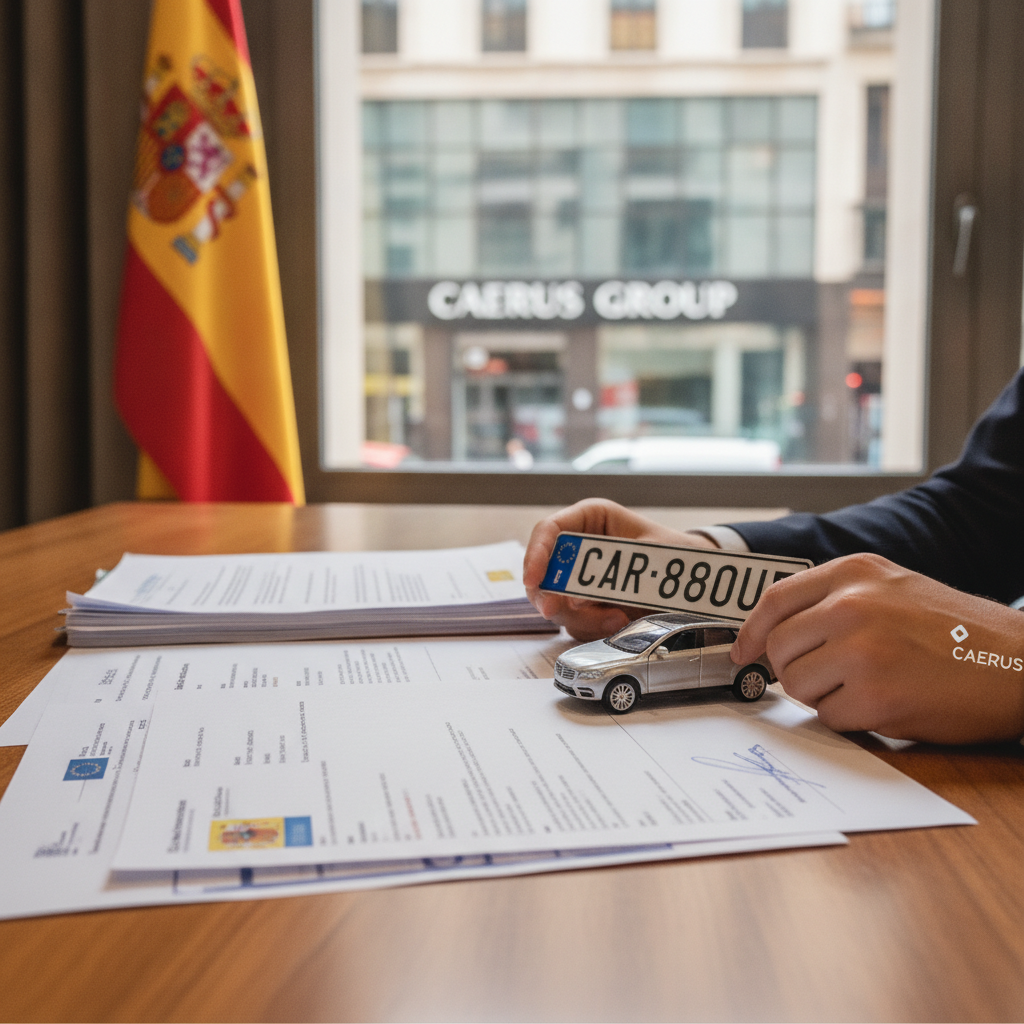
Bringing a vehicle into Spain, whether you are moving here permanently or have purchased a dream car from another European country, is an exciting milestone. However, the administrative process that follows can often feel like a complex maze of bureaucracy. At Caerus Group, we understand that your time is valuable. As specialists in both car sales and vehicle registrations, we have helped hundreds of clients navigate the Spanish system. One of the most common questions we receive relates to the specific documentation required to get a foreign car legal on Spanish roads.
In this comprehensive guide, we will break down the necessary paperwork for registering a car from abroad to ensure you are fully prepared for the transition. From technical inspections to tax obligations, knowing what to prepare in advance can save you weeks of delays and unexpected costs.
The Importance of the Certificate of Conformity (COC)
The first and perhaps most vital document you will need is the Certificate of Conformity, commonly known as the COC. This document is issued by the vehicle manufacturer and proves that the car meets the required technical standards for the European Union. It contains detailed technical specifications, including CO2 emissions, which are crucial for calculating your registration taxes in Spain.
If your vehicle was manufactured for a market outside the EU, or if you do not have the COC, you may need to undergo a "Ficha Técnica Reducida." This is an equivalent document prepared by a certified Spanish engineer. At Caerus Group, we frequently assist our clients in obtaining this technical sheet to ensure the vehicle aligns with Spanish regulations before proceeding to the next steps.
Navigating the ITV: The Technical Inspection
Even if your car has a valid technical inspection from its country of origin (such as a MOT from the UK or a TUV from Germany), it must pass a Spanish ITV (Inspección Técnica de Vehículos) specifically for registration purposes. This is known as an "ITV por matriculación."
During this inspection, the technicians will verify that the vehicle matches the data provided in the COC or the Ficha Técnica Reducida. They will also check for specific Spanish road safety requirements, such as the alignment of headlights and the presence of approved safety equipment. Once the car passes, the ITV station will issue the Spanish technical card, which is a mandatory requirement for the next phase of the process. Having the right necessary paperwork for registering a car from abroad ready at this stage is essential to avoid a "fail" status based purely on missing administrative data.
Tax Obligations and Financial Documentation
Registering a car from abroad involves several tax payments. The Spanish Tax Agency (Agencia Tributaria) requires proof that all duties have been settled. First, there is the "Impuesto Especial sobre Determinados Medios de Transporte" (Registration Tax), which is calculated based on the car's CO2 emissions. For vehicles with low emissions, this tax might be zero, but for high-emission vehicles, it can be a significant percentage of the car's current market value.
In addition to the registration tax, you must provide proof of payment for the "Impuesto de Circulación" (IVTM), which is the annual road tax paid to the local town hall where you are registered as a resident. Furthermore, if you purchased the car from a professional dealer in another EU country, you must show an invoice with a clear VAT (IVA) breakdown. If the purchase was between individuals, you may be required to pay the "Impuesto de Transmisiones Patrimoniales" (Property Transfer Tax).
For vehicles imported from outside the European Union, the process is even more rigorous. You will need the DUA (Documento Único Administrativo), which proves the vehicle has cleared customs and that the relevant import duties and VAT have been paid at the border.
Final Steps with the DGT
Once you have your technical card from the ITV and proof of all tax payments, the final step is to submit your application to the Dirección General de Tráfico (DGT). The DGT is the official body responsible for issuing your Spanish license plate number and your "Permiso de Circulación" (Registration Certificate).
To complete this final step, you will need to present your identification (DNI or NIE), proof of address (Empadronamiento), and the original registration documents from the country of origin. The DGT will keep the foreign documents and issue you the new Spanish ones. Once you have the new registration number, you can order your physical plates and secure Spanish car insurance, which is mandatory before you can legally drive on public roads.
Why Choose Caerus Group for Your Registration Needs?
The list of necessary paperwork for registering a car from abroad can be overwhelming for those unfamiliar with the Spanish administrative language and digital platforms. Missing a single document or miscalculating a tax form can lead to the DGT rejecting your application, resulting in a loss of time and money.
At Caerus Group, we act as your professional "Gestoría" and automotive partner. We handle the entire process from start to finish. Our team ensures that every piece of documentation is accounted for, translates foreign invoices if necessary, and coordinates with the ITV stations and Tax Agency on your behalf. Whether you are buying a car from our premium inventory or bringing your own vehicle from home, we ensure that your transition to Spanish plates is seamless and stress-free.
Don't let bureaucracy stand in the way of your mobility in Spain. By preparing the necessary paperwork for registering a car from abroad in advance and partnering with experts like Caerus Group, you can enjoy the Spanish roads with total peace of mind and legal security. Contact us today to learn more about how we can help you with your vehicle registration and importation needs.