
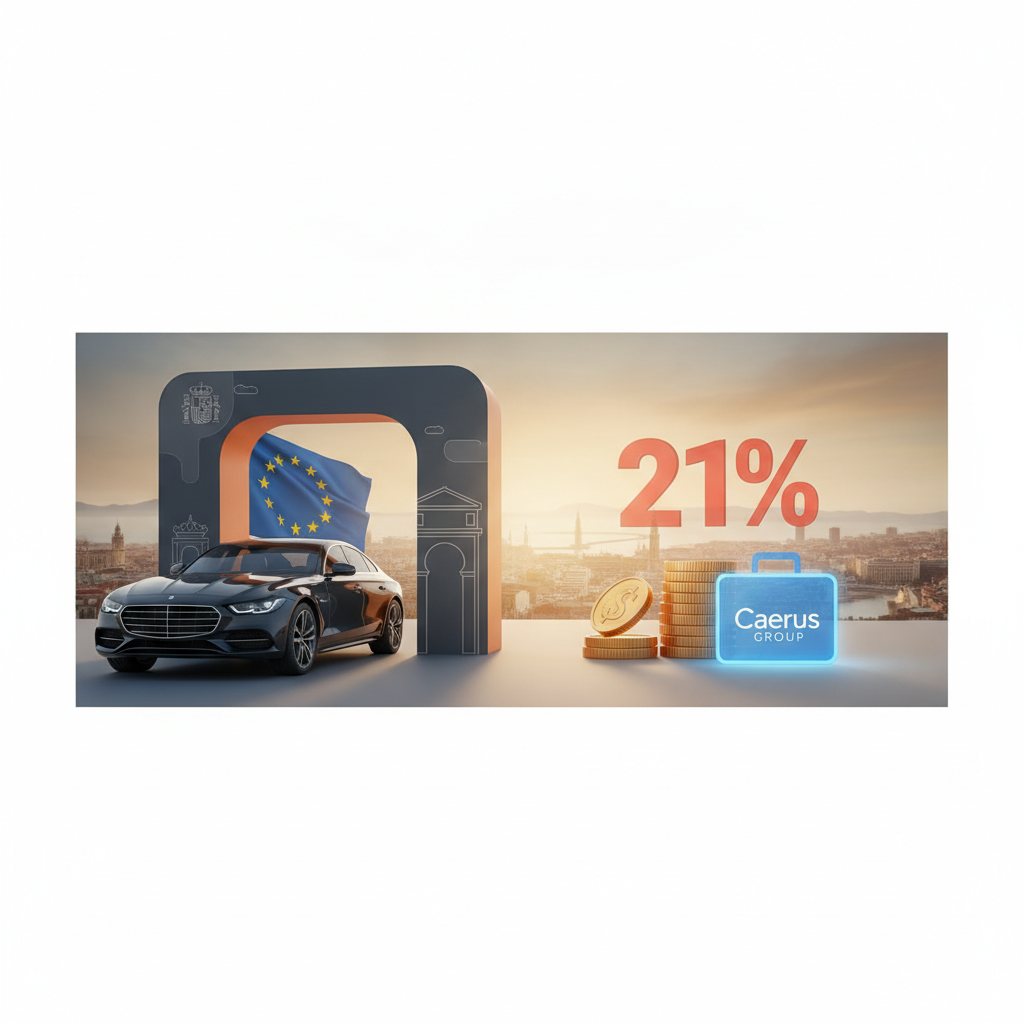
At Caerus Group, we understand that the allure of the international car market is stronger than ever. Whether you are looking for a specific high-end model from Germany, a classic from Italy, or a cost-effective vehicle from another European neighbor, importing a car to Spain is a popular choice for many enthusiasts and practical buyers alike. However, the process involves more than just finding the perfect vehicle and driving it across the border. One of the most critical aspects of this transition is understanding the fiscal responsibilities involved, specifically regarding Value Added Tax (VAT), or "IVA" as it is known in Spain.
Navigating the legalities of paying VAT on an imported car in Spain can be complex, as the rules change depending on where the car comes from and whether it is considered new or used by the Spanish Tax Agency. In this comprehensive guide, we will break down everything you need to know to ensure your vehicle is registered correctly and you remain compliant with Spanish tax laws.
Distinguishing Between New and Used Vehicles
Before diving into the payment process, it is essential to understand how the Spanish authorities define a vehicle's status. This distinction significantly affects how much you will pay and the administrative path you must follow. For tax purposes, a vehicle is considered "new" if it meets either of the following criteria:
- It has been driven for fewer than 6,000 kilometers.
- It was sold less than six months after its first registration.
If the vehicle exceeds both of these limits—meaning it has more than 6,000 kilometers on the odometer AND was first registered more than six months ago—it is classified as a "used" vehicle. This distinction is vital when paying VAT on an imported car in Spain because new vehicles are always subject to VAT in the country of destination (Spain), regardless of where they were purchased within the EU.
Importing a Vehicle from Within the European Union
If you are purchasing a car from another EU member state, the VAT rules depend on the status of the seller and the vehicle. This is where most buyers find the process slightly confusing, but Caerus Group is here to clarify the scenarios.
If you buy a new car from an EU dealer, you should ideally buy it net of VAT in the country of origin and pay the 21% Spanish VAT upon arrival. If you buy a used car from a professional dealer in the EU, the VAT is usually included in the price under the specific margin scheme of that country, meaning you may not have to pay additional VAT in Spain, although you will still be liable for the Registration Tax (Impuesto de Matriculación).
However, if you are a private individual buying a used car from another private individual in the EU, you do not pay VAT. Instead, you are required to pay the Property Transfer Tax (Impuesto de Transmisiones Patrimoniales or ITP), which varies depending on the Spanish Autonomous Community where you reside, typically ranging from 4% to 8% of the vehicle's official value.
Importing from Outside the European Union (Non-EU Countries)
When you bring a vehicle from outside the European Union (for example, from the United States, Japan, or post-Brexit United Kingdom), the process becomes a formal "importation." This means the vehicle must pass through customs.
In this scenario, paying VAT on an imported car in Spain is mandatory. You will be required to pay 21% VAT on the total value of the vehicle plus the cost of transport and any applicable customs duties. Customs duties generally hover around 10% for passenger cars. You will also need to complete the Single Administrative Document (DUA), which serves as the customs declaration. At Caerus Group, we often assist clients with this heavy paperwork to ensure the vehicle is cleared without unnecessary delays or fines.
For more detailed information on official customs procedures and current tax rates, you can visit the official website of the Spanish Tax Agency (Agencia Tributaria).
The Administrative Process: Forms and Deadlines
Once the vehicle is in Spain, you have a limited window to settle your tax obligations. If you are required to pay VAT (for example, on a new car bought in the EU), you must file Modelo 309. This form is used for non-periodic VAT declarations and must be submitted to the Tax Agency within 30 days of the vehicle's entry into Spain.
Failure to meet these deadlines can result in surcharges and interest. Furthermore, without the proof of VAT payment or exemption, the DGT (Dirección General de Tráfico) will not allow you to complete the registration process or issue Spanish license plates. This is why having a partner like Caerus Group is invaluable; we handle the filing of these forms as part of our comprehensive registration service.
Beyond VAT: The Registration Tax (Impuesto de Matriculación)
While the focus of this guide is paying VAT on an imported car in Spain, it is important to remember that VAT is only one part of the fiscal equation. Almost all cars imported to Spain must also pay the Registration Tax (Modelo 576).
Unlike VAT, which is a flat 21%, the Registration Tax is based on the vehicle's CO2 emissions. The cleaner the car, the less you pay:
- 0g/km to 120g/km: 0%
- 121g/km to 159g/km: 4.75%
- 160g/km to 199g/km: 9.75%
- 200g/km or more: 14.75%
Electric vehicles and highly efficient hybrids often benefit from a 0% rate, making them very attractive options for importation.
Why Choose Caerus Group for Your Car Importation?
At Caerus Group, we are more than just a dealership. We are specialists in the logistics and legalities of the Spanish automotive market. We know that the dream of owning a high-quality imported car can quickly turn into a bureaucratic headache if you are not familiar with the local tax system.
Our team handles the entire lifecycle of the import: from sourcing the vehicle and inspecting its condition to managing the transport and, most importantly, settling all tax duties. We ensure that paying VAT on an imported car in Spain is handled accurately, ensuring you don't pay a cent more than necessary and that your vehicle is fully legal to drive on Spanish roads as quickly as possible.
Whether you are moving to Spain and bringing your personal car with you, or you are a resident looking to purchase a specific model from abroad, Caerus Group provides the expertise needed to navigate the "ITV" inspections, customs clearances, and tax filings with ease. Let us handle the paperwork while you enjoy the drive.
Importing a vehicle is a rewarding way to get exactly the car you want. By understanding the rules regarding VAT and other taxes, you can budget effectively and avoid surprises. If you have questions about a specific vehicle or need assistance with your registration, contact Caerus Group today. We make car importation simple, transparent, and stress-free.