
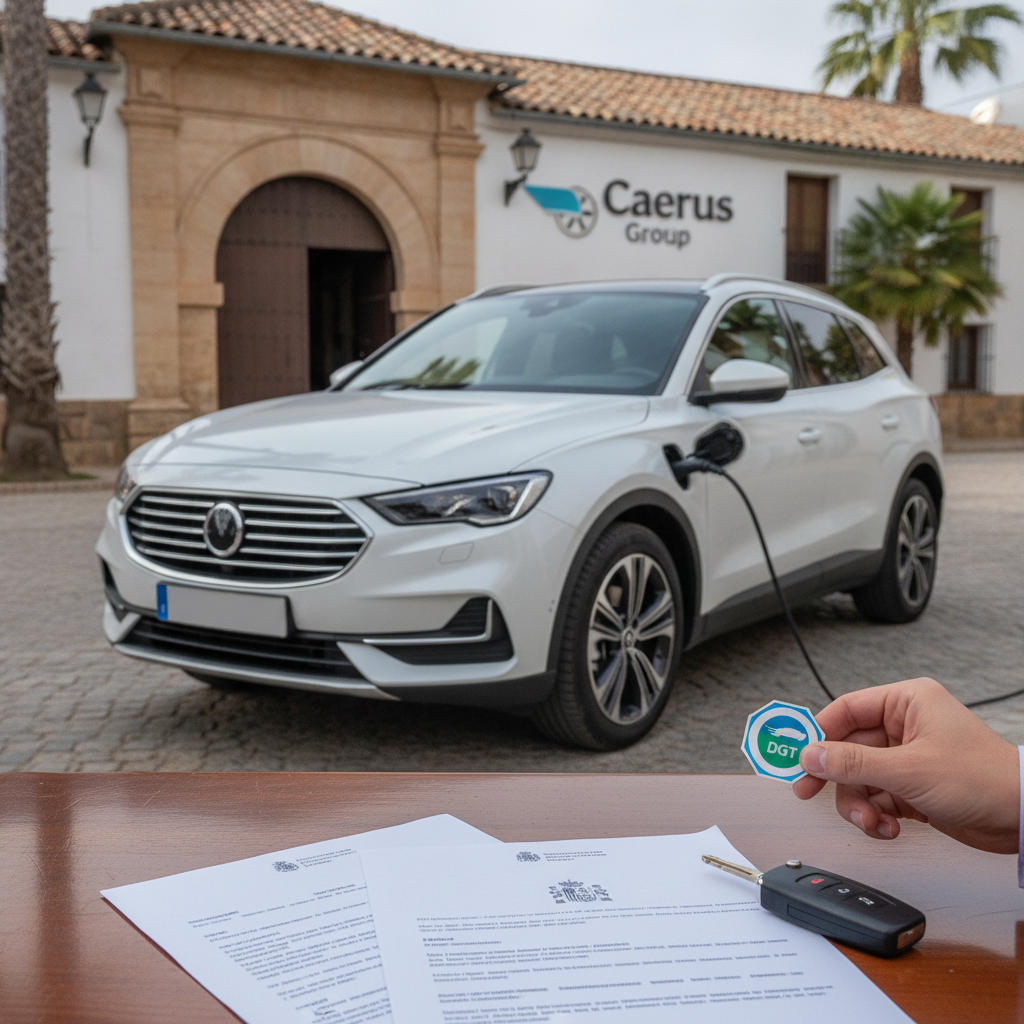
The transition toward sustainable mobility is no longer a future prospect; it is a current reality in Spain. As low-emission zones (Zonas de Bajas Emisiones or ZBE) become mandatory in many Spanish cities, more drivers are looking to import high-efficiency vehicles from abroad. However, the administrative process can be daunting. At Caerus Group, we specialize not only in providing high-quality vehicles but also in managing the complex procedures involved in registering a foreign plug-in hybrid car and DGT labels to ensure your transition to Spanish roads is seamless.
The Appeal of Plug-in Hybrids in the Spanish Market
Plug-in Hybrid Electric Vehicles (PHEVs) offer the perfect middle ground for drivers who want the environmental benefits of an electric motor without the range anxiety often associated with fully electric cars. When you bring a PHEV from another country—whether it is a luxury SUV from Germany or a compact commuter from France—you are investing in a vehicle that is highly favored by Spanish regulations. However, to enjoy the perks of driving such a vehicle, you must navigate the legal requirements of "matriculación" or registration.
The process of registering a foreign plug-in hybrid car and DGT labels requires a clear understanding of both technical inspections and tax obligations. Since these vehicles have both an internal combustion engine and a battery that can be charged via an external power source, their classification is specific and carries significant advantages in terms of urban mobility and taxation.
Step 1: Necessary Documentation for Importing Your PHEV
Before the car even touches Spanish soil, or immediately upon arrival, you must gather specific documentation. The most critical document is the Certificate of Conformity (COC). This document, provided by the manufacturer, contains all the technical specifications of the vehicle, including its CO2 emissions and its electric-only range. These two factors are vital for determining which DGT label your car will receive and how much you will pay in registration taxes.
In addition to the COC, you will need the original registration documents from the country of origin, a commercial invoice (if purchased from a dealership), or a contract of sale translated into Spanish (if purchased from an individual). At Caerus Group, we assist our clients in verifying that all foreign paperwork meets the stringent requirements of the Spanish authorities to avoid delays.
Step 2: Passing the Spanish Technical Inspection (ITV)
Every imported vehicle must pass a specific type of technical inspection known as the "ITV de matriculación." This is not a standard annual check-up; it is an exhaustive verification to ensure the car complies with Spanish road safety and environmental standards. For plug-in hybrids, the technicians will verify the electrical system and the battery's specifications as stated in the COC.
One of the common hurdles in registering a foreign plug-in hybrid car and DGT labels is ensuring that the vehicle's technical data sheet (Ficha Técnica) is correctly generated during this inspection. This document will later be used by the DGT to assign your environmental badge. Ensuring your vehicle is in top condition before this appointment is crucial, and Caerus Group provides pre-ITV checks to guarantee a passing grade on the first attempt.
Step 3: Taxes and Financial Obligations
One of the biggest advantages of registering a plug-in hybrid in Spain is the tax relief. The Registration Tax (Impuesto de Matriculación) is based on CO2 emissions. Most modern PHEVs emit less than 120g/km of CO2, which often means they are exempt from this tax. Furthermore, if the vehicle emits less than 50g/km, the savings are even more substantial.
However, you must still settle the Impuesto de Tracción Mecánica (IVTM), commonly known as "numerito," with the local town hall where you are resident. Many municipalities in Spain offer discounts of up to 75% for "Zero" or "Eco" labeled vehicles. Managing these payments accurately is a core part of the service we offer at Caerus Group, ensuring you don't pay a cent more than necessary.
Understanding the DGT Environmental Labels
The "Distintivo Ambiental" or DGT label is perhaps the most important sticker on your windshield. In Spain, the Dirección General de Tráfico (DGT) categorizes vehicles based on their environmental impact. For plug-in hybrids, there are generally two categories:
1. The '0 Emissions' Label (Blue)
To obtain the coveted blue "0" label, your plug-in hybrid must have an electric-only range of more than 40 kilometers. This label grants you the ultimate freedom in Spanish cities, allowing you to drive in restricted areas, park for free or at reduced rates in regulated zones, and use high-occupancy vehicle (BUS-VAO) lanes even when driving alone.
2. The 'Eco' Label (Blue and Green)
If your imported plug-in hybrid has an electric range of less than 40 kilometers, it will be classified with the "Eco" label. While not as powerful as the "0" label, it still provides significant benefits, such as access to most low-emission zones and discounts on parking and tolls.
When registering a foreign plug-in hybrid car and DGT labels, Caerus Group ensures that your vehicle is correctly categorized so you can maximize these benefits from day one.
Why Professional Management Matters
Attempting to handle the registration of a foreign vehicle independently can lead to weeks of bureaucratic headaches, incorrect tax filings, and even the wrong DGT label assignment. The Spanish system requires precise digital certifications and appointments that can be difficult to secure.
At Caerus Group, we act as your legal and technical representative. We understand the nuances of the "Matriculación" process for foreign vehicles. We handle the communication with the Tax Agency (Agencia Tributaria), the DGT, and the ITV stations. Our goal is to hand you the keys to your car along with its new Spanish license plates and its corresponding DGT label, ready for you to enjoy the Spanish roads without worry.
Conclusion
Registering a foreign plug-in hybrid car and DGT labels is a smart move for any resident in Spain looking to combine luxury, efficiency, and legal compliance. While the process involves multiple steps—from technical inspections to tax exemptions—the rewards of driving a "Zero" or "Eco" labeled vehicle in modern Spanish cities are unparalleled. Whether you are bringing your own car from abroad or looking for a professional team to source and register one for you, Caerus Group is your trusted partner in Spain. Let us handle the paperwork while you enjoy the drive.