
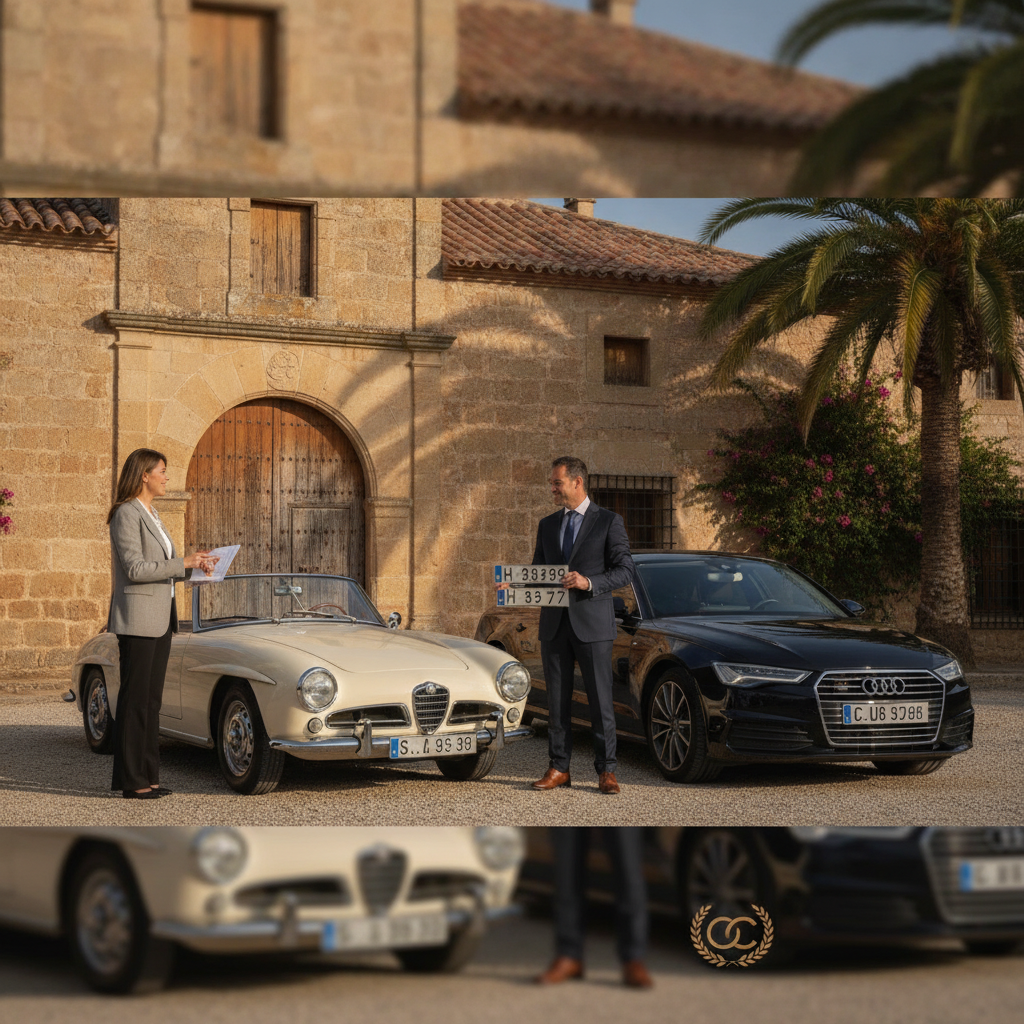
Bringing a vintage vehicle into Spain is a dream for many automotive enthusiasts. Whether it is a sleek Italian roadster from the 60s, a rugged American muscle car, or a refined British touring car, the allure of driving a piece of history along the Mediterranean coast is undeniable. however, the administrative journey can often feel like a labyrinth. At Caerus Group, we specialize in making this transition seamless. If you are looking into the process of registering a foreign classic car (matricular coche extranjero histórico), this guide will walk you through everything you need to know to get your prized possession legal on Spanish roads.
Understanding the "Historic" Classification in Spain
In Spain, not every old car qualifies for the "Vehículo Histórico" (Historic Vehicle) designation. As of recent legislative updates, a vehicle must generally be at least 30 years old from its date of manufacture or first registration to even be considered. Furthermore, the vehicle must be in its original state, without significant modifications to its engine, brakes, steering, or bodywork.
The process of registering a foreign classic car is distinct from a standard vehicle import. While a modern car simply needs to meet current Euro emissions standards and safety regulations, a historic car is judged on its preservation and cultural value. This classification offers several advantages, including longer intervals between mandatory technical inspections (ITV), exemptions from certain environmental restrictions in major cities like Madrid and Barcelona, and potential discounts on municipal road taxes.
The Step-by-Step Process of Registering a Foreign Classic Car
The journey from a foreign garage to Spanish plates involves several distinct phases. At Caerus Group, we manage these steps for our clients to ensure no detail is overlooked.
1. Obtaining a Technical Report and Certification
The first step involves an inspection by an official Laboratory of Automotive Excellence. They will verify the authenticity of the vehicle and its components. This laboratory issues a report certifying that the vehicle meets the requirements to be classified as "historic." This report is then sent to the regional government (Comunidad Autónoma) where you reside for official approval.
2. The Special ITV Inspection
Once you have the regional approval, the vehicle must undergo a specific Technical Vehicle Inspection (ITV) for historic vehicles. Unlike a standard ITV, this inspection focuses on ensuring the car is safe to drive while respecting the technical standards of the era in which it was built. You will need to provide the original foreign documentation of the car during this visit.
3. Payment of Taxes and Customs
If the vehicle is coming from outside the European Union, you will need to clear customs and pay the relevant VAT (IVA) and import duties. For vehicles coming from within the EU, the process is simpler, but you must still settle the "Impuesto Especial sobre Determinados Medios de Transporte" (Registration Tax). Depending on the age and emissions, some historic vehicles may be eligible for reductions, though the calculations can be complex.
4. Final Registration with the DGT
The final step is the formal registration with the Dirección General de Tráfico (DGT). Here, you will submit all the gathered documentation, including the ITV card, proof of tax payment, and the historic certification. Once processed, you will receive your new Spanish registration document (Permiso de Circulación) and your historic license plates, which begin with the letter "H".
Why Classification Matters: The Benefits
You might wonder if registering a foreign classic car as historic is worth the extra effort compared to a standard registration. The benefits are significant. Firstly, the ITV frequency is reduced; depending on the age of the car, you may only need to pass the inspection every two to four years. Secondly, many insurance companies offer specialized "classic car" policies at much lower rates because they recognize that these vehicles are usually driven less frequently and maintained with high levels of care.
Additionally, with the rise of Low Emission Zones (ZBE) across Spanish cities, historic status often provides a legal loophole, allowing these beautiful machines to enter city centers where other older, non-historic cars are banned. This ensures that your investment remains functional and enjoyable, rather than just a museum piece in your garage.
Common Challenges and How Caerus Group Can Help
The most common hurdles involve missing documentation from the country of origin or non-original modifications that were added over the decades. If a classic car has a modern engine swap, it may fail the historic certification process. At Caerus Group, we perform a pre-assessment of your vehicle's paperwork and physical condition before starting the legal process. We coordinate with laboratories, engineers, and the DGT to ensure that registering a foreign classic car is a success.
We understand that your car is more than just a vehicle; it is an investment and a passion. Our team handles the bureaucratic burden, from translating foreign documents to representing you at the traffic office, so you can focus on the road ahead.
Conclusion: Ready to Drive Your Classic in Spain?
Registering a foreign classic car in Spain is a rewarding process that preserves automotive heritage while giving you the freedom to enjoy your vehicle under the Spanish sun. While the administrative requirements are rigorous, the result is a fully legal, protected, and tax-efficient historic vehicle.
If you have recently purchased a classic car abroad or are planning to move to Spain with your vintage collection, contact Caerus Group today. Our expertise in vehicle matriculation and our passion for classic motoring make us the perfect partner for your automotive journey. Let us handle the paperwork while you prepare for your first drive through the scenic routes of the Costa del Sol or the rolling hills of Andalusia.