
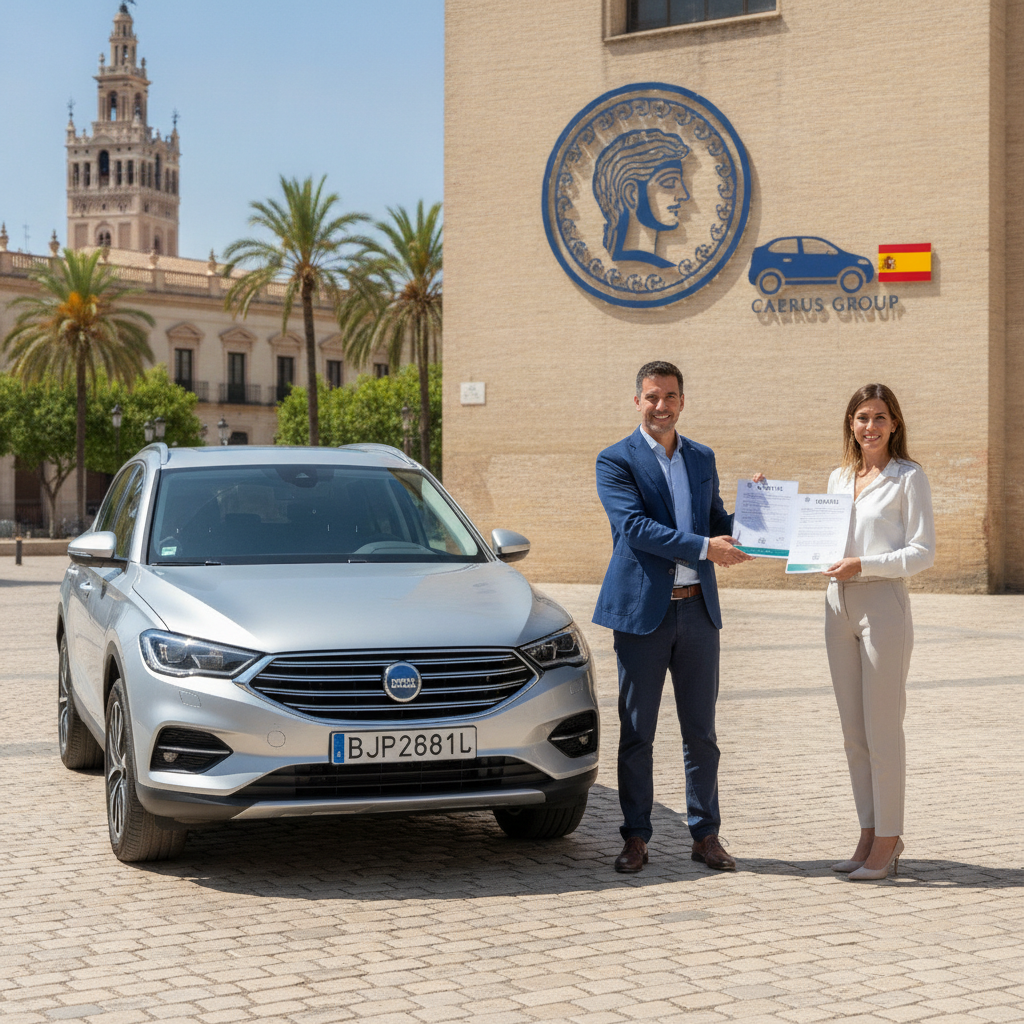
The automotive market in the European Union offers a wealth of opportunities for buyers looking for specific models, better prices, or vehicles in excellent condition. For those living in Spain, the proximity to Portugal makes it an incredibly attractive destination for purchasing a vehicle. However, the process of bringing a vehicle across the border involves more than just a scenic drive. Understanding the legalities of registering a car from Portugal is essential to avoid fines and ensure your new acquisition is fully road-legal on Spanish soil.
At Caerus Group, we specialize in both high-quality vehicle sales and comprehensive administrative services. We understand that the bureaucracy involved in importing a car can be daunting. Whether you have already purchased a vehicle in Lisbon or Porto, or you are considering doing so, this guide will walk you through everything you need to know about the registration process in Spain.
Why Consider Registering a Car from Portugal?
Many Spanish drivers turn to the Portuguese market for several reasons. In some cases, specific trim levels or engine configurations are available in Portugal that were not marketed extensively in Spain. Furthermore, the second-hand market in Portugal often features vehicles that have been well-maintained due to strict local regulations. However, the true challenge begins once the vehicle crosses the border. Registering a car from Portugal requires a sequence of technical inspections, tax payments, and administrative filings that must be executed in a specific order.
Navigating these steps alone can lead to delays and unexpected costs. That is why having a partner like Caerus Group can make a significant difference. We handle the paperwork so you can focus on enjoying your vehicle.
Step 1: Gathering the Necessary Documentation
Before you even leave Portugal, you must ensure you have the correct documentation from the seller. Without these papers, registering a car from Portugal becomes nearly impossible. You will need the original Portuguese vehicle documents, known as the Documento Único Automóvel (DUA). This document contains all the technical specifications and ownership history of the car.
In addition to the DUA, you must have a sales contract if you bought the car from an individual, or a commercial invoice if you purchased it from a dealership. If the invoice does not include the VAT (IVA) details, you may be required to prove its payment or settle the corresponding taxes in Spain. Another vital document is the Certificate of Conformity (COC). The COC proves that the vehicle meets the technical standards required by the European Union. If the vehicle does not have a COC, you may need to undergo a reduced technical inspection file (Ficha Técnica Reducida).
Step 2: The Technical Inspection (ITV)
Once the car is in Spain, the first physical requirement is passing the Inspección Técnica de Vehículos (ITV). This is not a standard annual inspection; it is a specific "non-resident" or "importation" inspection. The engineers at the ITV station will verify that the vehicle’s characteristics match the documentation provided and that it complies with Spanish road safety regulations.
During this process, the station will issue the Spanish technical card (Tarjeta de ITV). This is a crucial document for the subsequent steps of registering a car from Portugal. It is highly recommended to ensure the vehicle is in peak mechanical condition before attending this appointment to avoid a "failed" result, which would stall the entire registration process.
Step 3: Settling the Tax Obligations
Importing a vehicle involves financial responsibilities toward the Spanish Treasury. There are three main taxes you need to consider. First is the Special Tax on Certain Means of Transport (IEDMT), commonly known as the registration tax. The amount depends on the CO2 emissions of the vehicle. For cars with very low emissions, this tax might be zero, while high-emission vehicles can face significant charges.
Second, if you purchased the car from a private individual, you must pay the Property Transfer Tax (ITP). If you purchased from a professional, VAT rules apply. Third, you must pay the local Road Tax (IVTM) to the town hall where you are registered as a resident. Managing these payments requires interacting with the Agencia Tributaria (Spanish Tax Agency) and your local municipal office.
Step 4: Final Registration with the DGT
The final step in registering a car from Portugal is the formal application at the Dirección General de Tráfico (DGT). Once all taxes are paid and the ITV is passed, you must submit the complete dossier to the DGT. They will then assign a Spanish registration number to the vehicle and issue the "Permiso de Circulación" (Circulation Permit).
With this permit in hand, you can finally purchase your Spanish license plates and have them fitted to the car. Do not forget that you must also secure a Spanish insurance policy at this stage, as your Portuguese insurance may no longer be valid once the vehicle is registered under Spanish plates.
How Caerus Group Can Help
The process of registering a car from Portugal involves multiple steps across different government agencies, each with its own set of requirements and potential pitfalls. At Caerus Group, we have years of experience handling these exact procedures. We act as your administrative representative, ensuring that every document is correctly filed and every tax is accurately calculated.
By choosing Caerus Group, you avoid the long queues at the ITV stations, the confusion of tax forms, and the stress of dealing with the DGT. Our goal is to provide a seamless transition for your vehicle, ensuring that you are legally compliant and ready to drive on Spanish roads as quickly as possible. Whether you are an expat moving to Spain with your Portuguese car or a local enthusiast importing a specific model, we are here to provide the expertise you need.
If you are currently in the process of or considering registering a car from Portugal, contact Caerus Group today. Let our professional team handle the bureaucracy while you enjoy the freedom of the road.