
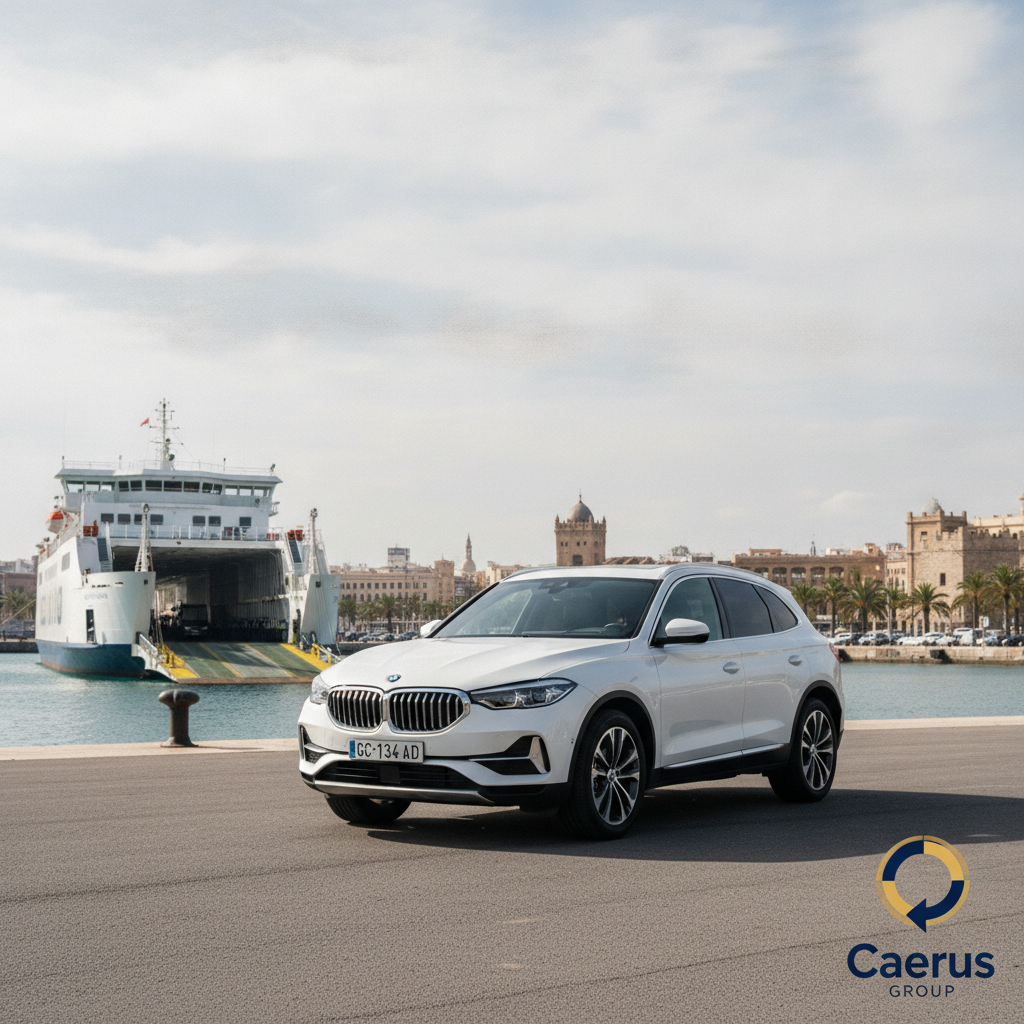
Relocating from the beautiful Canary Islands to the Spanish mainland is an exciting transition, but it often comes with a complex set of administrative hurdles. One of the most common challenges for residents moving across the Atlantic is the process of bringing their vehicle along. While both regions are part of Spain, they operate under different tax jurisdictions. This means that registering a car from the Canary Islands in the mainland involves more than just a long ferry ride; it requires a specific legal procedure to ensure the vehicle complies with Peninsular regulations.
Understanding the Tax Differences
The primary reason why the process is specialized is the fiscal distinction between the Canary Islands and mainland Spain. The archipelago operates under the Canary Islands General Indirect Tax (IGIC), while the mainland uses Value Added Tax (VAT), known in Spain as IVA. Because the Canary Islands are considered a "third territory" for VAT purposes, moving a vehicle to the mainland is technically treated as an import.
When you begin the journey of registering a car from the Canary Islands in the mainland, you must account for the Single Administrative Document (DUA). This document is essential for clearing customs. Without it, the vehicle cannot be legally registered or driven on the mainland for an extended period. At Caerus Group, we specialize in navigating these fiscal complexities to ensure our clients don’t face unexpected fines or delays at the port.
Steps to Successfully Register Your Vehicle
The process of registering a car from the Canary Islands in the mainland follows a specific sequence of bureaucratic steps. Skipping any of these can result in the vehicle being impounded or the owner facing significant tax penalties.
1. Customs Clearance and the DUA
The first step occurs at the point of entry. You must declare the vehicle to the Spanish Tax Agency (Agencia Tributaria). The DUA (Documento Único Administrativo) is the core document here. You will need to prove the value of the car and, in many cases, pay the difference in taxes unless you qualify for an exemption. You can find detailed information on tax obligations on the official Agencia Tributaria website.
2. The Technical Inspection (ITV)
Once the car has cleared customs, it must pass a Spanish Technical Inspection (ITV). Even if your vehicle had a valid ITV in Tenerife or Gran Canaria, you often need a specific inspection for the "change of residence" or "import" process to verify that the vehicle meets the technical standards required on the mainland. This inspection results in a new technical sheet (Ficha Técnica) which is vital for the final registration.
3. Payment of Registration Tax (IEDMT)
The Special Tax on Certain Means of Transport (IEDMT), commonly known as the registration tax, is calculated based on the CO2 emissions of the vehicle. If your car is older or has high emissions, this cost can be substantial. However, there are specific scenarios where this tax can be waived, particularly if you are moving due to a change of residence.
Exemptions for Change of Residence
The most common way to save money when registering a car from the Canary Islands in the mainland is by claiming an exemption due to a change of residence. If you have lived in the Canary Islands for at least twelve consecutive months and have owned the vehicle for at least six months prior to the move, you may be eligible to avoid paying IVA and the Registration Tax.
To qualify for this, you must apply within a specific timeframe—usually within six months of arriving on the mainland. You will need to provide your "Certificado de Empadronamiento" (census certificate) from both your previous Canary Island municipality and your new mainland address to prove the relocation. Documentation proving the cancellation of your residence in the islands is also frequently required.
Required Documentation Checklist
To ensure a smooth process with the DGT (Dirección General de Tráfico), you should have the following documents ready:
- Original vehicle registration certificate (Permiso de Circulación).
- The new Technical Inspection card (Ficha Técnica).
- The DUA provided by customs.
- Proof of payment (or exemption) of the IEDMT tax.
- Proof of payment of the IVTM (Mechanical Traction Vehicle Tax) to your new local town hall.
- Identification (DNI, NIE, or Passport).
- Proof of residence (Empadronamiento).
How Caerus Group Simplifies the Process
Registering a car from the Canary Islands in the mainland is notoriously time-consuming. Between dealing with customs agents, tax offices, and the DGT, many individuals find themselves overwhelmed by the paperwork and the language of Spanish bureaucracy. This is where Caerus Group provides essential value.
As experts in vehicle logistics and registration, we handle the entire lifecycle of the transfer. From the moment your car leaves the port in the Canary Islands to the moment you receive your new mainland license plates, we manage the communications with the authorities. Our team ensures that all tax exemptions are correctly applied for, saving you potentially thousands of Euros in unnecessary payments.
We understand that moving is stressful enough without having to worry about whether your car is legal to drive. By choosing a professional service, you eliminate the risk of errors in the DUA or delays at the ITV station. We ensure that every document is filed correctly and that your vehicle meets all mainland requirements.
Final Thoughts
While the process of registering a car from the Canary Islands in the mainland involves several technical and fiscal steps, it is a manageable task with the right guidance. Understanding the distinction between IGIC and IVA, preparing your documentation in advance, and knowing the requirements for the change of residence exemption are the keys to a successful transition.
If you are planning a move or have recently arrived on the mainland with your Canary Islands vehicle, don't leave your registration to chance. Contact Caerus Group today, and let our experts handle the bureaucracy so you can enjoy the drive on the mainland's vast road network with total peace of mind.