
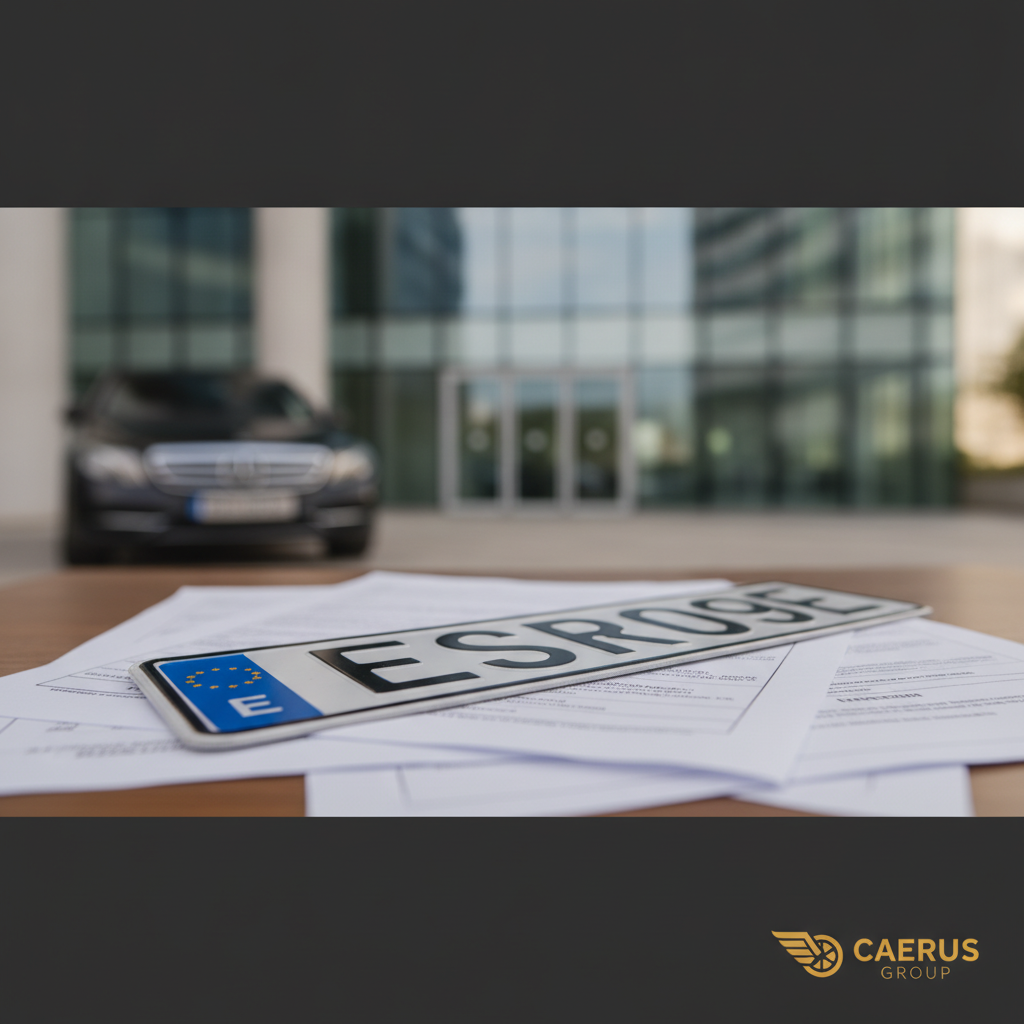
Moving to Spain is an exciting chapter in anyone’s life. Whether you are attracted by the Mediterranean climate, the vibrant culture, or the relaxed lifestyle, the logistics of relocation can be overwhelming. One of the most common questions we receive at Caerus Group from expats and returning residents is how to handle their vehicles. Bringing your own car can provide a sense of comfort and familiarity, but the bureaucratic process of legalizing a foreign car in Spain can be daunting for those unfamiliar with the Spanish legal system.
At Caerus Group, we specialize in vehicle registrations and legalizations, ensuring that your transition to Spanish roads is smooth, legal, and stress-free. In this comprehensive guide, we will walk you through the essential steps, costs, and documentation required to successfully navigate the process of legalizing your vehicle in the Iberian Peninsula.
Understanding the Legal Requirement
If you have moved to Spain and intend to stay for more than six months (183 days) in a calendar year, you are considered a legal resident for tax purposes. This status triggers the requirement to register your foreign vehicle on Spanish plates. Driving a vehicle with foreign plates beyond this period can lead to heavy fines and even the impounding of your car by local authorities.
The process of legalizing a foreign car in Spain involves several administrative bodies, including the Tax Agency (Agencia Tributaria), the Ministry of Industry, and the General Directorate of Traffic (DGT). Understanding the sequence of these steps is vital to avoid unnecessary delays and costs.
Step 1: The Technical Inspection (ITV)
The first physical step in the process is taking your vehicle to an ITV (Inspección Técnica de Vehículos) station. This is not a standard annual check-up; it is a specialized inspection for foreign vehicles entering the Spanish registry. The engineers will verify that your car complies with Spanish safety and environmental standards.
To pass this inspection, you will typically need a Certificate of Conformity (COC). This document, provided by the manufacturer, confirms that the vehicle was built to EU standards. If your car was manufactured outside the EU or does not have a COC, you may need to undergo a "homologación individual," which is a more complex and expensive certification process. At Caerus Group, we assist our clients in obtaining the necessary technical files to ensure the ITV process goes off without a hitch.
Step 2: Settling Your Taxes
Legalizing a foreign car in Spain is inseparable from tax obligations. There are two main taxes you must address before your car can be registered:
1. Special Tax on Certain Means of Transport (IEDMT): Commonly known as the registration tax (Impuesto de Matriculación). The amount is calculated based on the vehicle's CO2 emissions. Cars with lower emissions pay less, while high-emission vehicles can face a tax rate of up to 14.75% of the vehicle’s current value. It is worth noting that if you are moving to Spain as a new resident, you may be eligible for an exemption from this tax if you register the car within a specific timeframe (usually 60 days from obtaining residency).
2. Road Tax (IVTM): This is an annual municipal tax paid to your local town hall (Ayuntamiento). The cost varies significantly depending on the municipality where you reside and the horsepower of the vehicle.
For more detailed information on tax brackets and official forms, you can visit the official portal of the Dirección General de Tráfico (DGT), which outlines the specific requirements for foreign imports.
Step 3: Customs and VAT (IVA)
If you are bringing a car from a country outside the European Union (for example, the United Kingdom post-Brexit, the United States, or Switzerland), you must also clear customs. This involves paying Import Duty and VAT (IVA) at the standard rate of 21%. However, similar to the registration tax, exemptions may apply for those moving their primary residence to Spain, provided they meet specific criteria regarding previous ownership of the vehicle.
Step 4: Final Registration with the DGT
Once you have the passed ITV report and proof of tax payments, the final step in legalizing a foreign car in Spain is submitting the documentation to the Provincial Traffic Headquarters (Jefatura Provincial de Tráfico). Upon approval, they will issue your vehicle’s new Spanish registration number and the "Permiso de Circulación" (logbook).
With this document in hand, you can finally purchase your Spanish license plates from an authorized provider and attach them to your vehicle. Remember, you must also update your insurance policy. Spanish law requires that all registered vehicles carry at least third-party insurance from a provider authorized to operate in Spain.
Required Documentation Checklist
To ensure a successful application, you will need to gather the following documents:
- Your Passport or National ID.
- Proof of Residency (NIE, TIE, or Green Certificate).
- Original vehicle registration document from the country of origin.
- Purchase invoice or contract (translated into Spanish if necessary).
- Certificate of Conformity (COC).
- Proof of payment for the IEDMT and IVTM taxes.
- Proof of address in Spain (Empadronamiento).
Why Choose Caerus Group?
As you can see, legalizing a foreign car in Spain involves navigating multiple layers of bureaucracy, language barriers, and technical requirements. One small error in documentation can lead to the rejection of your application and significant delays. This is where Caerus Group provides invaluable support.
We handle the entire process from start to finish. From coordinating the ITV appointment and calculating your tax liabilities to communicating with the DGT and obtaining your plates, our expert team ensures that your vehicle is registered in the shortest time possible. We understand the nuances of Spanish law and help our clients take advantage of any available tax exemptions, potentially saving you thousands of Euros.
Our commitment is to transparency and efficiency. When you trust Caerus Group with your vehicle registration, you are not just hiring a service; you are gaining peace of mind. We take care of the paperwork so you can focus on enjoying the open roads of your new home in Spain.
Conclusion
While the process of legalizing a foreign car in Spain may seem complex, it is a necessary step for any long-term resident. By following the correct procedures and ensuring all taxes are paid, you protect yourself from legal issues and ensure your vehicle is fully compliant with Spanish regulations. If the prospect of dealing with Spanish bureaucracy feels overwhelming, remember that you don’t have to do it alone. Contact Caerus Group today, and let us help you get your foreign car legal and ready for the Spanish sunshine.