
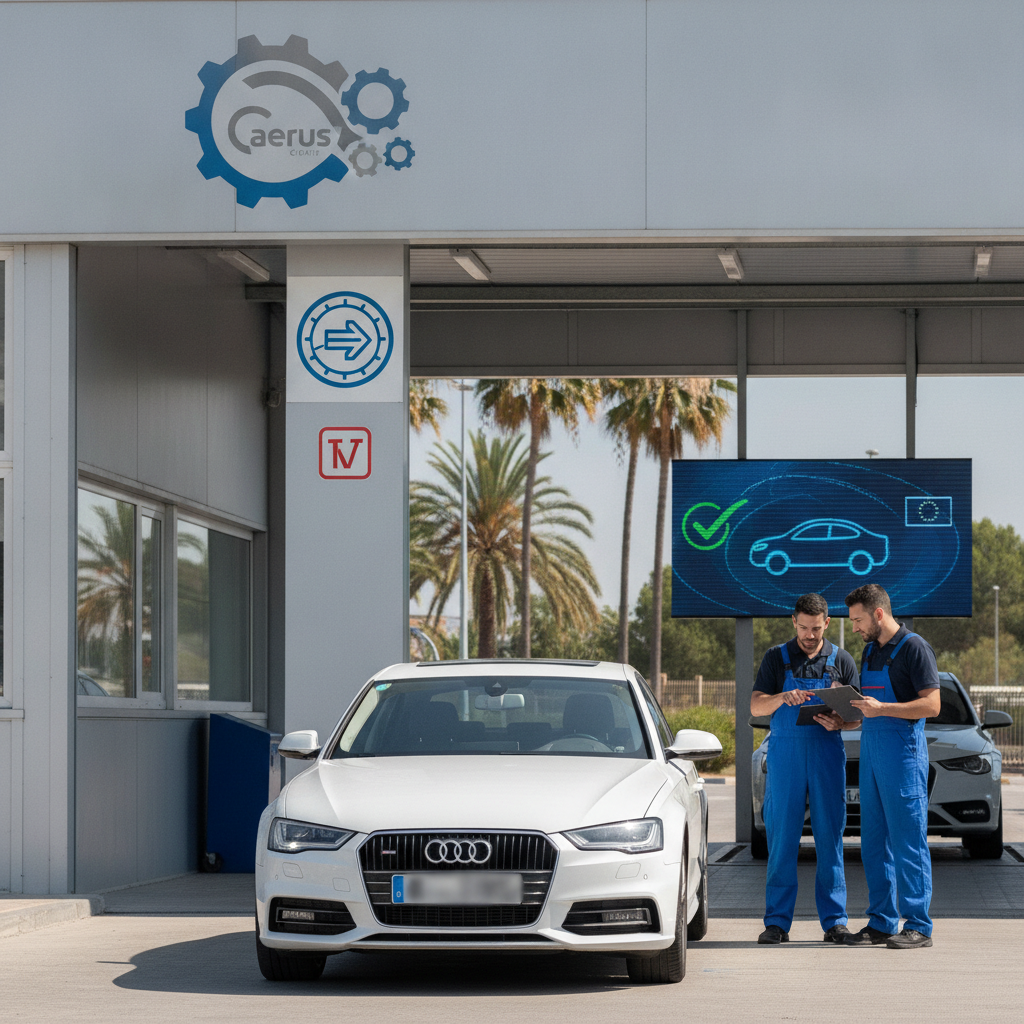
Germany has long been the preferred destination for Spanish car enthusiasts looking for high-quality second-hand vehicles. Whether it is the superior maintenance standards, the competitive pricing, or the vast selection of premium brands like BMW, Audi, and Mercedes-Benz, importing a vehicle from the German market is a smart move. However, once the car crosses the border into Spain, the administrative journey begins. The most critical step in this process is passing the technical inspection, commonly known as the ITV for a car imported from Germany.
At Caerus Group, we specialize not only in providing premium vehicles but also in managing the complex bureaucracy of vehicle registrations. Navigating the Spanish regulations can be overwhelming if you are unfamiliar with the specific requirements for foreign vehicles. In this guide, we will break down everything you need to know about the ITV for a car imported from Germany to ensure your transition to Spanish roads is as smooth as possible.
Why the ITV is Mandatory for Imported Vehicles
Every vehicle registered in Spain must comply with national safety and environmental standards. When you bring a car from Germany, the Spanish authorities need to verify that the vehicle’s technical specifications match the documentation provided and that it hasn't undergone unauthorized modifications. This is not a standard annual inspection; it is a "non-periodic" inspection specifically for registration purposes.
The primary goal of the ITV for a car imported from Germany is to issue the Spanish Technical Inspection Card (Ficha Técnica). This document is the vehicle's "birth certificate" in Spain and is required before the Dirección General de Tráfico (DGT) can issue your new Spanish license plates.
Essential Documentation for Your Inspection
Before you book your appointment at the ITV station, you must gather a specific set of documents. Missing even one piece of paperwork can result in a rejected application, costing you time and money. Here is what you need:
- The Original German Registration Documents: Known in Germany as the Zulassungsbescheinigung Teil I and Teil II. These are essential to prove the car's origin and previous ownership.
- The Certificate of Conformity (COC): This is perhaps the most important document. It is issued by the manufacturer and details all the technical characteristics of the vehicle. If your car has a European Type Approval, the COC makes the ITV for a car imported from Germany much simpler.
- Contract of Sale or Invoice: You must prove how you acquired the vehicle. If you bought it from a dealership, an invoice with the VAT (IVA) clearly stated is required. If it was a private sale, a contract translated into Spanish may be necessary.
- Proof of Identity: Your NIE or DNI and proof of residence in Spain.
If the vehicle does not have a COC, you may need a "Ficha Reducida," which is a technical data sheet prepared by a qualified engineer. At Caerus Group, we assist our clients in obtaining these documents to prevent any delays during the inspection process.
The Inspection Process: What to Expect
The ITV for a car imported from Germany is more rigorous than a standard check. The technician will verify the Chassis Number (VIN) to ensure it matches the paperwork exactly. They will also inspect the lighting system, emissions, braking efficiency, and tire specifications. One common issue with German cars is that they may have modifications—such as aftermarket suspensions or different wheel sizes—that were legal in Germany but require additional "homologation" in Spain.
It is important to remember that Spain has strict regulations regarding vehicle modifications. If your imported car has been modified, you must declare these changes. For more information on European vehicle standards and safety regulations, you can visit the official European Commission page on Automotive Technical Harmonisation.
Costs and Taxes Associated with Registration
Passing the ITV is just one part of the financial equation. Once you have your favorable ITV report, you must settle several taxes before the car is legally yours to drive on Spanish plates:
1. IEDMT (Registration Tax): This tax is based on the vehicle's CO2 emissions. Cars with lower emissions may be exempt, while high-performance vehicles can face a tax rate of up to 14.75% of the vehicle's current value.
2. IVTM (Road Tax): This is a local municipal tax paid to the town hall where you are registered (padrón).
3. Property Transfer Tax (ITP): If you purchased the car from an individual rather than a professional dealer, you will likely need to pay this tax, which varies depending on the Autonomous Community in Spain.
How Caerus Group Simplifies the Process
While the prospect of importing a car from Germany is exciting, the administrative burden of the ITV for a car imported from Germany and the subsequent registration can be a headache. This is where Caerus Group comes in. We offer a comprehensive service that covers every step of the journey.
From the moment your car arrives in Spain, we take over. We review your documentation, coordinate the technical inspection, handle the payment of all necessary taxes, and finally, present the file to the DGT. Our goal is to hand you the keys to your new car with the Spanish plates already fitted and all paperwork finalized.
Choosing a professional service ensures that you avoid common pitfalls, such as failing the ITV due to minor technical discrepancies or overpaying on registration taxes due to incorrect emissions data. With Caerus Group, you benefit from our years of experience in the Spanish automotive market and our deep understanding of import regulations.
Final Thoughts
Importing a vehicle from Germany is a fantastic way to acquire a high-spec car at a great price. While the ITV for a car imported from Germany is a mandatory hurdle, it doesn't have to be a stressful one. By being prepared with the right documentation and understanding the technical requirements, you can enjoy your German-engineered vehicle on the beautiful roads of Spain in no time.
If you are considering importing a car or have already brought one to Spain and are feeling lost in the paperwork, contact Caerus Group today. We are your trusted partner for vehicle sales and registrations in Spain, making the complex simple so you can focus on the drive.