
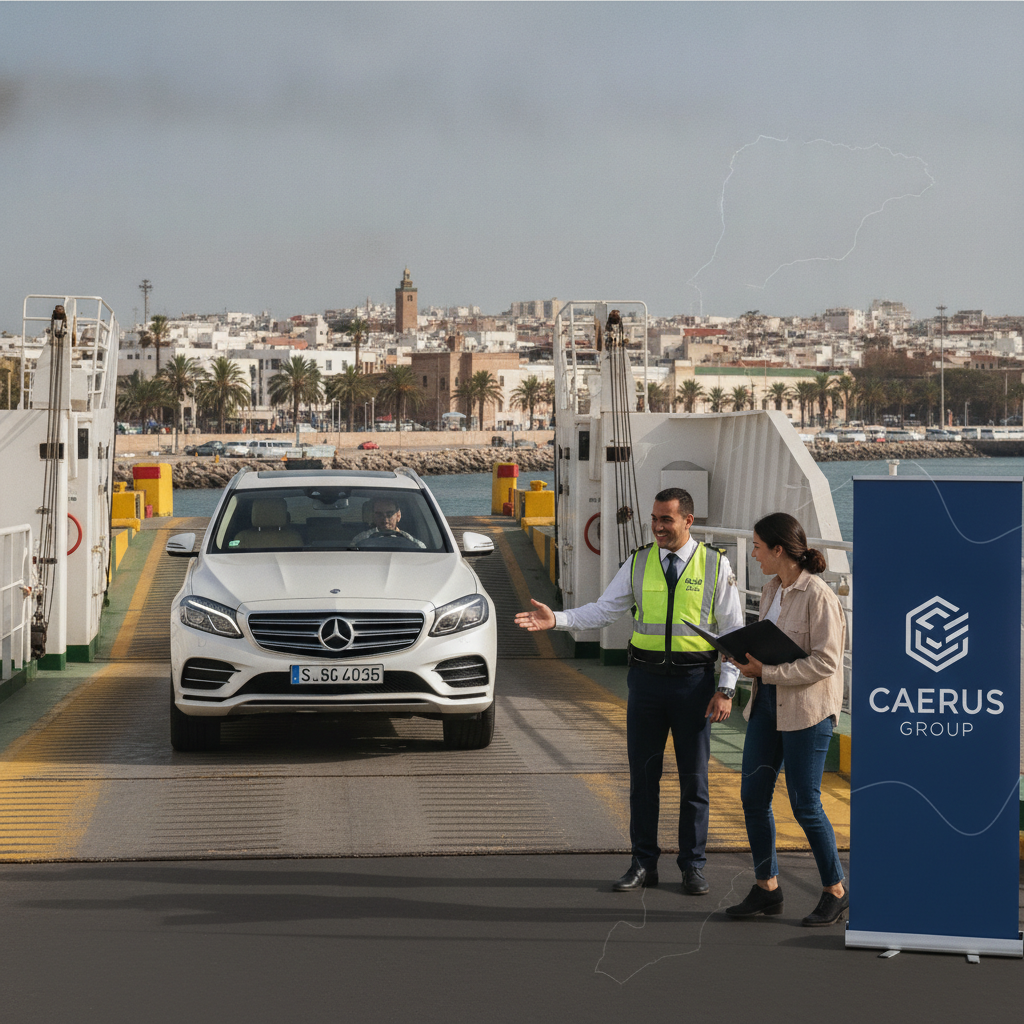
The geographical proximity between Spain and Morocco makes the movement of people and goods between the two nations a common occurrence. Whether you are a Spanish expatriate returning home, a Moroccan citizen moving to Spain, or a car enthusiast looking for a specific model, you might find yourself needing to import car from Morocco. However, bringing a vehicle from a non-European Union country into Spain involves a complex set of legal, fiscal, and technical procedures that can be overwhelming for those unfamiliar with Spanish bureaucracy.
At Caerus Group, we specialize not only in high-quality vehicle sales but also in the intricate process of car registrations and legalizations. This guide aims to demystify the process and explain how we can help you navigate the transition smoothly.
The Legal Framework for Importing from Outside the EU
Morocco is considered a third country in relation to the European Union. This means that any vehicle crossing the Strait of Gibraltar to be permanently registered in Spain must undergo a formal importation process. Unlike buying a car in Germany or France, where the internal market rules apply, importing from Morocco requires clearing customs and paying specific duties.
The first step in the journey is understanding the "DUA" (Documento Único Administrativo). This is the official customs declaration for imports. Without this document, which proves that the vehicle has been declared and the relevant taxes paid, it is impossible to proceed with Spanish registration.
Essential Documentation Required
To successfully import car from Morocco, you must gather a comprehensive dossier of documents. Missing even one can result in lengthy delays at the border or at the technical inspection station. You will need:
- The original vehicle registration document (Carte Grise).
- A valid identification document (Passport and NIE/DNI of the owner).
- The purchase invoice or a sales contract translated into Spanish.
- Proof of payment of the relevant taxes in Morocco (if applicable).
- The Certificate of Conformity (COC) or a "Ficha Técnica Reducida" prepared by a Spanish engineer.
If you are moving your residence from Morocco to Spain, you may be eligible for tax exemptions. This is a specific procedure known as "traslado de residencia," which requires proof that you have lived in Morocco for at least one year and that you have owned the vehicle for at least six months prior to the move.
Costs and Taxes Involved
One of the most frequent questions we receive at Caerus Group is regarding the cost. When you decide to import car from Morocco, you must account for several financial obligations:
1. Customs Duties (Aranceles): Generally, for passenger cars, this is set at 10% of the vehicle's current value according to the official tables provided by the Spanish Tax Agency.
2. VAT (IVA): You are required to pay 21% VAT on the value of the vehicle plus the cost of transport and the customs duties already paid.
3. Registration Tax (Impuesto de Matriculación): This is based on the vehicle's CO2 emissions. Cars with zero or very low emissions may be exempt, while high-polluting vehicles can face rates up to 14.75% or more.
For more detailed information on official tax rates and regulations, you can visit the official website of the Spanish Tax Agency (Agencia Tributaria).
The Technical Inspection (ITV) and Homologation
Before a Moroccan car can be driven legally with Spanish plates, it must pass a specific Technical Inspection (ITV). Since Morocco follows different manufacturing standards than the EU in some instances, the vehicle must be checked for "Homologation."
If the vehicle was originally manufactured for the European market, the process is straightforward. However, if the car is a model specific to the African market, it might require individual homologation. This process ensures that the lights, mirrors, seatbelts, and emissions levels meet strict European safety and environmental standards. At Caerus Group, we work with specialized engineers to ensure your vehicle meets all requirements before it ever reaches the inspection station.
Step-by-Step Summary of the Process
To give you a clearer picture, here is the chronological order of the steps required to import car from Morocco:
- Transport: Shipping the car via ferry (usually Tanger-Med to Algeciras or Motril).
- Customs Clearance: Presenting the DUA and paying the 10% duty and 21% VAT.
- Technical Sheet: Obtaining the "Ficha Técnica Reducida" from an authorized engineer.
- ITV Inspection: Passing the non-EU import inspection at a Spanish ITV station.
- Tax Settlement: Paying the Registration Tax and the local Road Tax (IVTM) at the local town hall.
- DGT Registration: Final submission of all documents to the Dirección General de Tráfico to receive your Spanish license plates.
Why Choose Caerus Group for Your Importation?
Attempting to import car from Morocco on your own can lead to significant headaches. Language barriers, changing regulations, and the strictness of Spanish customs officials often lead to vehicles being stuck at the port or rejected at the ITV.
Caerus Group offers a turnkey solution. We handle the logistics, the customs brokerage, the engineering reports, and the final registration. Our deep understanding of both the Spanish automotive market and the administrative requirements for non-EU vehicles ensures that your car is legalized in the shortest time possible. We take care of the paperwork so that you can focus on enjoying your vehicle on Spanish roads.
If you are planning to bring a vehicle from Morocco, contact Caerus Group today. Our team of experts will provide you with a personalized quote and a clear roadmap for your specific situation. Don't leave your investment to chance; trust the professionals in Spanish vehicle matriculations.