
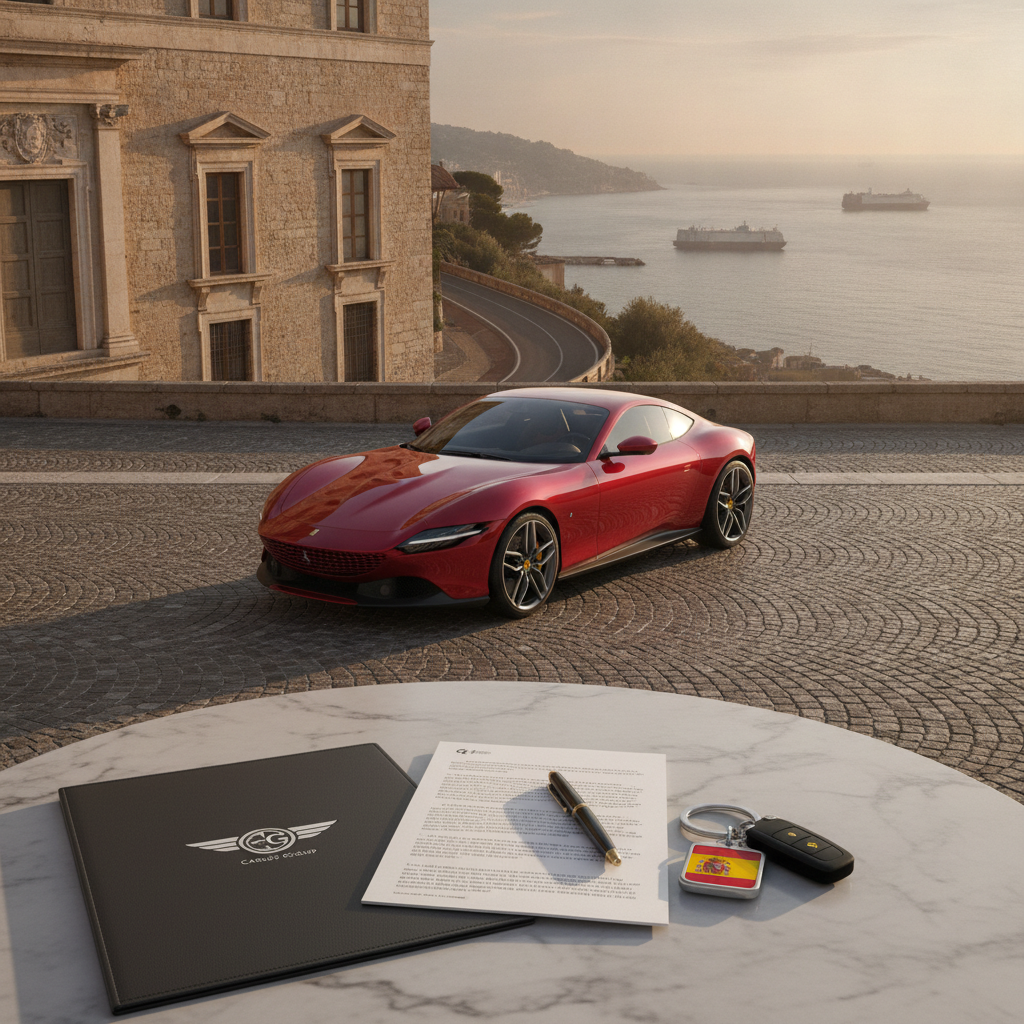
Italy is world-renowned for its rich automotive heritage, being the birthplace of legendary brands such as Ferrari, Lamborghini, Maserati, and Alfa Romeo. However, beyond the luxury market, Italy offers a vast and competitive second-hand car market that often attracts Spanish buyers looking for specific models or better pricing. If you are considering importing a car from Italy to Spain, you are embarking on a journey that combines the excitement of a new vehicle with the complexity of European bureaucracy. At Caerus Group, we specialize not only in car sales but also in the intricate process of vehicle registration and legal imports, ensuring that your dream car meets all Spanish regulations seamlessly.
Why Consider Importing a Car from Italy?
There are several reasons why Spanish drivers look toward the Italian market. Firstly, the sheer volume of vehicles available in Italy means that buyers can often find specific configurations or classic models that are rare in Spain. Secondly, pricing in the Italian used car market can be significantly lower due to different depreciation rates and a high turnover of vehicles. Whether you are looking for a stylish city car for Madrid or a high-performance sports car for the coastal roads of Marbella, importing a car from Italy can be a financially savvy move.
However, the process is not as simple as driving across the border. It involves a series of administrative steps, tax payments, and technical inspections that require precision. This is where professional guidance becomes invaluable. Understanding the legal framework is the first step toward a successful importation.
The Essential Documentation Needed
To successfully navigate the process of importing a car from Italy, you must gather specific documentation from the seller. Without these papers, registering the vehicle in Spain (matriculación) will be impossible. The most critical documents include:
1. The original Italian registration certificate (Carta di Circolazione).
2. A proof of ownership, such as a sales contract (Contrato de Compraventa) if buying from a private individual, or a formal invoice if buying from a dealership (including the VAT number).
3. The Certificate of Conformity (COC), which proves the vehicle meets European Union technical standards. If the car does not have a COC, you may need to obtain a "Ficha Técnica Reducida" in Spain.
4. Proof of identity of the buyer (DNI or NIE).
It is crucial to ensure that the vehicle has been "de-registered" for export in Italy (Radiazione per esportazione). This is a legal requirement in Italy before the car can be officially registered in another country.
Step-by-Step Process for Importing a Car from Italy
Once you have found your vehicle and secured the paperwork, the logistical and administrative journey begins. Here is a breakdown of the steps involved:
1. Transporting the Vehicle
You have two main options: driving the car yourself or hiring a professional transport service. If you choose to drive, you must obtain temporary Italian transit plates (Targhe di Cartone) and valid insurance to cross borders. Alternatively, most clients at Caerus Group prefer using a specialized car carrier, which avoids wear and tear and simplifies insurance issues during transit.
2. The Technical Inspection (ITV)
Upon arrival in Spain, the vehicle must pass a specific type of technical inspection known as an "ITV de importación." This is more rigorous than a standard annual check. The engineers will verify that the car’s specifications match the European Certificate of Conformity and that the vehicle is safe for Spanish roads. You can find detailed information on EU vehicle standards on the official European Union portal.
3. Paying the Necessary Taxes
Importing a car from Italy requires settling several tax obligations in Spain. These include the "Impuesto Especial sobre Determinados Medios de Transporte" (IEDMT), also known as the registration tax. The amount depends on the vehicle's CO2 emissions. Additionally, you must pay the "Impuesto de Transmisiones Patrimoniales" (ITP) if you bought the car from a private individual, or ensure VAT (IVA) was handled correctly if purchased from a dealer.
4. Final Registration with the DGT
The final step is presenting all documentation, proof of tax payments, and the ITV report to the Dirección General de Tráfico (DGT). Once processed, you will be issued your Spanish registration number and the "Permiso de Circulación."
How Caerus Group Simplifies the Process
The bureaucracy involved in importing a car from Italy can be overwhelming for many owners. At Caerus Group, we act as your legal and logistical partner. We handle the communication with Italian entities, manage the transport logistics, and oversee the entire registration process in Spain. Our expertise in "matriculaciones" ensures that you avoid common pitfalls, such as incorrect tax filings or delays at the ITV station.
By choosing a professional service, you eliminate the risk of the car being stuck in a legal limbo. We ensure that every document is translated, verified, and submitted correctly to the Spanish authorities. This allows you to focus on the pleasure of driving your new Italian acquisition while we handle the paperwork.
Final Considerations: Costs and Timelines
When budgeting for importing a car from Italy, remember to factor in the total costs, not just the purchase price. Transport can cost between 600€ and 1,500€ depending on the location and method. Taxes can vary wildly based on the car's engine and value. Usually, the entire process takes between 3 to 6 weeks to complete fully, depending on the speed of the technical inspections and DGT appointments.
In conclusion, while the process of importing a car from Italy to Spain requires diligence, the rewards are often worth it. With the right support from Caerus Group, you can navigate the European market with confidence, knowing that your vehicle will be road-legal and ready for the Spanish sun in no time. If you have found a car in Italy and don't know where to start, contact us today to manage your import and registration professionally.