
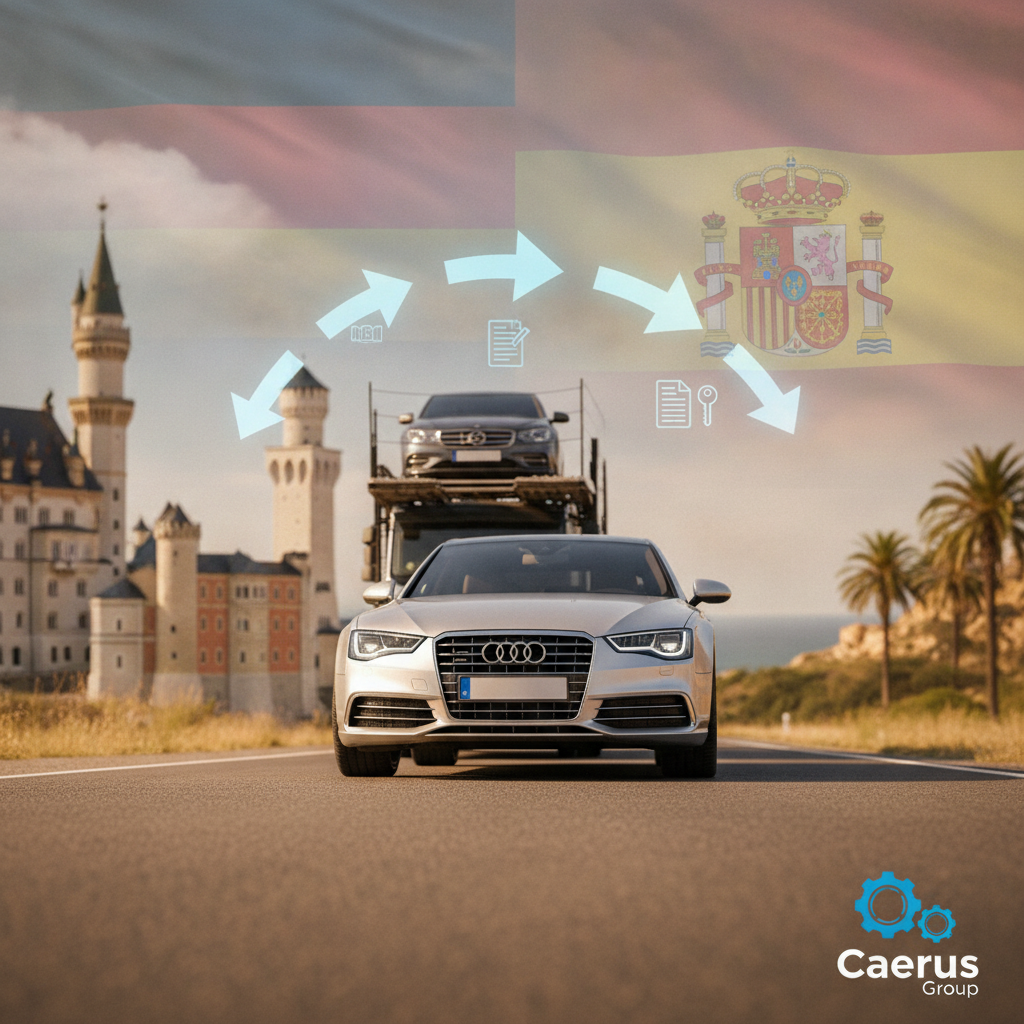
The European automotive market offers a wealth of opportunities for car enthusiasts and savvy buyers alike. One of the most popular trends in recent years has been the acquisition of vehicles from the German market. Germany is renowned for its high manufacturing standards, meticulous vehicle maintenance, and a vast secondary market that often features lower prices than those found in Spain. However, the process of bringing a vehicle across borders involves a series of legal and administrative steps that can be daunting for the uninitiated.
At Caerus Group, we specialize not only in providing high-quality vehicles but also in managing the complex "importing a car from Germany procedures" to ensure that your new acquisition is legal, safe, and ready for Spanish roads. In this comprehensive guide, we will break down everything you need to know about the transition from a German dealership to a Spanish garage.
Why Choose the German Market?
Before diving into the technicalities, it is worth understanding why so many Spanish drivers look toward the North. Germany is the heart of the European automotive industry. Brands like BMW, Mercedes-Benz, Audi, and Porsche are local products, meaning the selection of used and semi-new vehicles is unparalleled. Furthermore, German car owners are known for following strict maintenance schedules, and the country’s rigorous technical inspections (TÜV) ensure that vehicles remain in top condition.
Even when considering the costs of transport and registration, many buyers find that they can save between 10% and 20% on high-end models or find specific configurations and extras that are simply not available in the Spanish domestic market.
Importing a Car from Germany Procedures: Step-by-Step
Navigating the bureaucratic landscape requires patience and attention to detail. The process can be broadly divided into four main phases: Purchase, Transport, Technical Inspection, and Legal Registration.
1. Documentation at the Source
When you purchase a vehicle in Germany, whether from a professional dealer or a private seller, you must ensure you receive the "Teil I" and "Teil II" of the Fahrzeugbrief (the German vehicle registration documents). You will also need a valid Bill of Sale or a Commercial Invoice that clearly states the VIN (Vehicle Identification Number), the purchase price, and whether VAT (IVA) has been paid.
2. The Certificate of Conformity (COC)
The COC is perhaps the most critical document when dealing with "importing a car from Germany procedures." This document, issued by the manufacturer, proves that the vehicle meets the technical standards required by the European Union. Having the COC simplifies the inspection process in Spain significantly. If the vehicle is older and does not have a COC, you may need to obtain a "Ficha Técnica Reducida" from a Spanish engineer.
3. Transportation and Transit Plates
You have two main options for bringing the car to Spain: driving it yourself or hiring a professional transport service. If you choose to drive, you must apply for temporary German transit plates (Zollkennzeichen), which include short-term insurance. If you use a trailer service, Caerus Group can coordinate this logistics phase to ensure the vehicle arrives at our facilities in Spain without adding unnecessary mileage.
The Spanish Legalization Process
Once the car is on Spanish soil, the clock starts ticking to complete the nationalization process. This is where the expertise of a dedicated agency like Caerus Group becomes invaluable.
The ITV Inspection
Every imported vehicle must pass a Spanish Technical Inspection (ITV) specifically for importation. The inspectors will verify the vehicle’s CO2 emissions, safety features, and ensure the VIN matches the documentation. Even if the car recently passed the German TÜV, this step is mandatory under Spanish law to generate the new Spanish "Ficha Técnica."
Settling Taxes
There are several taxes involved in the importation process:
- VAT (IVA): If the car is new (less than 6 months old or less than 6,000 km), you must pay 21% VAT in Spain. If purchased from a professional as a used car, VAT is usually handled at the source under the REBU scheme.
- Registration Tax (Impuesto de Matriculación): This is based on the vehicle's CO2 emissions. Cars with low emissions may be exempt, while high-emission vehicles can face a tax of up to 14.75% of the vehicle's current value according to the tables provided by the Tax Agency (Hacienda).
- Property Transfer Tax (ITP): This applies only if you bought the car from a private individual rather than a dealership.
For more detailed information on current traffic regulations and tax brackets, you can visit the official portal of the Dirección General de Tráfico (DGT).
Final Registration and Number Plates
The final step in the "importing a car from Germany procedures" is the presentation of all documents to the DGT. This includes proof of tax payments, the new Spanish technical card, and the application for registration. Once approved, you will be assigned a Spanish registration number. You can then have your physical plates printed and installed.
Don't forget that you must also pay the Municipal Circulation Tax (IVTM) to the town hall where you are registered as a resident before the process is fully complete.
How Caerus Group Simplifies Your Import
While the prospect of importing a car from Germany is exciting, the administrative burden can be overwhelming. Errors in documentation or incorrect tax filings can lead to expensive delays and fines. This is where Caerus Group steps in. As a premier car dealership and registration specialist in Spain, we offer a "turnkey" service.
We handle everything from the initial search and mechanical verification in Germany to the final mounting of your Spanish license plates. Our team is well-versed in the nuances of "importing a car from Germany procedures," allowing you to enjoy your new vehicle without the headache of bureaucratic hurdles.
Whether you are looking for a specific luxury SUV, a high-performance sedan, or an efficient electric vehicle, let Caerus Group manage the logistics. We ensure that every vehicle we import meets our rigorous quality standards and is fully compliant with Spanish legislation from day one.
Importing a vehicle is a significant investment. By understanding the procedures and partnering with professionals, you turn a complex international transaction into a smooth, rewarding experience. Contact Caerus Group today to start the journey toward your dream car from Germany.