
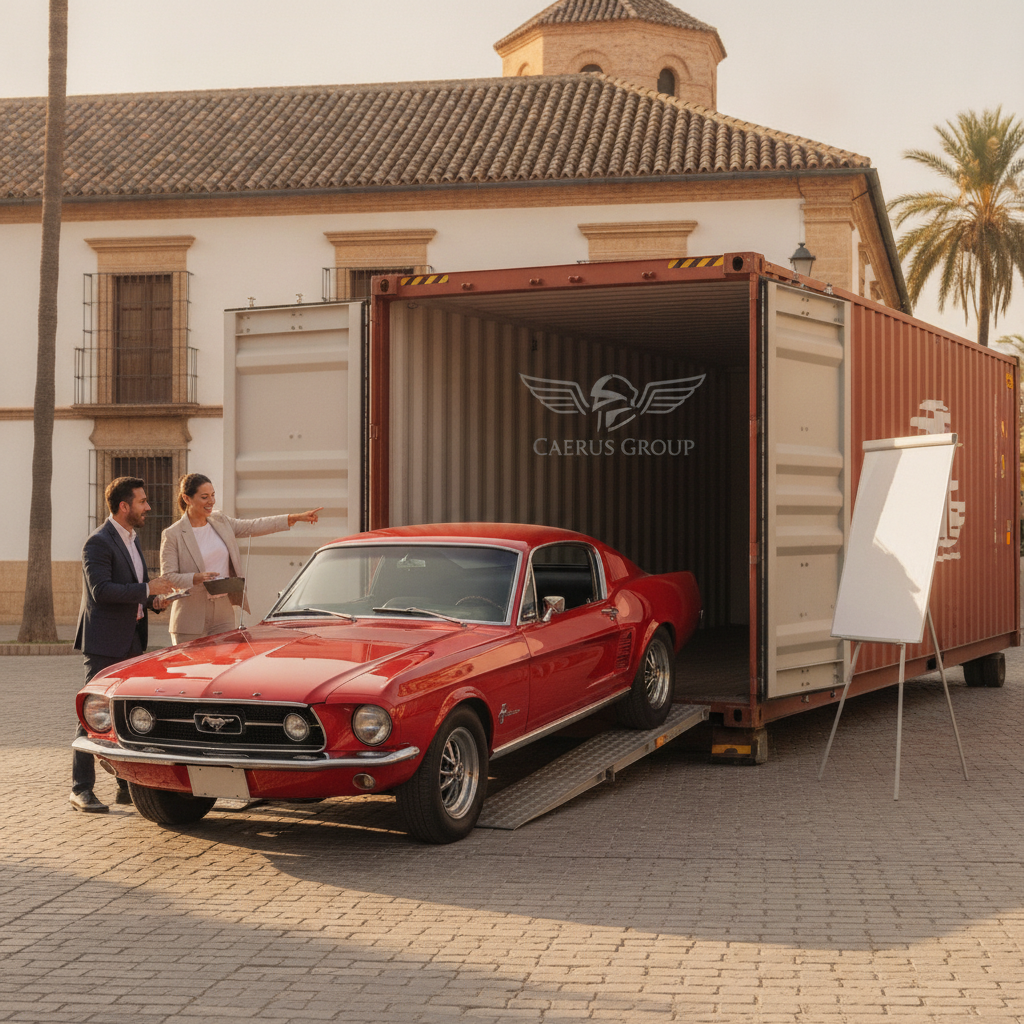
For many automotive enthusiasts in Spain, the allure of the American highway is irresistible. There is a specific kind of magic found in the rumble of a high-displacement V8 engine, the expansive chrome bumpers of the 1950s, and the aggressive silhouettes of the muscle car era. Whether it is a 1967 Ford Mustang, a classic Chevrolet Corvette, or a rugged vintage Jeep, these vehicles represent more than just transportation; they are pieces of rolling history. However, turning the dream of owning one into a reality involves navigating a complex web of logistics and Spanish bureaucracy. That is where Caerus Group steps in, bridging the gap between the United States and your garage in Spain.
The Growing Appeal of American Classics in the Spanish Market
In recent years, the interest in North American vintage vehicles has surged across the Iberian Peninsula. Spanish collectors are increasingly looking beyond European brands to find the unique character and presence that only American steel can provide. The process of importing an American classic car has become a sought-after service for those who want to stand out at local car meets or simply enjoy a piece of Americana on the scenic roads of the Costa del Sol or the Pyrenees.
However, the journey from a dealership in Texas or a private garage in California to the streets of Madrid or Barcelona is paved with technical requirements and administrative hurdles. Understanding the nuances of international shipping, customs duties, and the specific Spanish "matriculación" (registration) process is essential for a successful acquisition.
Navigating the Logistics: From the USA to Spanish Shores
The first step in importing an American classic car is, of course, finding the right vehicle. Once the purchase is secured, the logistical marathon begins. This involves inland transport within the United States to a major port, such as New York, Miami, or Houston, followed by ocean freight in a secure container. While the physical transport is a significant undertaking, it is often the paperwork that proves most challenging for individual buyers.
Upon arrival in Spain, the vehicle must clear customs. This involves paying the applicable Value Added Tax (IVA) and import duties. For classic cars, there are often specific tax advantages if the vehicle meets certain historical criteria, but documenting this correctly is vital to avoid overpaying or facing long delays at the port of entry.
The Critical Step: Homologation and Registration in Spain
The most daunting phase for many is the "matriculación." Spain has strict regulations regarding vehicle safety and emissions. While classic cars are often exempt from modern standards, they must still undergo a rigorous inspection process known as the ITV (Inspección Técnica de Vehículos). For American imports, this often requires "homologation," which is the process of certifying that the vehicle meets Spanish road standards.
This may include modifying lighting systems (such as changing red rear indicators to amber) and ensuring the VIN (Vehicle Identification Number) is properly documented and etched. At Caerus Group, we specialize in these technical adaptations, ensuring that your American classic maintains its original soul while satisfying every requirement of the Spanish authorities.
The "Vehículo Histórico" Advantage
One of the best ways to enjoy an imported classic in Spain is by registering it as a "Vehículo Histórico" (Historical Vehicle). This status offers several benefits, including longer intervals between mandatory ITV inspections, exemptions from certain environmental restrictions in major cities, and often lower insurance premiums. To qualify, the car must typically be at least 30 years old, be in its original state, and be recognized as a piece of heritage by an official laboratory.
According to the official guidelines provided by the Dirección General de Tráfico (DGT), the process involves obtaining a technical report and approval from the regional government (Comunidad Autónoma). Caerus Group handles this entire workflow, from the initial laboratory report to the final issuance of the historical license plates, allowing you to focus on the joy of driving.
Why Choose Caerus Group for Your Import Project?
Importing an American classic car is a significant investment, both financially and emotionally. Choosing a partner who understands both the passion for these cars and the intricate legal landscape in Spain is crucial. At Caerus Group, we offer a comprehensive "turnkey" service. We don’t just sell cars; we manage the entire lifecycle of the import.
Our expertise covers:
- Sourcing and verifying vehicles in the North American market.
- Managing international shipping and maritime insurance.
- Clearing customs and handling all tax obligations in Spain.
- Technical modifications for ITV compliance.
- Full registration and historical vehicle classification.
Conclusion: Start Your Engine Today
Owning a piece of American automotive history in Spain is a rewarding experience that offers a unique connection to the past. While the regulations surrounding importing an American classic car can be intimidating, they should not be a barrier to your passion. With the right professional guidance, the transition from the American suburbs to the Spanish highways can be seamless and stress-free.
If you are ready to bring a legendary muscle car or a timeless vintage cruiser to Spain, Caerus Group is here to make it happen. Our team of experts is dedicated to ensuring that your import experience is as smooth as a Cadillac ride. Contact us today to learn more about our current inventory and our bespoke registration services.