
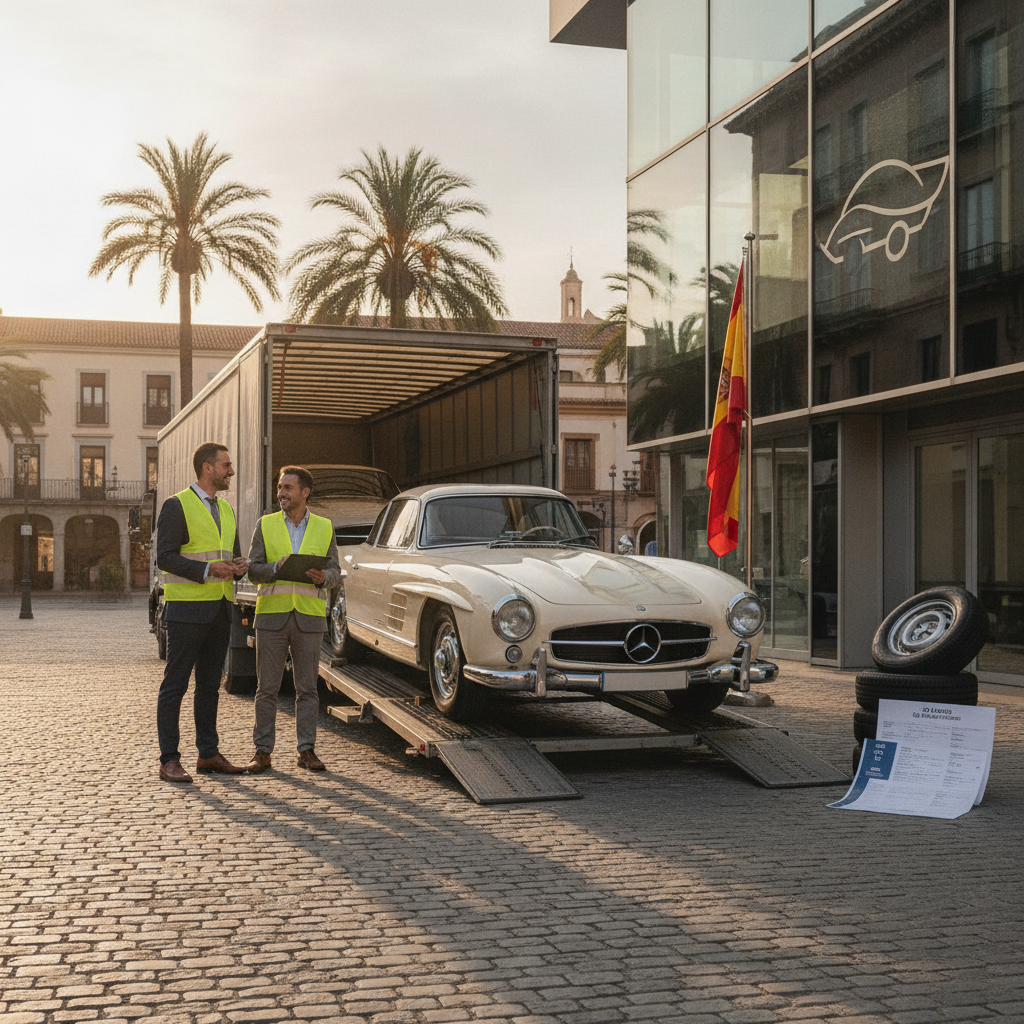
For many automotive enthusiasts, the dream of cruising along the sun-drenched Mediterranean coast in a vintage Porsche or a classic American muscle car is a lifelong goal. However, bringing that dream into reality involves navigating the complex labyrinth of Spanish bureaucracy. If you have recently purchased a vintage vehicle from abroad or are planning to bring your cherished collection to the Iberian Peninsula, the most critical step you will face is the process to homologate an imported classic car. At Caerus Group, we specialize not only in the sale of premium vehicles but also in the technical and administrative hurdles of vehicle registration and homologation in Spain.
Spain is known for its rigorous standards regarding vehicle safety and environmental compliance. When a vehicle is brought into the country from outside the Spanish borders—whether from within the EU or a third country like the United States or the UK—it must be certified to meet national requirements. This process ensures that the car is roadworthy and legally recognized by the Dirección General de Tráfico (DGT). For classic cars, this process is even more nuanced, often requiring specialized inspections and specific documentation that differs significantly from modern vehicle registration.
Understanding the Importance of Homologation
To homologate an imported classic car essentially means to obtain an official certification that the vehicle conforms to the technical standards required in Spain. Without this, you cannot obtain a Spanish license plate, secure insurance, or legally drive on public roads. For classic cars, the challenge often lies in the fact that these vehicles were manufactured under different safety regulations than those currently in force. Fortunately, Spanish law provides a specific pathway for vehicles of "historic interest," allowing for certain exemptions while still maintaining strict safety checks.
The process has recently undergone significant changes with the introduction of the new Royal Decree regarding historic vehicles in Spain. This legislation aims to simplify the bureaucracy for cars that are at least 30 years old, preserved in their original state, and represent a piece of motoring history. However, even with these improvements, the technical "expediente" (file) required to prove the car's eligibility is extensive and requires professional oversight to avoid costly delays or rejections at the ITV (Inspección Técnica de Vehículos) stations.
Step-by-Step: The Process of Registering Your Classic
When you decide to homologate an imported classic car with Caerus Group, we guide you through a structured process designed to minimize stress. The first step involves a comprehensive review of the vehicle's original documentation, such as the foreign title and proof of purchase. If the car is coming from outside the European Union, customs clearance and the payment of relevant import duties and VAT are mandatory prerequisites.
Once the taxes are handled, the technical phase begins. This involves obtaining a "Ficha Técnica Reducida" (a reduced technical data sheet) or, in the case of historic registration, a report from an accredited laboratory or an official classic car club. This document details every technical specification of the vehicle, from engine displacement to wheelbase dimensions. Following this, the vehicle must pass a specific ITV inspection. Unlike a standard annual check-up, this inspection for imported vehicles is more thorough, verifying that all components—lights, brakes, emissions, and structural integrity—align with the data provided in the technical sheet.
Finally, once the ITV is passed, the file is submitted to the Dirección General de Tráfico (DGT) for the issuance of the Spanish registration certificate (Permiso de Circulación). At Caerus Group, we manage these interactions with the tax agency and the traffic department on your behalf, ensuring that your classic car is road-legal in the shortest time possible.
The Benefits of Historic Classification
Choosing to homologate an imported classic car under the "Historic" (Vehículo Histórico) category offers several long-term advantages for owners in Spain. Firstly, the frequency of the mandatory ITV inspections is reduced; depending on the age of the vehicle, you may only need to visit the inspection station every two to four years rather than annually. This not only saves money but also reduces the wear and tear associated with frequent testing.
Furthermore, historic vehicles are often exempt from certain municipal road taxes (IVTM) depending on the local town hall’s policies. Perhaps most importantly in the modern era, having a historic registration can provide exemptions from certain Low Emission Zone (ZBE) restrictions in major cities like Madrid and Barcelona, allowing you to enjoy your vintage machine even in urban centers where modern high-emission vehicles are restricted.
Why Choose Caerus Group for Your Registration Needs?
The technicalities involved in the Spanish registration system can be overwhelming, especially for expatriates or collectors who are not familiar with the local administrative language. At Caerus Group, we bridge that gap. Based in Spain, our team has years of experience in both the commercial side of the automotive industry and the logistical side of vehicle matriculation.
We understand that a classic car is an investment and a passion. When you trust us to homologate an imported classic car, we treat the vehicle with the respect it deserves. We coordinate with specialized engineers, laboratories, and the DGT to ensure that every document is perfect. Our goal is to handle the "paperwork headache" so that you can focus on the joy of driving. Whether you are importing a 1960s Jaguar from the UK or a vintage Mustang from America, our comprehensive service covers everything from the moment the car arrives at the port to the moment you turn the key with Spanish plates attached.
Don't let the complexity of Spanish regulations stall your passion for classic motoring. Contact Caerus Group today to discuss your vehicle’s specific needs and let our experts pave the way for your next classic adventure in Spain.