
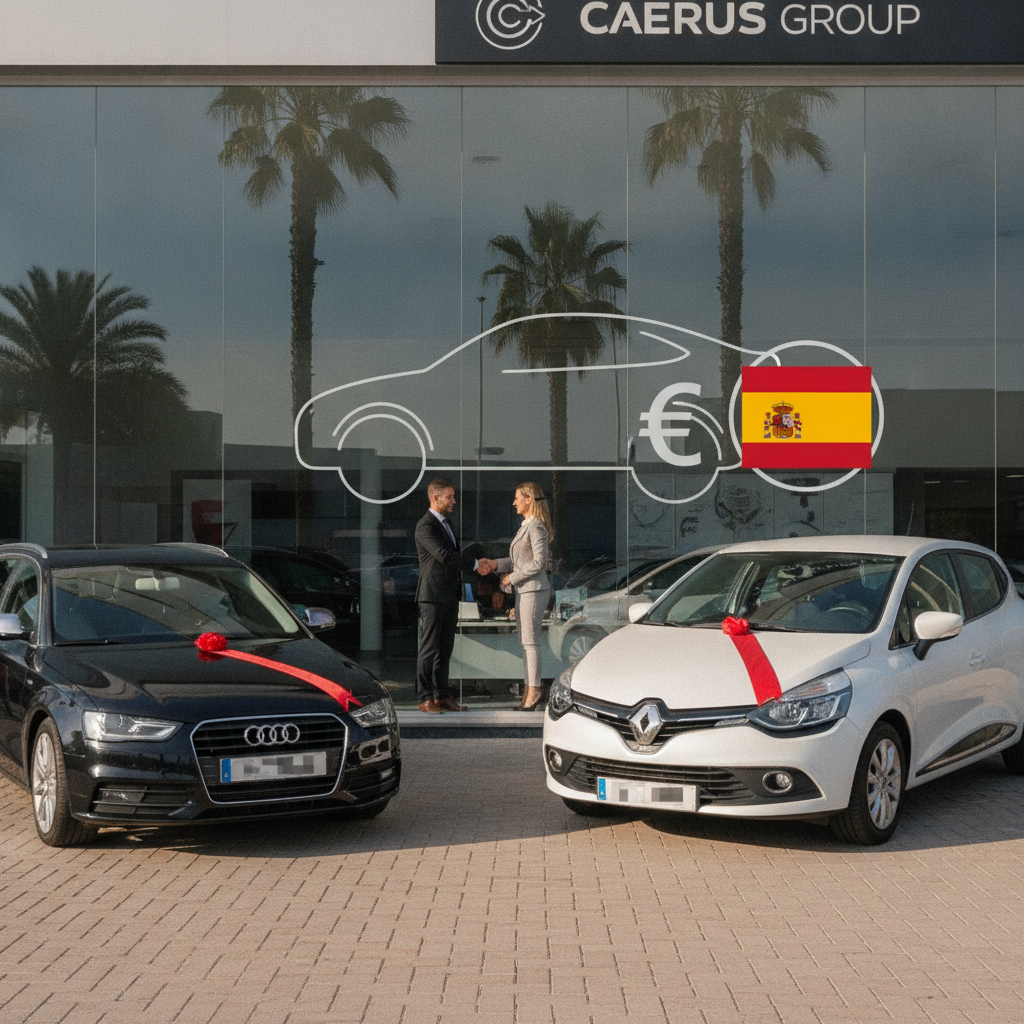
The allure of the European automotive market is undeniable. For many residents and expats living on the Mediterranean coast or in the bustling centers of Madrid and Barcelona, the prospect of importing a vehicle from countries like Germany, France, or Belgium is highly appealing. Whether it is a luxury sedan, a sturdy SUV, or a classic vintage model, buying a second-hand foreign car in Spain has become a popular alternative to browsing local inventories. However, while the prices might seem lower and the maintenance records more detailed abroad, the administrative process in Spain can be daunting for the uninitiated.
At Caerus Group, we specialize in bridging the gap between finding your dream vehicle abroad and legally driving it on Spanish roads. This guide aims to navigate you through the complexities of the acquisition, importation, and registration process, ensuring that your investment is both safe and legally compliant.
The Benefits of Buying a Second-Hand Foreign Car in Spain
Why do so many drivers choose this route? The primary reason is often the variety and quality of the stock available in Northern Europe. In countries like Germany, cars are often equipped with higher specifications and have been maintained according to rigorous standards. Furthermore, the sheer volume of the second-hand market in central Europe often drives prices down, making it financially viable even after accounting for transport and registration costs.
However, when you decide on buying a second-hand foreign car in Spain, you must look beyond the initial price tag. You are not just buying a machine; you are entering a legal process that requires meticulous attention to detail. This is where professional guidance becomes invaluable.
Key Steps in the Importation Process
Before the car even touches Spanish soil, several documents must be verified. Without these, the process of "matriculación" (registration) can become a nightmare of delays and extra fees. The most critical documents include the original vehicle title, a sales contract (translated if necessary), and the Certificate of Conformity (COC).
The COC is particularly important. It proves that the vehicle meets the technical requirements and safety standards set by the European Union. If a vehicle does not have a COC, you may need to undergo a "ficha técnica reducida," which is a technical sheet prepared by a certified engineer in Spain to prove the car's specifications.
Once the car arrives, it must pass a Spanish technical inspection, known as the ITV (Inspección Técnica de Vehículos). This is not a standard ITV that local cars undergo; it is a specific inspection for imported vehicles to verify that the physical car matches the documentation provided.
Understanding Taxes and Registration Fees
One of the biggest hurdles when buying a second-hand foreign car in Spain is calculating the associated taxes. There are three main financial obligations you must fulfill:
1. **VAT (IVA) or Transfer Tax (ITP):** If you buy from a professional dealer in another EU country, you usually pay VAT there. However, if you buy from an individual, you must pay the "Impuesto de Transmisiones Patrimoniales" (ITP) in Spain, which varies depending on the autonomous community you live in.
2. **Registration Tax (IEDMT):** This is the "Impuesto Especial sobre Determinados Medios de Transporte." The amount depends entirely on the CO2 emissions of the vehicle. Electric vehicles and low-emission cars may be exempt, while high-pollution vehicles can face a tax of up to 14.75% of the vehicle's current value according to official tables.
3. **Road Tax (IVTM):** This is the local municipal tax paid to the town hall where you are registered. It must be paid annually, and proof of payment for the current year is required to finalize the registration.
To ensure you are following the latest regulations, you can consult the official Dirección General de Tráfico (DGT) website, which provides updated information on foreign vehicle registration.
Common Challenges for Buyers
Many buyers underestimate the time it takes to navigate the Spanish bureaucracy. Scheduling an ITV appointment specifically for an import can take weeks, and dealing with the Tax Agency (Agencia Tributaria) requires a digital certificate or an appointment that might not be immediately available. Furthermore, there is the issue of "homologación." If a car was originally manufactured for a market outside the EU (such as the United States or Japan), making it compliant with Spanish law can be extremely expensive and technically difficult.
When buying a second-hand foreign car in Spain, it is also crucial to verify the vehicle's history. Unlike some countries, Spain does not have a single unified "Carfax" style report for foreign vehicles that includes all previous international service records. You must rely on the documentation provided by the seller and, ideally, a professional inspection before the purchase is finalized.
How Caerus Group Simplifies the Process
At Caerus Group, we understand that our clients want to enjoy their new car, not spend their afternoons in government offices. We provide a comprehensive service that covers both the commercial side and the administrative side of the industry. Whether you have already found a car abroad or are looking for one within our curated international stock, we handle the logistics from start to finish.
Our team manages the entire "matriculación" process. We handle the ITV appointments, calculate and pay the necessary taxes, and obtain your new Spanish license plates. By choosing a professional service, you eliminate the risk of fines for driving with expired temporary plates or the frustration of rejected paperwork due to minor clerical errors.
Buying a second-hand foreign car in Spain should be an exciting milestone, not a source of stress. With the right preparation and professional support, you can access the best of the European car market and drive with total peace of mind on Spanish roads.
Conclusion
Importing a vehicle offers a world of possibilities for quality and savings. However, the Spanish legal framework requires precision. From understanding the nuances of the IEDMT tax to ensuring your COC is valid, every step is vital. If you are considering buying a second-hand foreign car in Spain, let Caerus Group be your partner in this journey. We turn a complex administrative maze into a smooth, turnkey experience, allowing you to focus on the road ahead.