
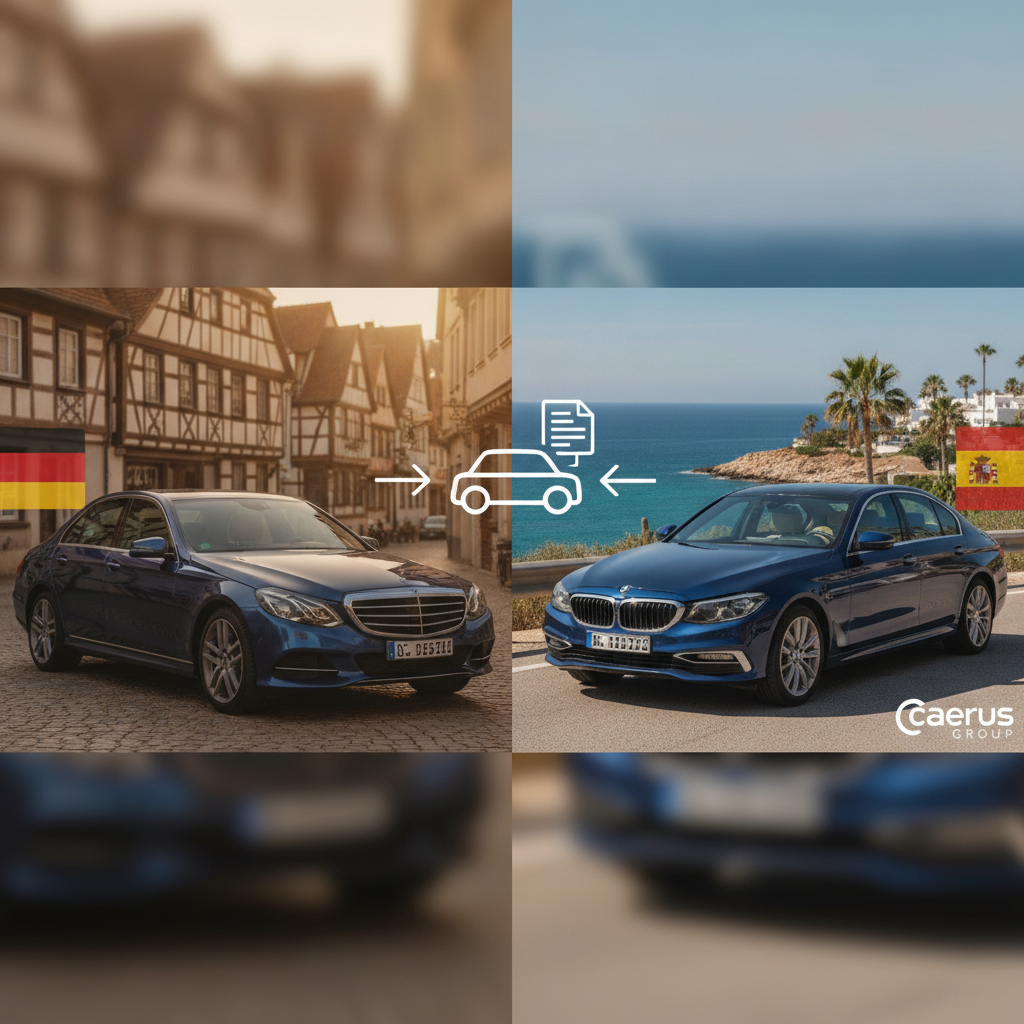
The European automotive market offers a wide range of opportunities for car enthusiasts and savvy buyers alike. One of the most popular trends in recent years among Spanish residents is looking toward Central Europe to find their next vehicle. Specifically, buying a car in Germany and registering it in Spain has become a preferred method for obtaining high-quality vehicles with better specifications and often at more competitive prices than those found locally.
At Caerus Group, we understand that while the prospect of importing a vehicle is exciting, the administrative process can seem daunting. In this comprehensive guide, we will walk you through everything you need to know about the journey from a German dealership to the Spanish roads, and how professional assistance can save you time, money, and stress.
Why Choose the German Market?
Germany is widely considered the automotive heart of Europe. There are several reasons why Spanish buyers look to the German market. Firstly, the sheer volume of inventory is significantly higher. Whether you are looking for a luxury sedan, a high-performance sports car, or a reliable family SUV, the variety of used cars in excellent condition is unparalleled.
Secondly, German car owners are known for their rigorous maintenance habits. Most vehicles come with a full service history (Scheckheftgepflegt) and have been driven on high-quality roads. Additionally, German vehicles often feature higher trim levels and more optional extras compared to the same models sold in Spain. Even when you factor in the costs of transport and taxes, buying a car in Germany and registering it in Spain can still result in significant savings or a much higher value-for-money ratio.
The Step-by-Step Process
The journey begins with finding the right car. Most buyers use platforms like Mobile.de or Autoscout24 to browse listings. Once you have identified a vehicle, it is crucial to verify its condition. We recommend requesting the vehicle identification number (VIN) to check its history and ensuring it has a valid technical inspection (TÜV).
Once the purchase is finalized, you have two main options for bringing the car to Spain: driving it yourself or hiring a professional transport service. If you choose to drive, you must obtain temporary German transit plates (Zollkennzeichen), which include short-term insurance. If you choose transport by truck, the car does not need temporary registration, but you will need to coordinate delivery logistics.
Essential Documentation Required
To ensure a smooth transition when buying a car in Germany and registering it in Spain, you must gather all necessary documentation at the point of sale. Missing paperwork is the most common cause of delays in the Spanish registration process. You will need:
1. The Original Invoice or Sales Contract: If buying from a dealer, ensure the invoice clearly states the VAT (MwSt) details. If buying from an individual, a bilingual contract is highly recommended.
2. Fahrzeugbrief and Fahrzeugschein: These are the German ownership documents (Part I and Part II of the registration certificate).
3. Certificate of Conformity (COC): This document is vital as it proves the vehicle meets European technical standards. Without it, you may need to undergo a more complex and expensive individual homologation process in Spain.
4. Valid Identification: Your passport or DNI, and your NIE if you are a foreign resident in Spain.
Navigating the Spanish Registration and Taxes
Once the car arrives on Spanish soil, the administrative phase begins. This is where many buyers feel overwhelmed due to the various regional and national requirements. The first stop is the ITV (Inspección Técnica de Vehículos) station. Even if the car has a valid German TÜV, it must pass a Spanish "pre-registration" inspection to verify its technical characteristics and CO2 emissions.
After passing the ITV, you must settle the tax obligations. There are two main taxes to consider:
The IEDMT (Impuesto Especial sobre Determinados Medios de Transporte): This is the registration tax based on the vehicle's CO2 emissions. For vehicles with low emissions, this tax can be 0%, but for high-emission vehicles, it can reach up to 14.75% of the vehicle's current value according to official tables.
VAT or ITP: If you bought the car from a dealer, you usually pay VAT in Germany (provided it is a used car). If you bought from a private individual, you must pay the Property Transfer Tax (Impuesto de Transmisiones Patrimoniales) in your specific Spanish Autonomous Community.
For official information on vehicle procedures and regulations, you can visit the Dirección General de Tráfico (DGT) website, which outlines the legal requirements for importing vehicles from the EU.
How Caerus Group Simplifies the Journey
While the prospect of buying a car in Germany and registering it in Spain is financially attractive, the bureaucracy involved requires precision. A single mistake in a tax form or a missing document can lead to costly penalties or the car being stuck in a garage for weeks.
This is where Caerus Group comes in. As experts in both car sales and administrative registrations, we offer a "turnkey" service. We don't just help you find the car; we handle the entire process. From verifying the German paperwork and coordinating the transport to managing the ITV appointment and filing all tax returns with the Spanish Tax Agency and the DGT.
Our team ensures that your vehicle is registered correctly and efficiently, allowing you to enjoy your new purchase without the headache of Spanish red tape. We specialize in navigating the nuances of the "Matriculación" process, ensuring that every calculation of the IEDMT is accurate and that you benefit from any eligible exemptions or reductions.
Final Thoughts
Buying a car in Germany and registering it in Spain is an excellent way to access premium vehicles that might not be available in the local market. With the right preparation and professional support, the process is a straightforward path to upgrading your driving experience. By understanding the costs, documentation, and technical requirements involved, you can make an informed decision that saves you money in the long run.
If you are considering importing a vehicle or have already found your dream car in Germany, contact Caerus Group today. Let us handle the complexities of the registration while you focus on the road ahead.