
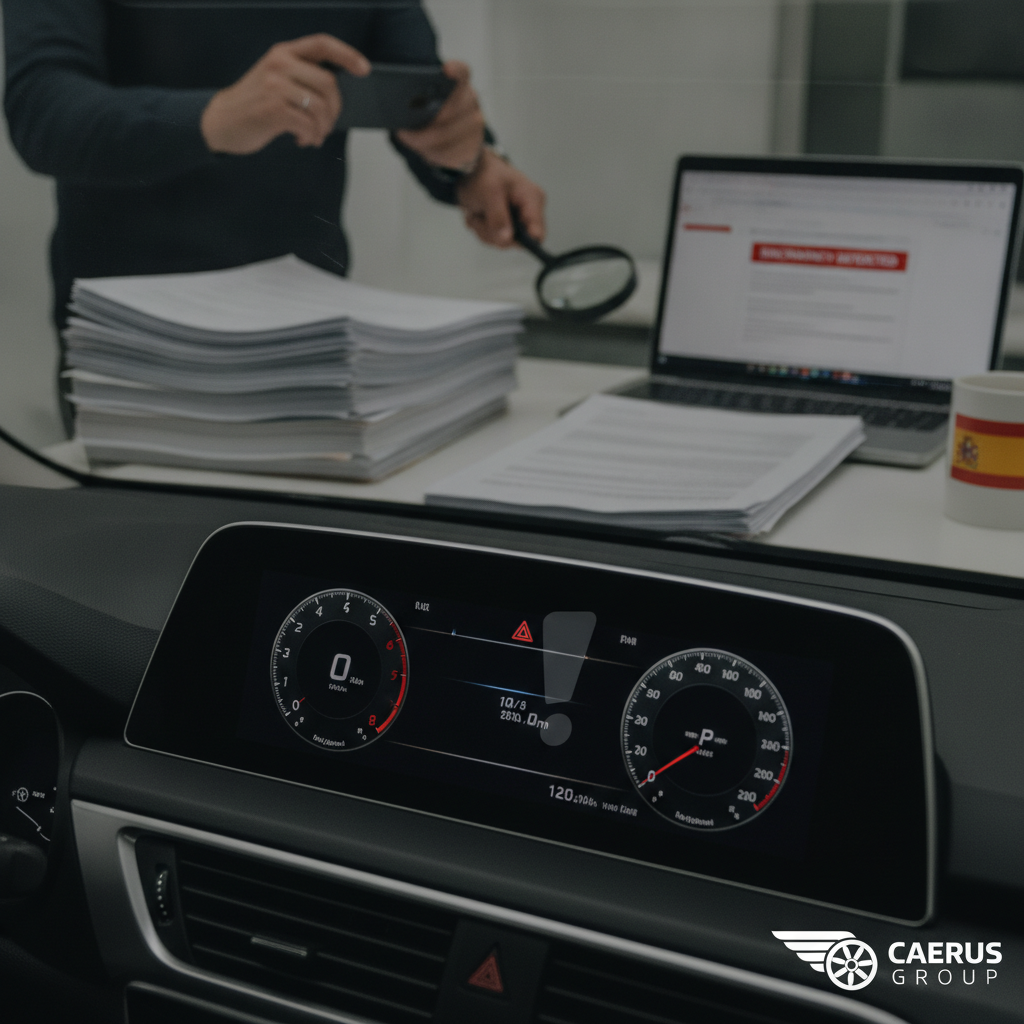
The used car market in Spain has seen a significant increase in demand for imported vehicles, particularly from countries like Germany, Belgium, and France. Buyers are often attracted by better maintenance standards, higher equipment levels, and competitive pricing. However, one of the biggest concerns for any buyer venturing into the international market is the authenticity of the vehicle’s history. Specifically, many wonder: How to know if an imported car has real mileage?
At Caerus Group, we specialize not only in the sale of high-quality vehicles but also in the complex process of vehicle registration and matriculation in Spain. We understand that transparency is the cornerstone of a successful purchase. Odometer fraud, or "clocking," is a serious issue that can lead to unexpected repair costs and a significant drop in the vehicle's resale value. In this guide, we will provide you with the essential tools and tips to verify the mileage of an imported car before you finalize your investment.
The Importance of Verifying Mileage
Mileage is much more than just a number on the dashboard; it is an indicator of the remaining life of the engine, the condition of the transmission, and the timing for critical maintenance tasks like replacing the timing belt. When a seller illegally lowers the mileage, they are not just lying about the car's age; they are potentially hiding upcoming mechanical failures that could compromise your safety on the road.
For those looking at vehicles outside of Spain, the question remains: How to know if an imported car has real mileage? The verification process requires a combination of digital research, physical inspection, and official documentation. Because different countries have different reporting standards, being thorough is your best defense against fraud.
Step 1: Analyze the Maintenance Records and Service Book
The first place to look is the vehicle's service book. A legitimate car should have a consistent history of oil changes, inspections, and repairs. Each entry should include the date, the work performed, the mileage at that time, and the official stamp of the workshop. Check for any inconsistencies in the dates; if a car had 50,000 km in 2020 and suddenly shows 40,000 km in 2022, you have a clear red flag.
If the service book is digital (as is common with brands like BMW, Mercedes-Benz, or Audi), you can request a printout from an authorized dealer. At Caerus Group, we always recommend verifying these records directly with the manufacturer's database whenever possible to ensure they haven't been falsified.
Step 2: Request an International Vehicle History Report
In the digital age, data is your greatest ally. There are several reputable platforms that aggregate data from insurance companies, police records, and technical inspection centers across Europe. Using services like CARFAX Europe allows you to enter the Vehicle Identification Number (VIN) and receive a detailed report on the car’s past.
These reports often include mileage readings recorded during previous sales or inspections. If the report shows a higher mileage than what the odometer currently displays, you have definitive proof of tampering. This is one of the most effective answers to the question: How to know if an imported car has real mileage?
Step 3: Physical Inspection for Wear and Tear
While modern scammers can be very sophisticated with digital odometers, they often overlook the physical evidence of use. A car with "50,000 km" should not have a steering wheel that is worn down to the smooth plastic or pedals that are completely bald. Here are key areas to inspect:
- The Steering Wheel and Gear Shifter: Excessive wear or a brand-new replacement in a supposedly low-mileage car can be suspicious.
- Driver’s Seat Bolsters: Look for sagging or tears in the fabric or leather, which typically happen after years of entry and exit.
- Brake Discs: If the discs have a very deep lip (wear groove) but the odometer is low, the car may have been driven much further than claimed.
- Tire Manufacturing Date: Check the DOT code on the tires. If a car has very low mileage but the tires are much newer than the car, it might be normal. However, if the tires are old but the mileage is high, or vice versa, it warrants further investigation.
Step 4: Use Diagnostic Tools (OBD-II)
Modern vehicles store mileage data in several electronic control units (ECUs), not just the dashboard. Specialized diagnostic tools can plug into the car's OBD-II port and read the mileage recorded in the transmission control module, the ABS system, or even the light module. Frequently, fraudsters forget to "clean" the mileage from these secondary modules. If the dashboard says 80,000 km but the engine computer says 180,000 km, you have found the "ghost" mileage.
The Role of Matriculation and Technical Inspections in Spain
When you bring a car to Spain, it must undergo a specific ITV (Inspección Técnica de Vehículos) for registration. During this process, the Spanish authorities will record the mileage. However, this only protects future buyers in Spain. To protect yourself before the car is registered, you must be proactive.
This is where Caerus Group provides added value. Our team is expert in the administrative requirements of importing vehicles. We help our clients navigate the paperwork, ensuring that the documentation presented to the DGT (Dirección General de Tráfico) is legitimate and that the vehicle’s history stands up to scrutiny.
Why Trust Caerus Group?
Buying an imported car doesn't have to be a gamble. At Caerus Group, we bridge the gap between international sellers and Spanish buyers. We handle the complexities of matriculation, ensuring that every vehicle we manage or sell meets the legal and mechanical standards required in Spain. We understand the nuances of the European market and the common pitfalls associated with importing.
If you are still wondering how to know if an imported car has real mileage, the best answer is to work with professionals who verify every detail. From checking the VIN against European databases to ensuring the ITV process goes smoothly, we are committed to transparency.
Final Thoughts
Importing a car can be a fantastic way to get a premium vehicle at a great price, but it requires due diligence. Never rely solely on the word of the seller or the number on the screen. By checking service records, obtaining a history report, inspecting physical wear, and using diagnostic technology, you can buy with confidence.
If you are planning to import a vehicle or need help with the registration of a car already in Spain, contact Caerus Group today. Let us handle the bureaucracy while you enjoy your new ride.