
For many car enthusiasts and practical buyers in Spain, the German used car market represents the pinnacle of variety, maintenance quality, and competitive pricing. Whether you are looking for a high-end Porsche, a reliable BMW, or a well-equipped Volkswagen, Germany often offers options that are hard to find locally. However, the process of importing a vehicle can be daunting if you are unfamiliar with the legal and logistical requirements. At Caerus Group, we specialize in making this transition seamless. In this guide, we will break down exactly how to bring a car from Germany to Spain without the headaches.
Why Source a Vehicle from the German Market?
Germany is the largest automotive market in Europe. This translates to a massive inventory of second-hand vehicles that are generally better maintained than those in other regions. German car owners are known for following strict maintenance schedules, often performed at official dealerships. Furthermore, the German "TÜV" (Technical Inspection Association) is world-renowned for its rigor, ensuring that cars on the road meet high safety and environmental standards.
Beyond quality, there is the price factor. Even when including transportation and registration costs, many buyers find that they can save between 10% and 20% on luxury or specialized models. However, to realize these savings, you must understand the administrative steps involved in the import process.
Step 1: Finding and Inspecting Your Car
The journey begins online. Platforms like Mobile.de and AutoScout24 are the most popular sites to browse. Once you have identified a potential vehicle, the "inspection" phase is critical. If you cannot travel to Germany personally, it is wise to hire a professional service to verify the car's condition. Checking the Scheckheftgepflegt (service history) is a non-negotiable step to ensure the mileage is genuine and the vehicle has been cared for.
At Caerus Group, we often advise our clients to look for "Premium Selection" or "Junge Sterne" programs if buying from official BMW or Mercedes-Benz dealers, as these come with pan-European warranties that are valid in Spain.
Step 2: The Purchase and Export Documentation
Once the price is negotiated, you need to handle the paperwork in Germany. There are two primary ways to get the car to Spain: driving it yourself or using a professional transport truck. If you choose to drive it, you will need to obtain "Export Plates" (Ausfuhrkennzeichen), which include temporary insurance and a temporary registration document. These plates usually have a red strip on the right side indicating their expiration date.
Essential documents you must receive from the seller include:
- Zulassungsbescheinigung Teil I & II: These are the German registration documents (formerly known as the Fahrzeugschein and Fahrzeugbrief).
- COC (Certificate of Conformity): This document is vital for the Spanish ITV (Technical Inspection). It proves the vehicle meets EU standards.
- Invoice or Sale Contract: If buying from a dealer, ensure the VAT (IVA) is clearly stated. If buying from an individual, a bilingual contract is recommended.
Step 3: Logistics and Transportation
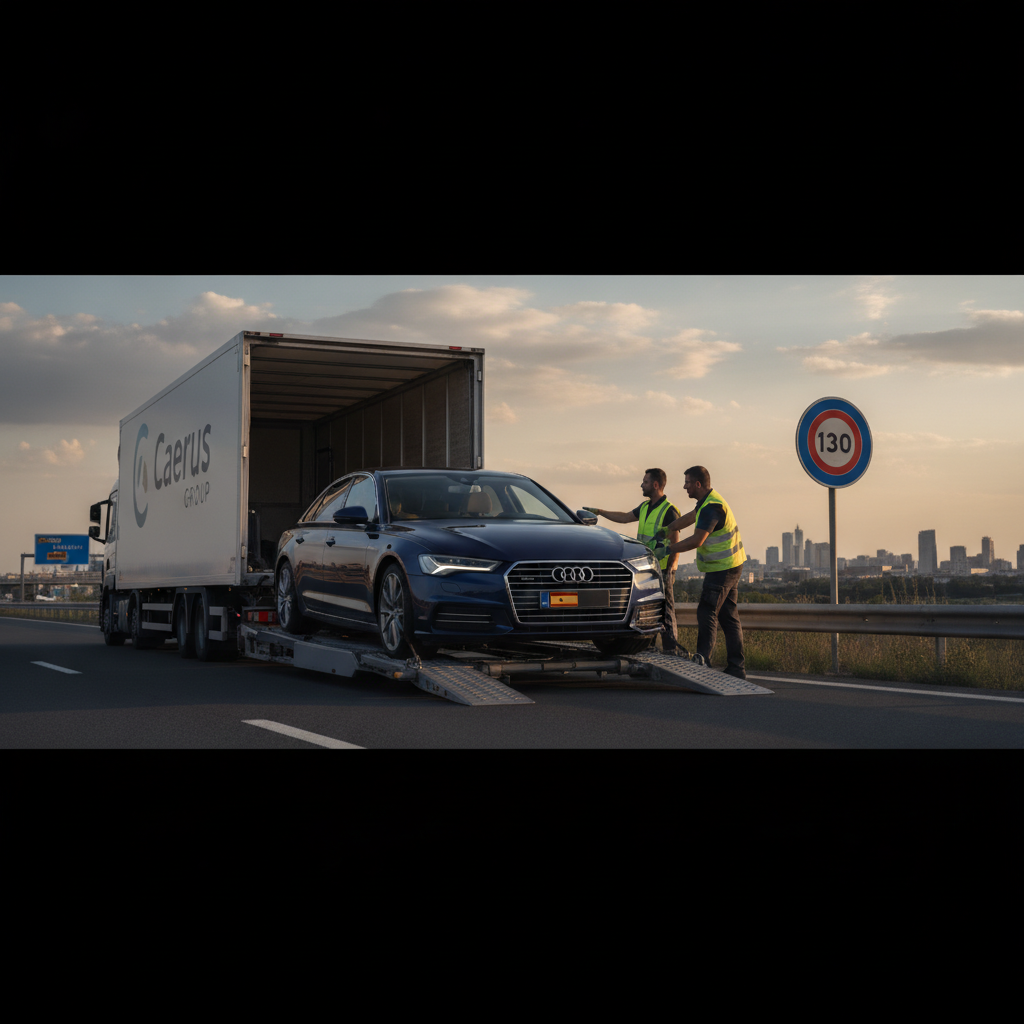
Many of our clients ask us about the best way to move the vehicle. While a road trip across Europe sounds romantic, it adds mileage, wear and tear, and fuel/toll costs. Professional transport on a multi-car carrier is often the most cost-effective and safest method. According to the European Union’s official guidelines on cross-border vehicle registration, you have a limited window to register the car in your home country once it arrives, so efficient transport is key.
Step 4: The Spanish Registration Process (Matriculación)
This is where the process becomes technical. Once the car is on Spanish soil, the "Spanishization" begins. This involves several mandatory steps:
1. The ITV Inspection
Even if the car has a valid German TÜV, it must pass a Spanish ITV. You will need to present the German documents and the COC. The station will issue a Spanish Ficha Técnica (Technical Sheet).
2. Payment of Taxes
This is the most complex part of how to bring a car from Germany. You must settle two main taxes:
- IEDMT (Impuesto Especial sobre Determinados Medios de Transporte): This is the registration tax based on the car's CO2 emissions. Cars with zero or very low emissions may be exempt.
- IVTM (Impuesto de Vehículos de Tracción Mecánica): The local road tax paid to your municipality (Ayuntamiento).
- VAT/IVA: If the car is considered "new" (less than 6 months old or less than 6,000 km), you must pay VAT in Spain. If it is used and bought from a dealer, VAT is usually paid in Germany.
3. DGT Registration
Finally, with all taxes paid and the ITV passed, you must apply for the final registration with the Dirección General de Tráfico (DGT) to receive your Spanish license plates and the Permiso de Circulación.
Why Trust Caerus Group with Your Import?
The process of "cómo bajar un coche de Alemania" (how to bring a car from Germany) involves navigating two different legal systems and several tax offices. A single mistake in the documentation can lead to heavy fines or a car that is stuck in a garage unable to legally drive.
At Caerus Group, we provide a comprehensive service. We don't just sell cars; we manage the entire lifecycle of the import. From verifying the vehicle's history in Germany to handling the complex tax filings and the final registration in Spain, we ensure that your only job is to turn the key and enjoy your new ride. Our expertise in matriculaciones means we know exactly how to calculate taxes to avoid overpayment and how to expedite the ITV process.
Conclusion
Importing a car from Germany is a fantastic way to access premium vehicles at better prices, provided you follow the rules. By understanding the importance of the COC, the nuances of the IEDMT tax, and the logistics of transport, you are well on your way to owning a German-engineered masterpiece. If you find the bureaucracy overwhelming, remember that Caerus Group is here to handle the heavy lifting for you. Contact us today to start your journey toward your next car!