
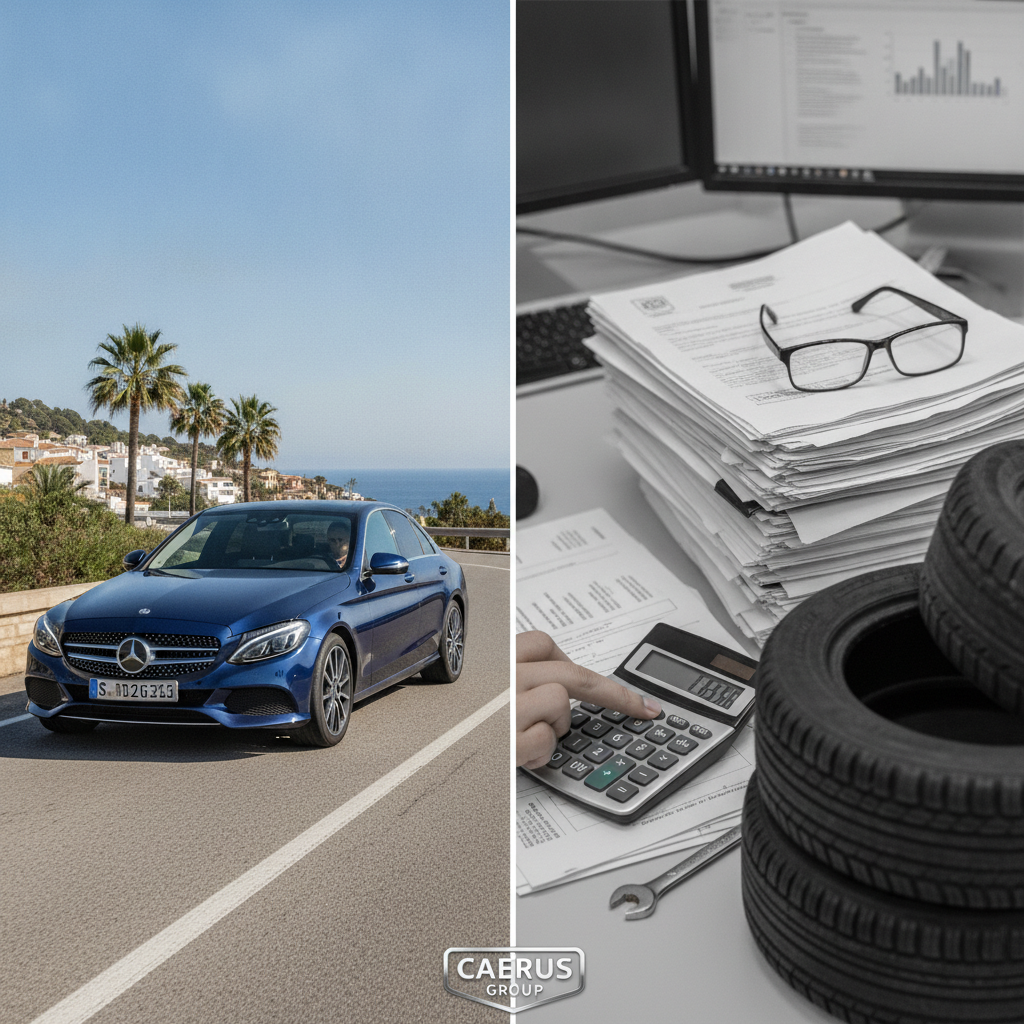
For car enthusiasts and savvy buyers in Spain, the allure of the German automotive market is undeniable. Germany is the heart of the European car industry, housing giants like Mercedes-Benz, BMW, Audi, and Porsche. It is no surprise that many Spanish residents look across the border when searching for their next vehicle. However, importing a vehicle is a significant undertaking that requires careful consideration. In this guide, we will explore the essential German import car pros and cons to help you decide if this path is right for you and how Caerus Group can simplify the process.
The Advantages of Importing from Germany
The primary reason thousands of cars are brought from Germany to Spain every year is the sheer volume of the market. Germany has the largest second-hand car market in Europe, which creates several distinct advantages for the buyer.
1. Competitive Pricing and Variety
Due to the high volume of supply, prices for used premium vehicles in Germany are often significantly lower than for similar models in Spain. Whether you are looking for a specific engine type, a rare color, or a particular interior finish, the German market offers a variety that is hard to match locally. When you weigh the German import car pros and cons, the financial savings on the initial purchase price usually sit at the top of the "pro" list.
2. Superior Maintenance and Care
German car owners are known for their meticulous attention to vehicle maintenance. Most used cars in Germany come with a full service history (Scheckheftgepflegt), often performed at official dealerships. Furthermore, the German technical inspection, known as the TÜV, is exceptionally rigorous. This ensures that vehicles reaching the second-hand market are generally in excellent mechanical condition.
3. High-End Specifications
German buyers tend to equip their cars with high levels of technology and luxury features. It is common to find used cars with premium sound systems, advanced driver assistance packages, and high-quality leather interiors that were never even offered as standard options in the Spanish market at the time of original sale.
The Disadvantages and Challenges to Consider
While the benefits are tempting, it is crucial to remain realistic about the challenges involved. Buying a car abroad is not as simple as a local transaction, and there are specific risks associated with the German climate and Spanish bureaucracy.
1. The "Salt Factor" and Corrosion
One of the most significant "cons" in the German import car pros and cons list is the weather. Unlike the dry, sunny climate of Spain, German winters involve heavy snow and ice. To keep roads safe, German authorities use large amounts of road salt. Over time, this salt can lead to corrosion on the underbody and suspension components of a vehicle. It is vital to have a professional inspection to ensure the chassis hasn't been compromised by rust.
2. Complex Bureaucracy in Spain
Once the car arrives in Spain, the real work begins. You must navigate the Spanish registration process, which includes passing a specific "Import ITV" (Technical Vehicle Inspection), paying the IEDMT (Registration Tax based on CO2 emissions), and dealing with the Dirección General de Tráfico (DGT). For those unfamiliar with the Spanish administrative system, this can be a daunting and time-consuming task.
3. Travel and Logistics Costs
Unless you hire a professional service, you will need to factor in the cost of flying to Germany, accommodation, temporary transit insurance, and fuel for the drive back—or alternatively, the cost of a professional transport truck. These expenses can quickly eat into the savings you made on the purchase price.
The Role of Registration Taxes (IEDMT)
In Spain, the cost of importing a car is heavily influenced by its CO2 emissions. The "Impuesto Especial sobre Determinados Medios de Transporte" (IEDMT) can range from 0% for low-emission vehicles to as high as 14.75% for high-emission luxury cars. Before purchasing a German import, it is essential to calculate this tax based on the vehicle’s technical sheet. A car that seems like a bargain in Berlin might become expensive once the Spanish tax office takes its share.
Why Choose Caerus Group for Your Import?
Understanding the German import car pros and cons is the first step, but executing the plan requires expertise. This is where Caerus Group comes in. As specialists in both vehicle sales and the complex world of Spanish registrations, we bridge the gap between the German market and your garage in Spain.
Professional Sourcing and Inspection
We help you identify the best vehicles, ensuring they have been properly maintained and are free from hidden rust or mechanical issues. Our expertise allows us to filter out the "lemons" and focus on high-quality German engineering.
Hassle-Free Registration
The "con" of Spanish bureaucracy is completely eliminated when you work with us. Caerus Group handles the entire registration process. From the ITV inspection to the payment of local taxes and the final issuance of your Spanish license plates, we manage the paperwork so you don't have to. We ensure that every vehicle we handle is 100% legal and ready to drive on Spanish roads without any future administrative headaches.
Conclusion: Is It Worth It?
Importing a car from Germany is a fantastic way to acquire a high-spec, well-maintained vehicle at a competitive price. However, the success of the venture depends on your ability to navigate the potential pitfalls of road salt, logistical costs, and Spanish red tape. By weighing the German import car pros and cons and partnering with an experienced group like Caerus Group, you can enjoy the best of German automotive quality with the peace of mind that comes from professional Spanish registration services.
Whether you are looking for a sporty Audi, a robust BMW, or a family-friendly Mercedes-Benz, let Caerus Group turn your international car-buying dream into a local reality. Contact us today to learn more about our import and registration services.