
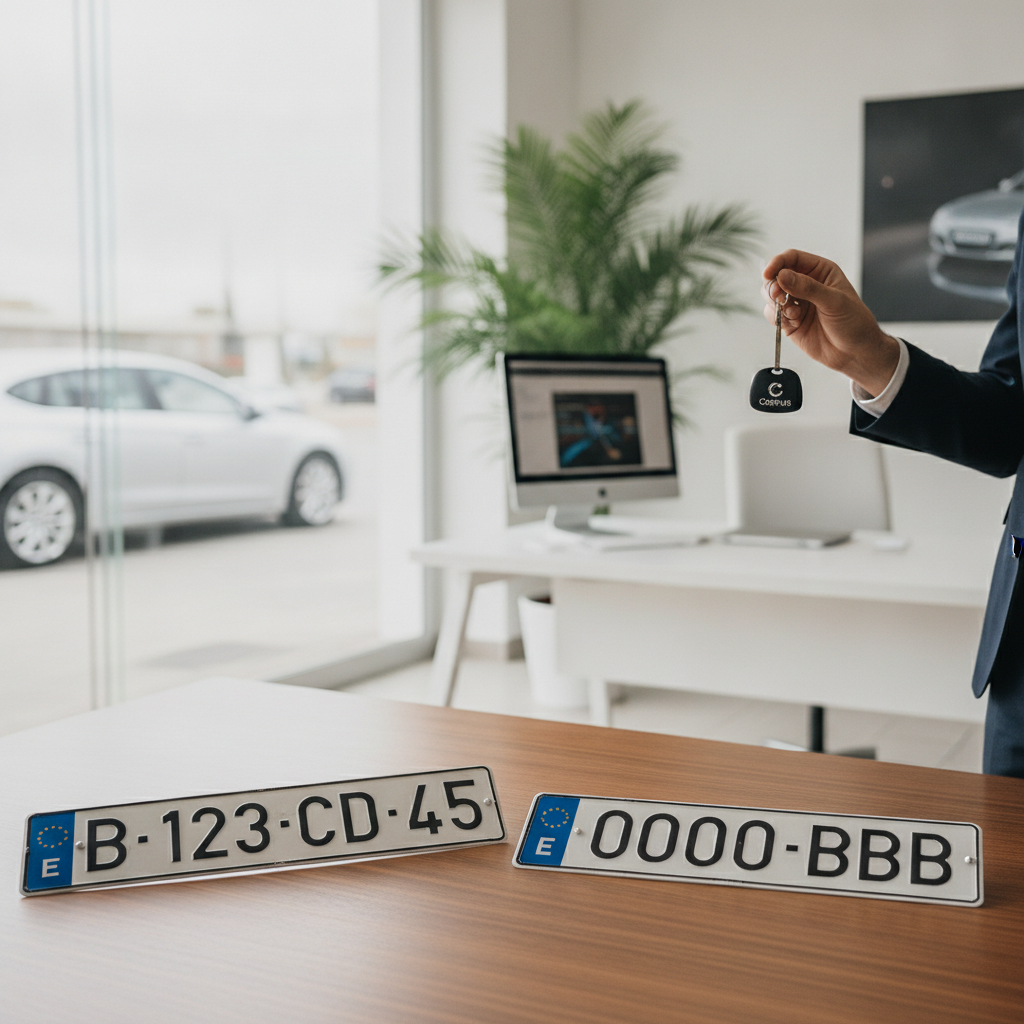
Relocating to Spain is an exciting journey filled with new opportunities, beautiful landscapes, and a vibrant culture. However, for many expatriates and international residents, the logistics of moving can be complex, particularly when it relates to bringing a personal vehicle. If you have decided to bring your car from another country, one of the most critical administrative tasks you will face is changing foreign license plates to Spanish plates. At Caerus Group, we specialize in making this transition seamless, ensuring that your vehicle complies with all local regulations without the headache of navigating Spanish bureaucracy alone.
Why Is It Necessary to Register Your Foreign Car in Spain?
Spanish law is very clear regarding the use of foreign-registered vehicles. If you become a legal resident in Spain, you are required by law to register your vehicle with the Spanish authorities. Generally, you have a window of 30 days from the date you start your residency to begin the process. For non-residents who spend more than six months (183 days) in the country within a calendar year, the vehicle must also be imported and registered locally.
Failing to undergo the process of changing foreign license plates to Spanish plates can lead to significant consequences. Local police and the Guardia Civil are increasingly vigilant regarding foreign-plated cars that have overstayed their legal limit. Penalties can range from heavy fines to the temporary impoundment of the vehicle. By proactively registering your car, you ensure peace of mind and legal protection while driving on Spanish roads.
The Step-by-Step Process of Changing Foreign License Plates to Spanish Plates
The transition from a foreign registration to a Spanish one involves several administrative steps, multiple government bodies, and specific technical requirements. Understanding these steps is essential for a successful registration.
Step 1: The Technical Inspection (ITV)
The first and perhaps most vital step is taking your car to an Inspección Técnica de Vehículos (ITV) station. Unlike a standard annual inspection, this is a special "homologation" inspection. The technicians will verify that your car meets Spanish safety and environmental standards. You will need to provide the original vehicle documentation and, in many cases, a Certificate of Conformity (CoC). The CoC proves that the vehicle was manufactured to standards accepted in the European Union. If your car was manufactured outside the EU (for example, in the USA or Japan), you might need a "Ficha Técnica Reducida," a document prepared by an authorized engineer.
Step 2: Payment of Registration Taxes
Before you can apply for your new plates, you must settle your tax obligations. There are two primary taxes involved in changing foreign license plates to Spanish plates:
- Impuesto Especial sobre Determinados Medios de Transporte (IEDMT): This is the main registration tax. The amount is calculated based on the CO2 emissions of the vehicle. Cars with lower emissions may be exempt, while high-emission vehicles can face a tax rate of up to 14.75% of the vehicle's current market value.
- Impuesto de Circulación (IVTM): This is the annual road tax paid to your local town hall (Ayuntamiento). The cost depends on the horsepower of the vehicle and the municipality where you reside.
It is worth noting that if you are moving to Spain as part of a permanent relocation, you may be eligible for a tax exemption on the registration tax, provided you meet certain criteria and apply within the legal deadlines.
Step 3: Registration with the DGT
Once the taxes are paid and the ITV is passed, the final administrative hurdle is at the Dirección General de Tráfico (DGT). You must submit all your documentation, including proof of ID (TIE or NIE), proof of address (Empadronamiento), the vehicle’s original title, and proof of tax payments. The DGT will then issue your new Spanish registration number and the "Permiso de Circulación."
Required Documentation at a Glance
To avoid delays when changing foreign license plates to Spanish plates, ensure you have the following documents ready:
1. Original vehicle registration document from the country of origin.
2. Purchase invoice or contract (translated into Spanish if necessary).
3. Certificate of Conformity (CoC) or Ficha Técnica Reducida.
4. Valid Passport and NIE/TIE card.
5. Proof of address in Spain (Empadronamiento).
6. Proof of payment for the relevant Spanish taxes.
Common Challenges and Pitfalls
Many vehicle owners attempt to handle this process themselves, only to find it overwhelming. One of the most common issues is the lack of specific paperwork, such as the CoC, which can lead to a vehicle failing the ITV. Additionally, navigating the tax office (Agencia Tributaria) platforms to calculate and pay the IEDMT requires a digital certificate and a deep understanding of the Spanish tax code.
Furthermore, modifications to the vehicle can cause significant problems. If your car has aftermarket parts that are not reflected in the original technical sheet, you may be required to undergo a specialized engineering project to legalize those modifications in Spain before the new plates can be issued.
How Caerus Group Simplifies Your Registration
At Caerus Group, we understand that your time is valuable. As a premier car dealership and registration specialist in Spain, we offer a comprehensive service designed to take the weight off your shoulders. We handle every aspect of changing foreign license plates to Spanish plates, from coordinating the ITV appointment to filing the final paperwork with the DGT.
Our team of experts stays up-to-date with the latest changes in Spanish traffic laws and tax regulations. We provide a clear breakdown of the costs involved, helping you avoid unexpected expenses. Whether you are bringing a classic car, a family SUV, or a high-performance sports car, we ensure that your vehicle is registered correctly, legally, and as quickly as possible.
Beyond registration, Caerus Group is also a trusted name in the automotive market. If you decide that importing your vehicle is too costly or complex, we can assist you in finding a high-quality Spanish-registered vehicle from our dealership, ensuring you stay mobile from day one.
Conclusion
While the process of changing foreign license plates to Spanish plates involves several technical and legal layers, it is a necessary step for anyone looking to call Spain home. By understanding the requirements—from the ITV inspection to the DGT registration—you can prepare yourself for the transition. However, you don't have to do it alone. Trusting a professional service like Caerus Group ensures that your vehicle is handled with care and that you remain in full compliance with Spanish law.
Ready to get your Spanish plates? Contact Caerus Group today, and let us drive the paperwork while you enjoy the Spanish sun.