
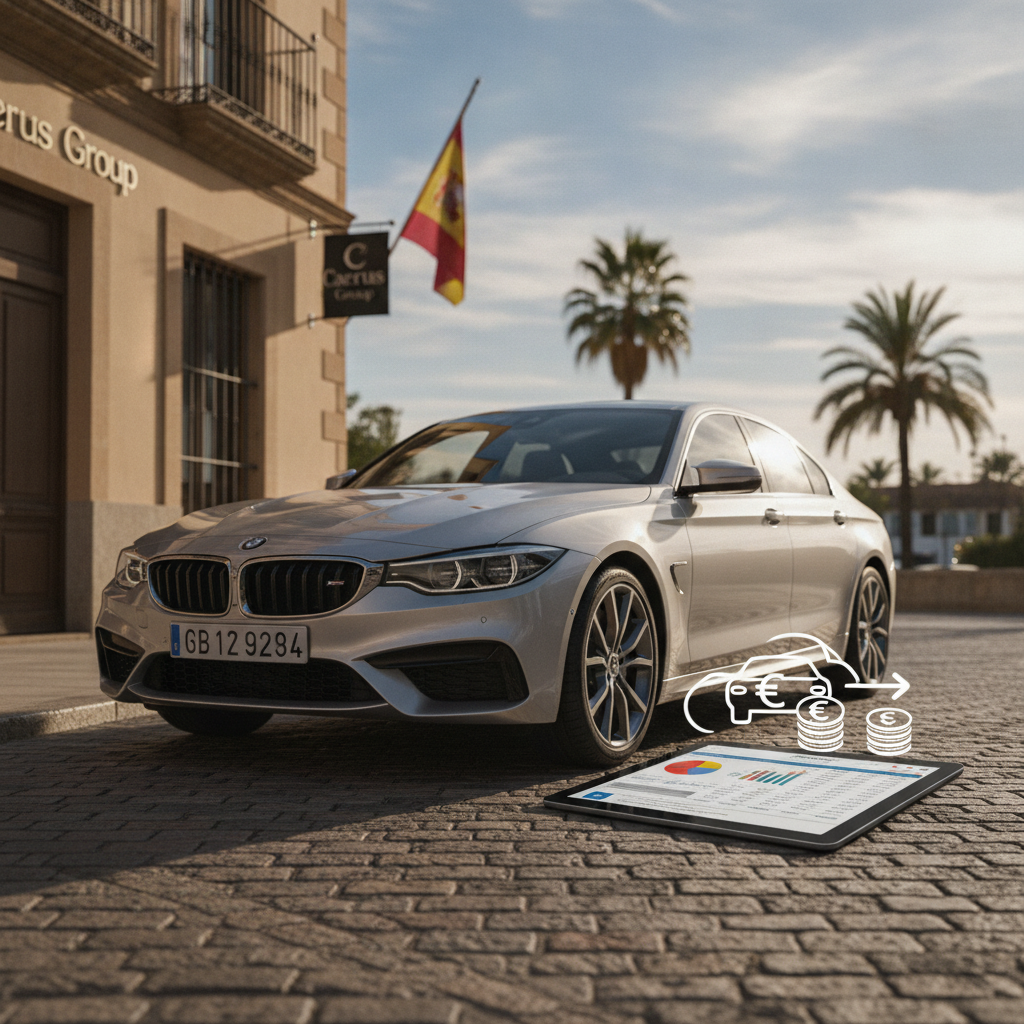
The allure of bringing a high-end vehicle from Germany, a classic car from the United States, or simply moving your personal vehicle to Spain is a common ambition for many residents and expats. However, the administrative landscape in Spain is known for its complexity, especially regarding vehicle taxation and documentation. At Caerus Group, we specialize not only in providing premium vehicles but also in ensuring that your transition to Spanish plates is seamless and transparent.
One of the most frequent questions we receive is how to accurately calculate the price of registering a foreign car. Understanding these costs upfront is essential to avoid "sticker shock" and to ensure that your imported vehicle remains a sound investment. In this comprehensive guide, we will break down the various taxes, fees, and technical requirements involved in the process.
The Main Components of Registration Costs
When you decide to import a vehicle, you aren't just paying for a license plate. You are settling a series of obligations with the Spanish Tax Agency (Agencia Tributaria) and the General Directorate of Traffic (DGT). The total cost is influenced by the vehicle’s age, its CO2 emission levels, and its original market value.
To calculate the price of registering a foreign car, you must consider the following pillars: the Registration Tax (IEDMT), Value Added Tax (VAT) or Property Transfer Tax (ITP), the technical inspection fees (ITV), and the administrative fees for the DGT.
The Registration Tax (IEDMT) Based on Emissions
The "Impuesto Especial sobre Determinados Medios de Transporte" (IEDMT) is perhaps the most significant variable in your calculation. This tax is calculated based on the CO2 emissions of the vehicle. Spain has strict environmental regulations, and the cleaner your car is, the less you pay. The tax brackets are generally divided as follows:
For vehicles emitting less than 120g/km of CO2, the tax is 0%. For those between 120 and 160g/km, the rate is 4.75%. Vehicles falling between 160 and 200g/km are taxed at 9.75%, and anything above 200g/km faces a 14.75% tax rate. It is important to note that these percentages are applied to the current "book value" of the car according to official tables published annually by the government, which account for depreciation based on the car's age.
VAT vs. Property Transfer Tax (ITP)
The type of tax you pay on the purchase itself depends on where you bought the car and from whom. If you purchase a new car from a dealer within the EU, you will typically pay 21% VAT (IVA) in Spain. If the car is considered "used" (more than 6 months old and with more than 6,000 km), and you are buying it from an individual, you will instead pay the Property Transfer Tax (ITP), which varies by autonomous community but usually ranges between 4% and 8%.
If you are importing a car from outside the European Union, such as the UK or the USA, the process becomes more expensive due to Customs Duties (usually around 10%) and the mandatory 21% VAT applied at the point of entry. Navigating these requirements is where professional advice becomes invaluable to ensure you do not overpay.
Technical Inspection (ITV) and Homologation
Before any foreign vehicle can be registered in Spain, it must pass a specific technical inspection known as the "ITV previa a la matriculación." This is more rigorous than a standard annual check. The engineers will verify that the vehicle meets Spanish safety and environmental standards.
To pass this, you will need a Certificate of Conformity (COC). If your vehicle does not have a COC—common with cars from outside the EU—you may need a "Ficha Técnica Reducida" or even a simplified individual homologation. These technical documents add to the total cost but are non-negotiable requirements for the DGT to issue your new registration.
The Importance of Official Valuation
To correctly calculate the price of registering a foreign car, you cannot simply use the price you paid for the vehicle. The Spanish Tax Agency uses a standardized list of vehicle values. You can consult the official tables on the Agencia Tributaria website to see how they value your specific make and model. As a car ages, its taxable value decreases according to a percentage scale provided by the state, which is a crucial factor for those importing classic or older luxury models.
Why Choose Caerus Group for Your Registration?
At Caerus Group, we understand that your time is valuable. The process of gathering the COC, visiting the ITV station, calculating the depreciated value of your car, and filing forms 576, 06, or 620 can be overwhelming. Errors in these filings can lead to delays and potential fines from the tax authorities.
We provide a turnkey service. From the moment your vehicle arrives in Spain until you have the physical metal plates attached to your bumper, our team of experts manages every step. We utilize advanced software to accurately calculate the price of registering a foreign car, ensuring you pay exactly what is required and nothing more.
Conclusion
Importing a vehicle to Spain allows you to enjoy the best of the international automotive market while living in one of the most beautiful countries in the world. While the taxes and paperwork may seem daunting, they are manageable with the right preparation. By understanding the CO2 emission brackets, the depreciation tables, and the technical requirements of the ITV, you can effectively budget for your import.
If you are looking to bring a vehicle into Spain or are interested in our current inventory of premium cars already registered and ready to drive, contact Caerus Group today. Let us handle the bureaucracy so you can focus on the open road.